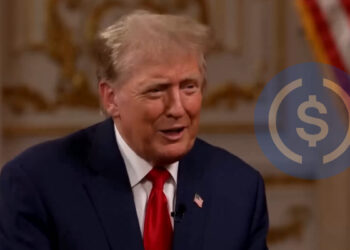




- IMF First Deputy Managing Director Dan Katz warned on August 7 that local-currency stablecoins like South Africa’s ZARU can end up accelerating adoption of dollar stablecoins instead of curbing it.
- South Africa’s central bank flagged the same capital-control risk on July 31, a week earlier, and had been warning about it since February.
- USDT settled close to R27 billion (roughly $1.7 billion) on South African exchanges in the year to April 2026; no comparable figure has surfaced for ZARU.
- Katz’s five policy recommendations largely mirror what South Africa’s central bank is already doing.
South Africa’s rand-backed stablecoin, ZARU, has been live for six months. In that same window, dollar-pegged USDT settled almost R27 billion (roughly $1.7 billion) in on-chain volume across the country’s exchanges, according to the South African Reserve Bank’s own Financial Stability Review. That gap is wide enough that South Africa’s central bank governor and the IMF’s second-highest official reached the same warning, independently, seven days apart.
Stablecoins have great promise but have also provoked anxiety in the emerging markets, especially over currency substitution.
How can countries unlock the benefits while managing the risks? My speech today in Cape Town @UCT_news lays it all out.
Link / thread below.
— Dan Katz (@DanKatzIMF) August 7, 2026
Dan Katz, the IMF’s First Deputy Managing Director, told an audience at the University of Cape Town on August 7 that local-currency stablecoins like ZARU can end up doing the opposite of what they’re built for. Once a rand stablecoin runs on the same blockchain infrastructure as a dollar one, he said, converting between them stops being a bank transaction and becomes an on-chain one:
“The on-ramp from local-currency to dollars moves from the regulated perimeter of banks and FX dealers to the on-chain perimeter: decentralized exchanges, liquidity pools, peer-to-peer swaps. Harder to monitor, harder to control.”
His own read of South Africa’s experiment so far: dollar-based stablecoins have gained “limited traction,” but rand-linked ones have seen “even less demand.”
Why the On-Chain Route Around Banks Matters
The mechanism Katz described isn’t hypothetical friction. It’s the specific policy lever regulators lose. Capital flow management measures were built around the assumption that converting local currency to dollars runs through a licensed bank or FX dealer, somewhere a regulator can see the transaction and, if needed, slow it down. Katz’s point is that stablecoins remove that chokepoint. A rand token and a dollar token sitting on the same chain can be swapped peer-to-peer or through a liquidity pool, with no institution in the middle required to report it.
He also tied this to why the incentive runs one direction: dollar-pegged tokens carry more liquidity, stronger network effects, and wider acceptance across platforms and borders. A rand stablecoin doesn’t compete with USDT on those terms. It becomes a stepping-stone to it. Katz’s own research includes a specific figure: sending $200 in stablecoins can cost anywhere from -2% to 8% depending on the corridor, evidence that a “stablecoin premium” already exists in some markets relative to official exchange rates, itself a sign of repressed dollar demand looking for a cheaper way out.
South Africa Was Already Watching
South Africa’s central bank had reached a similar conclusion on its own timeline, not Katz’s. SARB Governor Lesetja Kganyago said on July 31, seven days before Katz’s remarks, that stablecoins “have the potential to make cross-border payments faster and cheaper” but “must not be allowed to create loopholes for capital controls or financial crime,” and that crypto assets need “equivalent regulatory standards” to traditional banks. That’s the same circumvention risk Katz would describe in Cape Town, stated by South Africa’s own regulator first.
This wasn’t SARB’s opening position, either. In February, the same month ZARU launched, Kganyago told the Warwick Economics Summit stablecoins “could break apart” parts of the financial system if left unsupervised. By June, that had hardened into a narrower, data-driven stance: rather than wait for full legislation, SARB started pulling custody data directly from major crypto exchanges, an approach Katz cited approvingly in his own speech as proof that “data collection should not wait for perfect regulation.” SARB’s draft Crypto Asset Manual, still in progress, is the next concrete step in that same effort.
Timeline
- February 2026: ZARU launches; SARB Governor Kganyago warns stablecoins “could break apart” parts of the financial system.
- June 2026: SARB begins compiling custody data directly from major crypto exchanges and publishes its First Edition 2026 Financial Stability Review, showing USDT already dominant over any rand-pegged token.
- July 31, 2026: Kganyago calls for “equivalent regulatory standards” for crypto assets.
- August 7, 2026: Dan Katz delivers his Cape Town remarks; South African exchange data shows USDT’s on-chain dominance.
R27 Billion in Dollar Tokens, No Comparable Rand Figure
The mismatch is stark. ZARU launched in February 2026 as an institutional rand stablecoin backed by Sanlam, Luno, and EasyEquities. No public volume figure for it has surfaced since. USDT, over the same period, settled close to R27 billion (roughly $1.7 billion) on South African exchanges in the year to April 2026, according to SARB’s own Financial Stability Review, which tracks the figure across Luno, VALR, and AltCoinTrader. That figure spans all USDT activity in the country, not the FX-circumvention channel specifically. It shows dollar-token dominance broadly, not a confirmed capital-flight loophole. But the direction it points is hard to argue with: whatever demand exists for rand-denominated crypto exposure in South Africa, dollar tokens are capturing nearly all of it.
| ZARU (rand) | USDT (dollar) | |
|---|---|---|
| Launched | February 2026 | Pre-existing, global |
| Backers | Sanlam, Luno, EasyEquities | Tether |
| Reported on-chain volume (SA, to Apr 2026) | Not publicly reported | ~R27 billion (~$1.7B) |
Zoom out, and the same pattern holds globally. Stablecoin market capitalization nearly tripled between 2021 and 2025 but has sat flat at roughly $300 billion for the past year, 99% of it dollar-denominated. Total transaction volume topped $30 trillion in 2025, but the Bank for International Settlements puts actual payment-related stablecoin flows at just $390 billion of that, against a global cross-border payments market Katz sizes at roughly $1 quadrillion a year. Katz’s own research suggests the risk isn’t uniform: already-dollarized economies like El Salvador show little sign of the bank disintermediation stablecoins could cause, while countries with restricted dollar access face the opposite risk: a bigger net increase in dollar holdings. The headline volume number and the real-economy number are two very different stories, and the five-point regulatory overhaul Katz is proposing is aimed at the smaller one. The IMF has been building this case for months: a July working paper found stablecoin adoption could push currency-crisis probability from 3.9% to 7.4% in economies with fixed exchange rates, pointing to Bolivia as a live example of USDT already functioning as an unofficial FX reference.
Katz’s Five-Point Fix for the On-Chain Gap
Katz laid out five recommendations, and they read as a checklist for what SARB is already partway through: build strong macro fundamentals, close data gaps before regulation is finished (not after), rewrite capital flow tools to cover exchanges and on/off-ramps directly, tailor the response to how stablecoins are actually entering a given economy, and coordinate across borders so activity doesn’t just migrate to whichever jurisdiction is watching least closely. Recent reviews by the Financial Stability Board and IOSCO, he noted, still show gaps in that cross-border cooperation.
What Happens Next in Pretoria
If SARB keeps tightening its stance at the pace it has since February, its next moves will show whether Katz’s framework holds up in practice. Watch whether its draft Crypto Asset Manual and cross-border framework specifically extend reporting requirements to on- and off-ramps and on-chain exchange points, the exact channel Katz flagged, rather than treating crypto as a single undifferentiated risk category. The IMF says its own capacity-development work in the region is focused “on countries in the Southern African Development Community,” which puts South Africa in line for direct technical support on exactly this next step.
Disclaimer: Cryip's content is strictly for educational and informational purposes and does not constitute financial, legal, or investment advice. Cryptocurrency involves significant risk, and readers assume full responsibility for their own financial decisions. Asset references are never endorsements.
To make complex crypto topics accessible to readers at all experience levels, our team uses AI tools strictly to refine language, correct grammar, and simplify terminology. AI is never used to draft facts, source information, or form conclusions. Every article is fact-checked and approved by a human editor before publication. Read our full AI Use & Content Policy.