

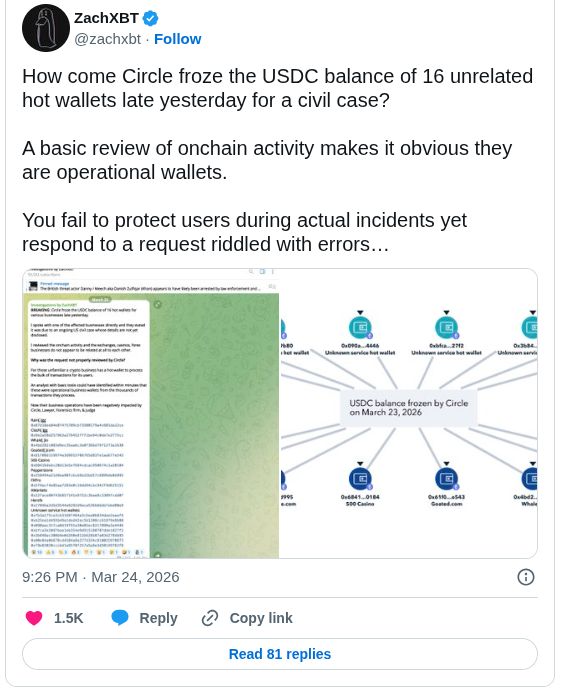
Circle Internet Financial has frozen the USDC balances of 16 independent business hot wallets in connection with a U.S. civil legal matter. The action, which took place late Monday, has reportedly disrupted the operations of several cryptocurrency exchanges, casinos, and foreign exchange platforms. On-chain data indicates that the affected wallets were actively processing high transaction volumes prior to the freeze.
Disruption of Operational Business Wallets
Investigation into the on-chain activity confirms these addresses were primary operational hubs for the affected businesses rather than static storage accounts. Despite their active status, the wallets which appear to have no direct connection to one another were blacklisted simultaneously. This broad enforcement action has sparked concerns regarding the stability of business operations reliant on centralized stablecoins for liquidity and daily user transactions.
Criticism of Circle’s Compliance Procedures
Blockchain investigator ZachXBT who first identified the incident questioned the validity of the freeze, suggesting the legal request served to Circle Internet Financial was “riddled with errors.” In a statement on X, he contrasted this rapid response to a civil case with Circle’s perceived failure to protect users during verified security exploits. He emphasized that any standard forensic analysis could have identified these as legitimate business wallets within minutes, raising questions about the due diligence performed by Circle’s legal and risk teams. His track record in uncovering major crypto-related incidents, including the Axiom Exchange expose that resolved $40M in Polymarket bets, further adds weight to his criticism.
While the wallet freeze has caused localized operational issues, it coincides with a broader 20% decline in Circle’s (CRCL) equity value driven by regulatory developments. Markets reacted sharply to a leaked draft of the CLARITY Act, which proposes strict bans on stablecoin yield and reward programs. Additionally, news of Tether engaging a “Big Four” accounting firm for a full audit has increased competitive pressure on Circle. These factors combined have reignited industry debate over the “gatekeeping” power of centralized issuers and the long-term viability of current stablecoin business models.