
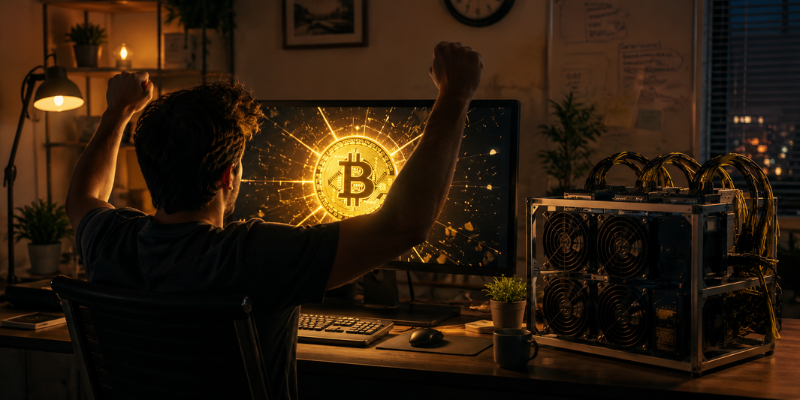


A solo Bitcoin miner successfully mined Bitcoin Block 951771 on May 30, 2026, earning the full block reward of 3.1404 BTC, valued at approximately $232,000 at current prices.
The miner used a small home-based mining setup connected through the Braiins Solo pool. The configuration included 12 Canaan Avalon Nano 3S units and two Avalon Mini 3 devices, generating a combined hashrate estimated between 147 TH/s and 157 TH/s.
One of the Avalon Nano 3S units operated at around 6.68 TH/s while consuming only 140 watts of power, highlighting the efficiency of compact, low-power mining hardware designed for hobbyist users.
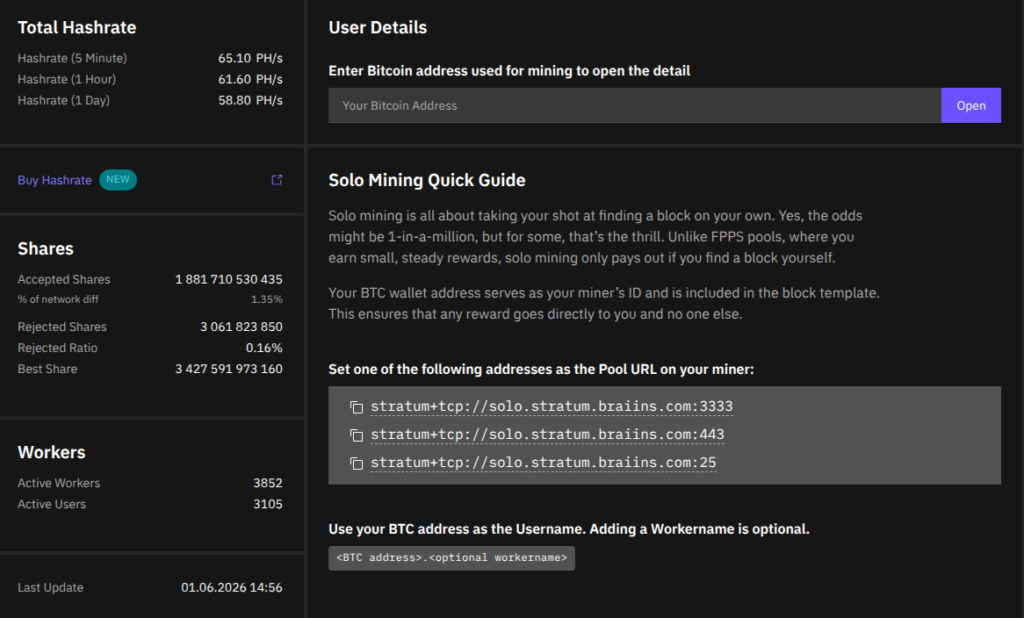
Block 951771 Details
The block contained 2,312 transactions and was mined at approximately 00:27 UTC on May 30, 2026. The total reward included the standard 3.125 BTC block subsidy along with roughly 0.0154 BTC in transaction fees.
The payout was sent to the miner’s coinbase address through Braiins Solo, a popular solo mining pool running on CKPool software. This service allows individuals to mine independently without needing to run their own full Bitcoin node.
Despite the impressive win, the miner’s hashrate represented only a tiny fraction of the overall Bitcoin network, which was operating at roughly 970 EH/s to 1,000 EH/s during that period.
Small-Scale Miner Beats the Odds
Estimates suggest the odds of this specific ~150 TH/s setup mining a block were approximately 1 in 6.7 million. For a single Avalon Nano 3S unit alone, the odds were significantly lower, at around 1 in 149 million per block.
Bitcoin mining in 2026 continues to be heavily dominated by industrial-scale mining farms and large pools. However, solo miners still occasionally secure full block rewards. Industry data shows that solo and small-scale miners collectively find around 20 to 24 Bitcoin blocks per year on average.
The continued success of independent miners highlights how Bitcoin’s decentralized network still allows smaller participants to compete alongside major operations. This principle is also gaining attention among policymakers worldwide, with some governments exploring Bitcoin mining as a potential economic driver.
Recent Solo Mining Wins in 2026
This victory follows other notable solo successes reported earlier this year. In April 2026, a miner operating around 70 TH/s earned approximately 3.128 BTC. In February 2026, another miner who rented 1 PH/s of hashrate for about $75 successfully mined a full block valued near $200,000.
High Risk, Lottery-Like Nature
While these wins generate excitement, solo mining remains a high-risk activity. Most solo miners operate for long periods without any reward while still incurring electricity and hardware costs. The nature of proof-of-work creates lottery-like outcomes where one successful block can deliver massive returns.
Services such as Braiins Solo and CKPool have lowered the technical barriers, enabling more hobbyists to participate without managing complex infrastructure.
Decentralization in Action
This latest win has once again drawn attention to Bitcoin’s permissionless design. Even as large industrial operations control the majority of the network hashrate, small home miners can still compete under the same rules.
Blockchain explorers including Blockstream and Mempool.space have publicly confirmed the details of Block 951771 and the associated mining activity.
The event is expected to boost interest in compact consumer-grade mining hardware among hobbyists, while also serving as a reminder of the extremely low probabilities involved in solo Bitcoin mining.
Disclaimer: Cryip's content is strictly for educational and informational purposes and does not constitute financial, legal, or investment advice. Cryptocurrency involves significant risk, and readers assume full responsibility for their own financial decisions. Asset references are never endorsements.
To make complex crypto topics accessible to readers at all experience levels, our team uses AI tools strictly to refine language, correct grammar, and simplify terminology. AI is never used to draft facts, source information, or form conclusions. Every article is fact-checked and approved by a human editor before publication. Read our full AI Use & Content Policy.