
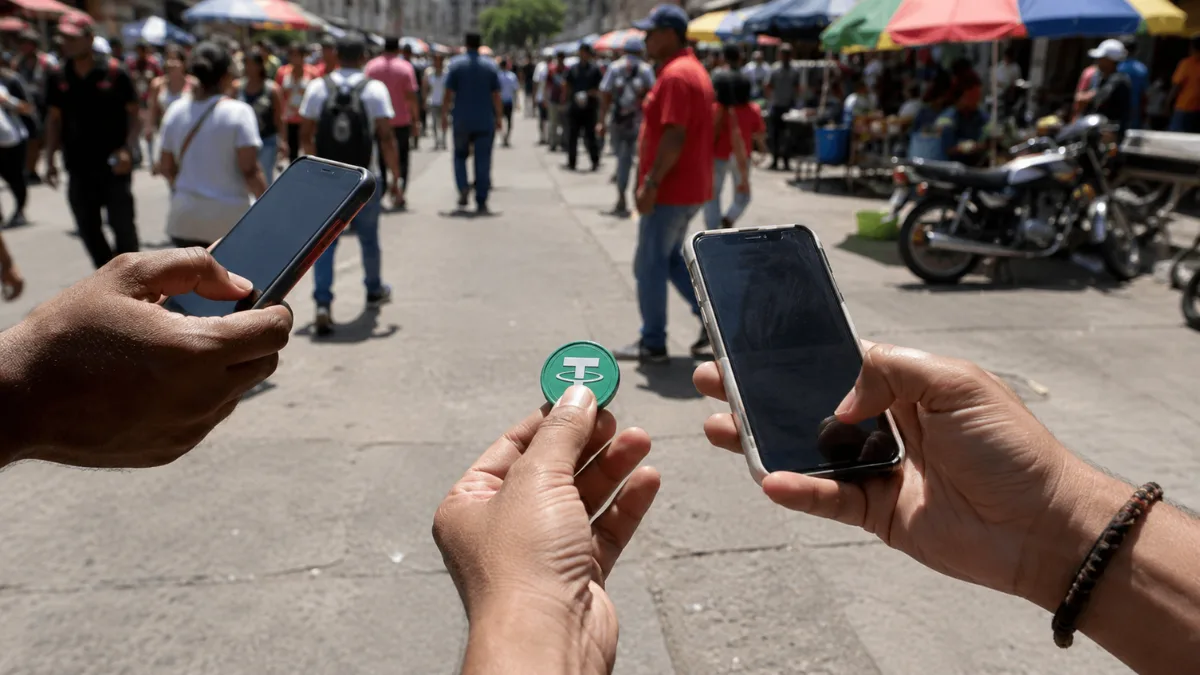


Venezuela’s peer-to-peer (P2P) market for Tether (USDT) recorded approximately 1.39 billion USDT in trading volume over a one-month period, highlighting the increasing role of stablecoins in the country’s economy amid persistent inflation and currency instability.
Around 1.389 billion USDT was traded on Binance P2P between June 11 and July 13, 2026. The report estimated an average daily trading volume of nearly 44 million USDT, reflecting continued demand for dollar-pegged digital assets among Venezuelan individuals and businesses.
USDT Adoption Accelerates Amid Economic Challenges
🇻🇪 En @ecoanalitica desarrollamos una metodología para estimar, por primera vez, el tamaño del mercado P2P de Binance en Venezuela. Y los resultados son sorprendentes.
Entre el 11 de junio y el 13 de julio estimamos que se transaron al menos USDT 1.389 millones, un promedio…
— Alejandro Grisanti (@agrisanti) July 16, 2026
The study noted that the stablecoin trading volume was comparable to a significant share of Venezuela’s monthly oil export revenue, underscoring how digital dollars have become an important part of the country’s financial activity. Analysts said USDT continues to serve as a practical alternative for preserving purchasing power and facilitating transactions in an economy affected by high inflation and limited access to foreign currency.
- Binance P2P processed approximately 1.389 billion USDT in trading volume over one month.
- Average daily USDT trading reached nearly 44 million.
- The trading volume represented a substantial share of Venezuela’s monthly oil export value, highlighting growing stablecoin adoption.
The report also found that USDT traded at approximately 840 Venezuelan bolivars, representing a premium over the country’s official exchange rate. The price difference reflects sustained demand for digital dollar exposure as residents seek protection from the depreciation of the local currency.
Stablecoins Gain a Larger Role in Venezuela’s Financial System
Stablecoins have increasingly become part of everyday financial activity in Venezuela, enabling users to transfer value, receive remittances, and settle payments outside the traditional banking system. Binance’s peer-to-peer marketplace remains one of the country’s most active platforms for converting between bolivars and USDT.
Ecoanalitica further estimated that the P2P trading volume accounted for a significant portion of the foreign currency supplied by Venezuela’s central bank during June. While the comparison with oil exports illustrates the scale of digital asset activity, analysts noted that the figures represent trading volume rather than direct economic output.
The latest data highlights the expanding role of stablecoins in emerging markets where economic volatility and currency depreciation continue to drive demand for digital alternatives. As adoption grows, Venezuela remains one of the most closely watched examples of how dollar-backed stablecoins are being integrated into everyday financial transactions.
Tether has continued expanding its investment strategy beyond stablecoins in recent months. In June 2026, the company joined a funding round of up to $1.4 billion for NEURA Robotics, supporting the development of AI-powered humanoid robotics.
In July 2026, Tether also led a $7 million funding round for Pact Labs, aiming to integrate the USAT stablecoin into U.S. payroll infrastructure and broaden real-world payment applications.
These investments reflect Tether’s broader push into artificial intelligence, financial technology, and digital payment infrastructure while expanding the utility of its stablecoin ecosystem beyond cryptocurrency trading. The latest developments come as USDT continues to see growing adoption in emerging markets such as Venezuela, where stablecoins are increasingly used for payments, savings, and cross-border transactions amid ongoing economic uncertainty.
Disclaimer: Cryip's content is strictly for educational and informational purposes and does not constitute financial, legal, or investment advice. Cryptocurrency involves significant risk, and readers assume full responsibility for their own financial decisions. Asset references are never endorsements.
To make complex crypto topics accessible to readers at all experience levels, our team uses AI tools strictly to refine language, correct grammar, and simplify terminology. AI is never used to draft facts, source information, or form conclusions. Every article is fact-checked and approved by a human editor before publication. Read our full AI Use & Content Policy.