

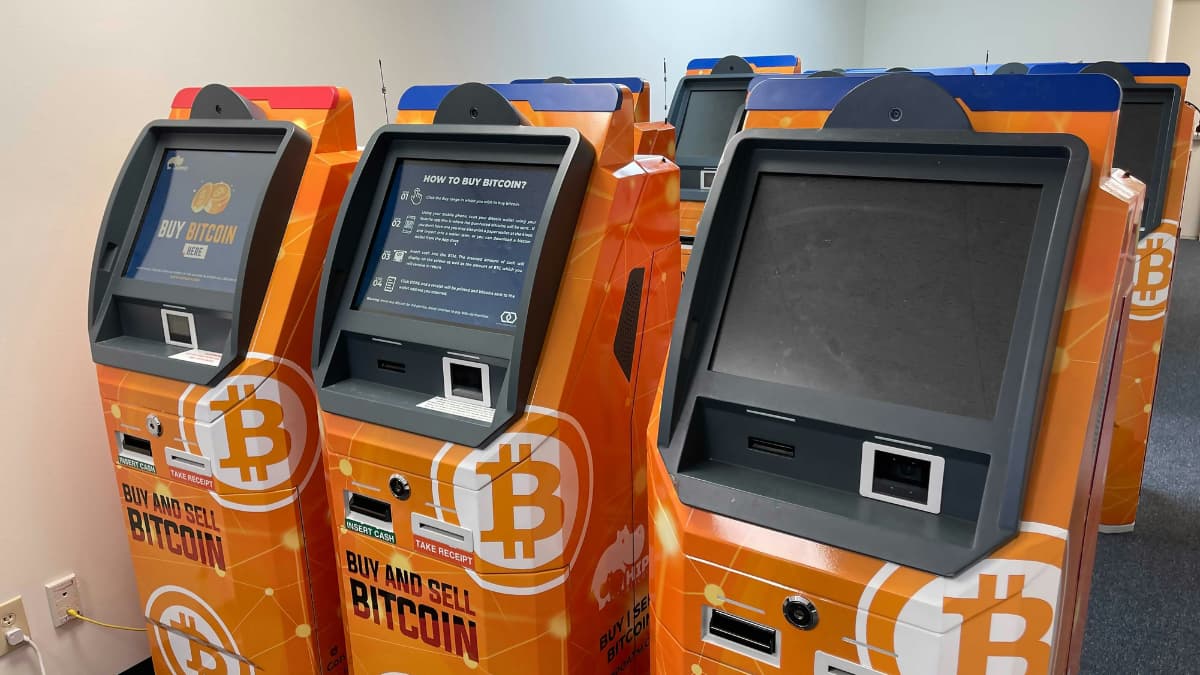


Kraken has sent at least $1.1 billion in bitcoin to cryptocurrency ATM operators, including $17 million to Athena Bitcoin after Washington D.C. regulators had already flagged the company for scam-linked transactions, according to an investigation by the International Consortium of Investigative Journalists.
Gemini supplied more than $500 million in bitcoin to Bitcoin Depot between May 2020 and March 2025. Cumberland DRW sent CoinFlip over $1 billion, with individual transfers as large as $5 million, and kept funding Bitcoin Depot through March 30, 2026.
- Kraken → ATM operators: At least $1.1 billion in Bitcoin.
- Kraken → Athena Bitcoin: $17 million in Bitcoin.
- Gemini → Bitcoin Depot: More than $500 million between May 2020 and March 2025.
- Cumberland DRW → CoinFlip: More than $1 billion, with individual transfers as large as $5 million.
- Cumberland DRW → Bitcoin Depot: Funding continued through March 30, 2026.
- Key takeaway: The liquidity reaches ATM operators and their kiosks, while Hawaii’s ban targets the physical kiosk rather than the upstream suppliers.
Hawaii’s own relationship with crypto looked very different two years ago. The state ran a Digital Currency Innovation Lab, a regulatory sandbox that let digital currency companies operate without a standard money-transmitter license while officials studied the industry.
In February 2024, the legislature moved to permanently exempt cryptocurrency activity from the state’s Money Transmitters Modernization Act, according to an analysis by law firm Greenberg Traurig.
The lab has since concluded, per the Department of Commerce and Consumer Affairs.
- Earlier period: Hawaii operates the Digital Currency Innovation Lab, allowing digital currency companies to operate under a regulatory sandbox while officials studied the industry.
- February 2024: The legislature moves to exempt cryptocurrency activity from the state’s Money Transmitters Modernization Act.
- July 9, 2026: Governor Josh Green signs Act 224, prohibiting kiosks that accept U.S. currency in exchange for digital assets.
- October 1, 2026: The Act 224 kiosk prohibition takes effect.
What replaced that posture is Act 224, signed by Governor Josh Green on July 9, 2026, which bans anyone from owning, operating, or managing a kiosk that accepts U.S. currency in exchange for digital assets, starting October 1. The governor’s transmittal message and bill text lay out the prohibition in full.
The law’s reach stops there. Withdrawing crypto for cash still works. Machines that trade one digital asset for another still work. And nothing in Act 224 touches the exchanges supplying the bitcoin that kiosk operators dispense, because those exchanges don’t operate inside Hawaii’s kiosks at all. They wire liquidity to operators who run machines in dozens of states at once.
Crypto ATM Bans Spread as Fraud Concerns Rise
Delaware and New Jersey lawmakers are also moving to restrict or ban cryptocurrency ATMs, citing rising scam losses, consumer fraud, and risks to seniors.
Canada has proposed a similar ban as part of its 2026 economic strategy, pointing to fraud, money laundering, and misuse of cash-to-crypto transactions. The moves highlight a broader push to limit crypto ATM access as regulators confront growing consumer-protection concerns.
The Money Kept Moving
That liquidity kept flowing well after regulators had reason to question where it was going. Washington D.C.’s attorney general found that 93% of Athena Bitcoin’s transactions in the district involved scams. Iowa’s attorney general found more than half of Bitcoin Depot’s transactions between October 2021 and July 2024 involved scams.
Cumberland DRW and Gemini continued supplying Bitcoin Depot through those findings, Gemini until March 2025 and Cumberland DRW until this March. Bitcoin Depot filed for bankruptcy in May 2026, after Connecticut suspended its banking license and Massachusetts sued the company, alleging most of its revenue came from scams.
CoinFlip is fighting a similar fight, sued by Iowa’s attorney general and facing a Missouri demand for restitution to senior victims, which the company has called meritless. None of this establishes that Kraken, Gemini, or Cumberland DRW knew which specific transactions were fraudulent. Kraken has said its ATM-operator relationships go through “rigorous onboarding, ongoing due diligence, and enhanced monitoring.”
One State’s Ban, Everyone Else’s Supply Chain
Tennessee, Minnesota, and Indiana have passed their own bans on the machines. The United Kingdom has granted no licenses to crypto ATM operators, which amounts to a prohibition without calling it one. Canada has proposed a ban of its own.
None of these measures reach the exchanges wiring bitcoin to the operators that run the machines, because that liquidity crosses the same state and national lines that each ban stops at. A kiosk taken offline in Honolulu is a business decision for whichever operator owned it. It is not an interruption in the pipeline that supplied it, and that pipeline will keep looking for the next zip code where a machine is still legal to run.
Disclaimer: Cryip's content is strictly for educational and informational purposes and does not constitute financial, legal, or investment advice. Cryptocurrency involves significant risk, and readers assume full responsibility for their own financial decisions. Asset references are never endorsements.
To make complex crypto topics accessible to readers at all experience levels, our team uses AI tools strictly to refine language, correct grammar, and simplify terminology. AI is never used to draft facts, source information, or form conclusions. Every article is fact-checked and approved by a human editor before publication. Read our full AI Use & Content Policy.