




- ZEC has reclaimed $800 and is up more than 20% in a day, and extending a rally that has taken the token nearly 5,000% off its July 2024 low of $15.97, per CoinMarketCap.
- Grayscale set Aug. 25, 2026 as its anticipated date to list Zcash ETF shares on NYSE Arca under the ticker ZCSH, according to a Form 8-K filed Aug. 21.
- A separate filing three days earlier disclosed that DCG International Investments, a subsidiary of Grayscale’s parent company, Digital Currency Group, is in non-binding talks to contribute about 200,000 ZEC to the same trust.
Zcash is having one of its sharpest weeks of the year. ZEC has reclaimed the $800 level, up more than 20% in a day, extending a rally that has now carried the token nearly 5,000% above its July 2024 low of $15.97.
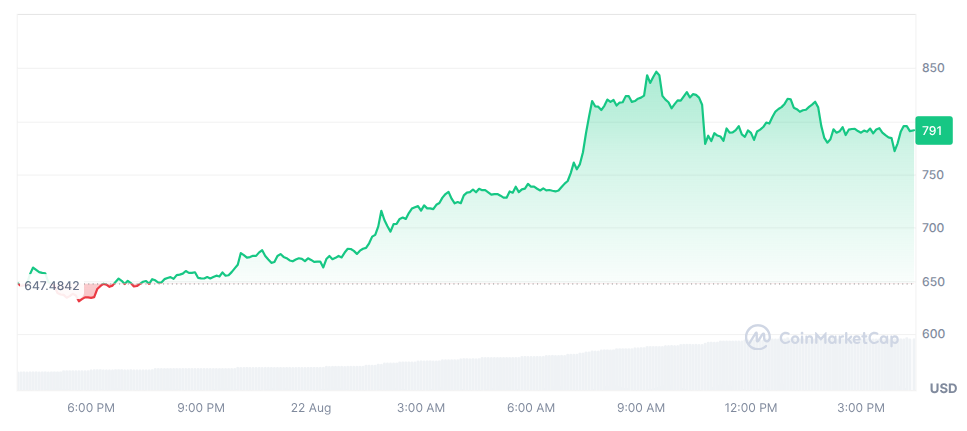
Two forces are feeding that move at once: a token-specific privacy narrative that has been building since last year, and a fast-moving Grayscale filing process that is now just days from an actual stock exchange listing.
The price side: a privacy-coin rally that predates this month’s filings
In January, the SEC closed a multiyear investigation into the Zcash Foundation without taking enforcement action, and ZEC hit a six-month high on the news. In late July, Zcash activated its “Ironwood” network upgrade, retiring a shielded pool that had been exposed by an “Orchard” cryptographic bug capable of letting someone mint counterfeit ZEC undetected.
And last October, investor Naval Ravikant argued that “Bitcoin is insurance against fiat. ZCash is insurance against Bitcoin,” a line that helped pull ZEC back into the broader privacy-coin conversation.
Ravikant is also reported to have been an early investor in Zcash’s founding development company in 2015 and to have served on the Zcash Foundation’s board, a stake he did not mention when making the case for the token.
The Grayscale side: two filings, three days apart, doing different things
Grayscale told the SEC on Aug. 21 that it intends to rename its Zcash Trust “The Zcash ETF” and list it on NYSE Arca under the symbol ZCSH on or around Aug. 25. Most coverage has treated that announcement as part of one continuous “fourth amendment” story, but it is a separate document from what came three days earlier.
On Aug. 18, Grayscale filed an amendment to the trust’s registration statement disclosing that it is in talks with DCG International Investments, a wholly owned subsidiary of Digital Currency Group, to have that DCG unit contribute roughly 200,000 ZEC to the trust in exchange for shares.
Digital Currency Group is also Grayscale’s parent company, and at current prices, 200,000 ZEC is worth roughly $155 million to $160 million. Grayscale’s filing is explicit that the arrangement is not settled: the discussions are not binding, and the DCG unit “could ultimately contribute more, fewer, or no ZEC.”
Still, the structure is worth naming plainly. The sponsor converting this trust into an ETF and the company proposing to help fill it with coins trace back to the same corporate parent, and if the contribution goes through, it happens at whatever ZEC is trading for when the deal closes.
Grayscale has run this same trust-to-ETF conversion process before. Its Dogecoin and XRP trusts have already converted and now trade as NYSE-listed ETFs, and similar filings are moving forward for its Litecoin, Bitcoin Cash, Hedera, and Chainlink trusts. The Zcash conversion fits that broader pattern rather than standing apart from it.
The DCG contribution is non-binding and could still fall through entirely. The Aug. 25 listing date is Grayscale’s own anticipated timeline, and the company’s filing says as much: “No assurance can be given that the Shares of the Trust will list and trade on the Sponsor’s anticipated timeline, or at all.” Both the listing and the contribution still require the SEC’s registration statement to become effective.
Disclaimer: Cryip's content is strictly for educational and informational purposes and does not constitute financial, legal, or investment advice. Cryptocurrency involves significant risk, and readers assume full responsibility for their own financial decisions. Asset references are never endorsements.
To make complex crypto topics accessible to readers at all experience levels, our team uses AI tools strictly to refine language, correct grammar, and simplify terminology. AI is never used to draft facts, source information, or form conclusions. Every article is fact-checked and approved by a human editor before publication. Read our full AI Use & Content Policy.