
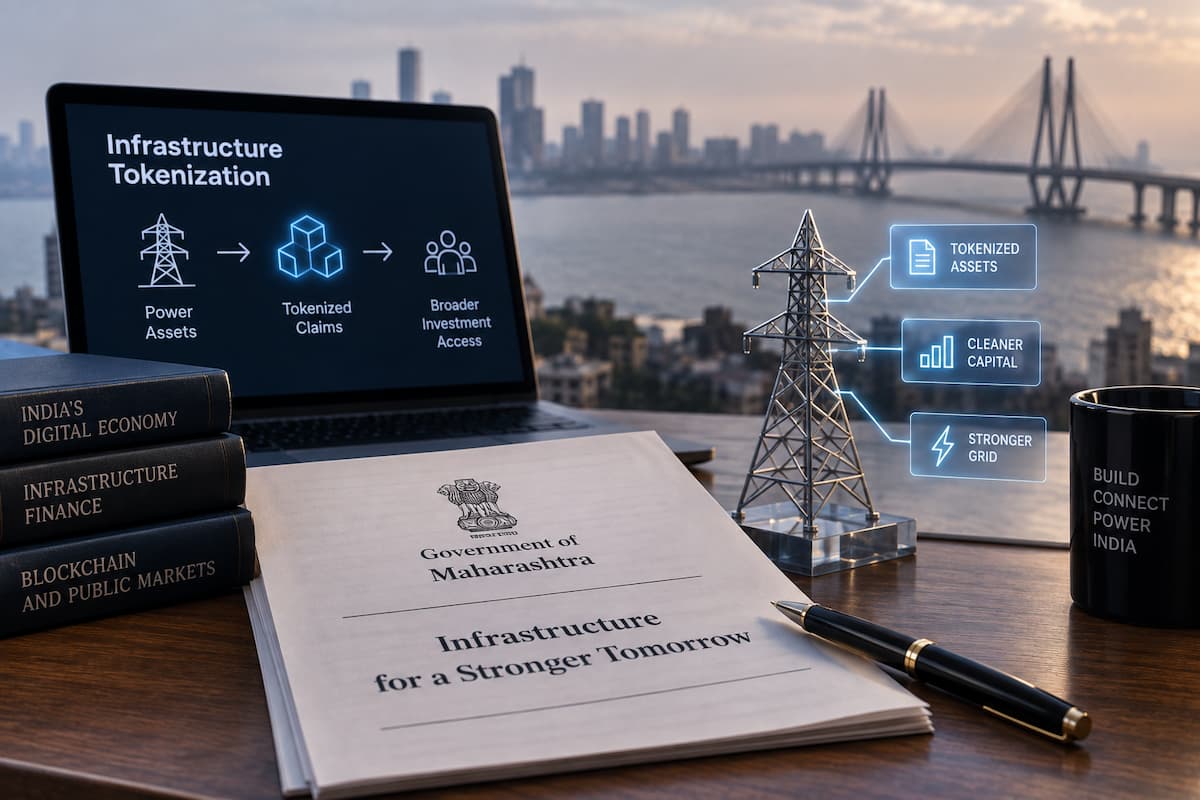


- Maharashtra, India’s largest state economy, is reported to be exploring tokenized claims on power transmission infrastructure.
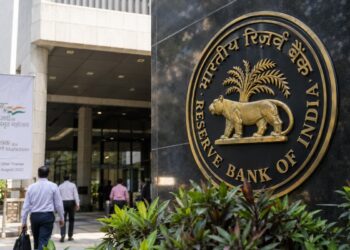
- The move would follow India’s broader push into tokenized settlement, already underway in the corporate bond market via the digital rupee.
- No formal state notification confirming the plan has been published on Maharashtra’s official government channels as of this writing.
Maharashtra, India’s largest state economy by output, is reported to be exploring tokenized claims on its power transmission infrastructure as a way to fund new construction, an idea that would extend the tokenized-settlement logic already underway in India’s corporate bond market down to physical infrastructure assets. As of this writing, no formal notification detailing the plan has been published through Maharashtra’s official state government portal, so what follows should be read as an early-stage exploration rather than a confirmed program.
What Tokenizing a Power Grid Actually Means
Power transmission infrastructure, the lines and substations that move electricity from generation to distribution, is a capital-intensive asset class with a highly predictable revenue stream: tariffs paid by whoever draws power off the grid. That predictability is exactly what makes it a candidate for tokenization, since a token representing a fractional claim on that tariff revenue is a comparatively simple financial instrument to design, closer to an infrastructure bond than to the more novel forms of tokenized equity regulators elsewhere are still working through. The pitch, in principle, is opening infrastructure investment to a much broader base of investors who could not otherwise buy into a project-financing deal reserved for institutional lenders.
The harder part is not the token design but the legal wrapper underneath it, the same register problem that shows up in every tokenized-asset story: a token is only as good as the enforceable claim it represents. For power infrastructure specifically, that claim would need to survive interactions with existing state electricity regulation, tariff-setting authorities, and whatever legal entity actually holds title to the physical assets, a more layered structure than a corporate bond tokenization has to navigate.
Why This Is Still an Early Signal, Not a Launch
India’s own central bank digital currency framework and the securities regulator’s own tokenized bond settlement pilot give a state government a working template to point to, which is likely why Maharashtra is being discussed as a candidate for the next asset class rather than starting from zero. But a state exploring an idea and a state government formally notifying a funding structure are very different stages, and infrastructure financing of this scale typically involves multiple regulatory approvals before any token is actually issued. The detail worth watching is whether Maharashtra’s government publishes anything through its own official channels, rather than through characterizations of the plan appearing elsewhere first.
Disclaimer: Cryip's content is strictly for educational and informational purposes and does not constitute financial, legal, or investment advice. Cryptocurrency involves significant risk, and readers assume full responsibility for their own financial decisions. Asset references are never endorsements.
To make complex crypto topics accessible to readers at all experience levels, our team uses AI tools strictly to refine language, correct grammar, and simplify terminology. AI is never used to draft facts, source information, or form conclusions. Every article is fact-checked and approved by a human editor before publication. Read our full AI Use & Content Policy.