



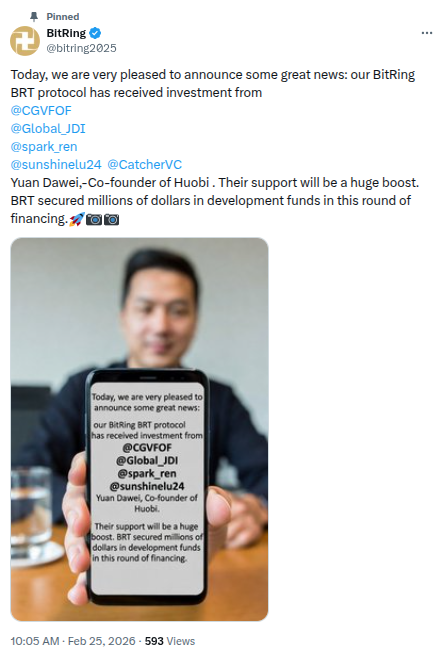
BitRing, the developer of a blockchain-based smart ring and BRT protocol, announced on February 25, 2026, that it secured multi-million development funding for the BRT protocol from investors and backers including CGV FoF, JDI Global, Catcher VC, Yuan Dawei (described as a Huobi co-founder), and Sunny Lu (VeChain founder).
Company Overview
BitRing produces a smart ring hardware device that monitors health metrics such as heart rate, blood oxygen, HRV, exercise, stress, body temperature, and non-invasive blood sugar risk assessment, alongside sleep and activity tracking. The BRT protocol integrates AI and blockchain to encourage daily exercise habits, positioning the project in the DePIN (decentralized physical infrastructure network) and health wearable sector on the BNB Chain. The company’s website describes selling the ring at cost price, with $10 profit per unit, and emphasizes community mining and cryptocurrency rewards tied to health data collection.
Investor Details
The round includes participation from CGV FOF, Global JDI (JDI Global), Spark Ren, Sunshine Lu24 (likely Sunny Lu), and Catcher VC as participants, alongside Yuan Dawei, co-founder of the Huobi exchange. These backers include crypto-focused funds and individuals with ties to established projects like VeChain and Huobi, though their specific focus areas or prior relevant investments in health DePIN are not detailed in the post.
Use of Funds
Company materials state the funds will support BRT protocol development, with the team expressing interest in partnerships with health device firms like Oura and Whoop to expand user adoption and exercise promotion. The hardware remains available for pre-order at $459 for the gold-threaded version, shipping in June 2026, suggesting ongoing product iteration alongside protocol work.
Market Context
BitRing operates in the growing intersection of wearables, DePIN, and AI-driven health incentives on BNB Chain, where projects mine tokens through data contribution and staking. The BRT token has a total supply of 1 billion, with 70% allocated to community mining staking and 30% to an insurance fund for reinsurance payouts based on on-chain records. Comparable raises in early 2026 include seed and pre-seed rounds in the 1.5M to 4M range, with deals such as Rhythmic Raises $4 Million in the DePIN and AI health segment illustrating continued investor interest despite a selective broader crypto funding environment.
Recent DePIN projects emphasize hardware-subsidized user acquisition to bootstrap networks, much like BitRing’s cost-price sales strategy. Broader capital flows favor protocols with real-world data utility, though health-focused ones face regulatory scrutiny on data privacy and medical claims.
Conclusion
BitRing plans to advance its BRT protocol with the new capital, focusing on development and potential ecosystem integrations. Future progress will hinge on hardware delivery, token utility execution, and verifiable user growth metrics.
Disclaimer: Cryip's content is strictly for educational and informational purposes and does not constitute financial, legal, or investment advice. Cryptocurrency involves significant risk, and readers assume full responsibility for their own financial decisions. Asset references are never endorsements.
To make complex crypto topics accessible to readers at all experience levels, our team uses AI tools strictly to refine language, correct grammar, and simplify terminology. AI is never used to draft facts, source information, or form conclusions. Every article is fact-checked and approved by a human editor before publication. Read our full AI Use & Content Policy.