
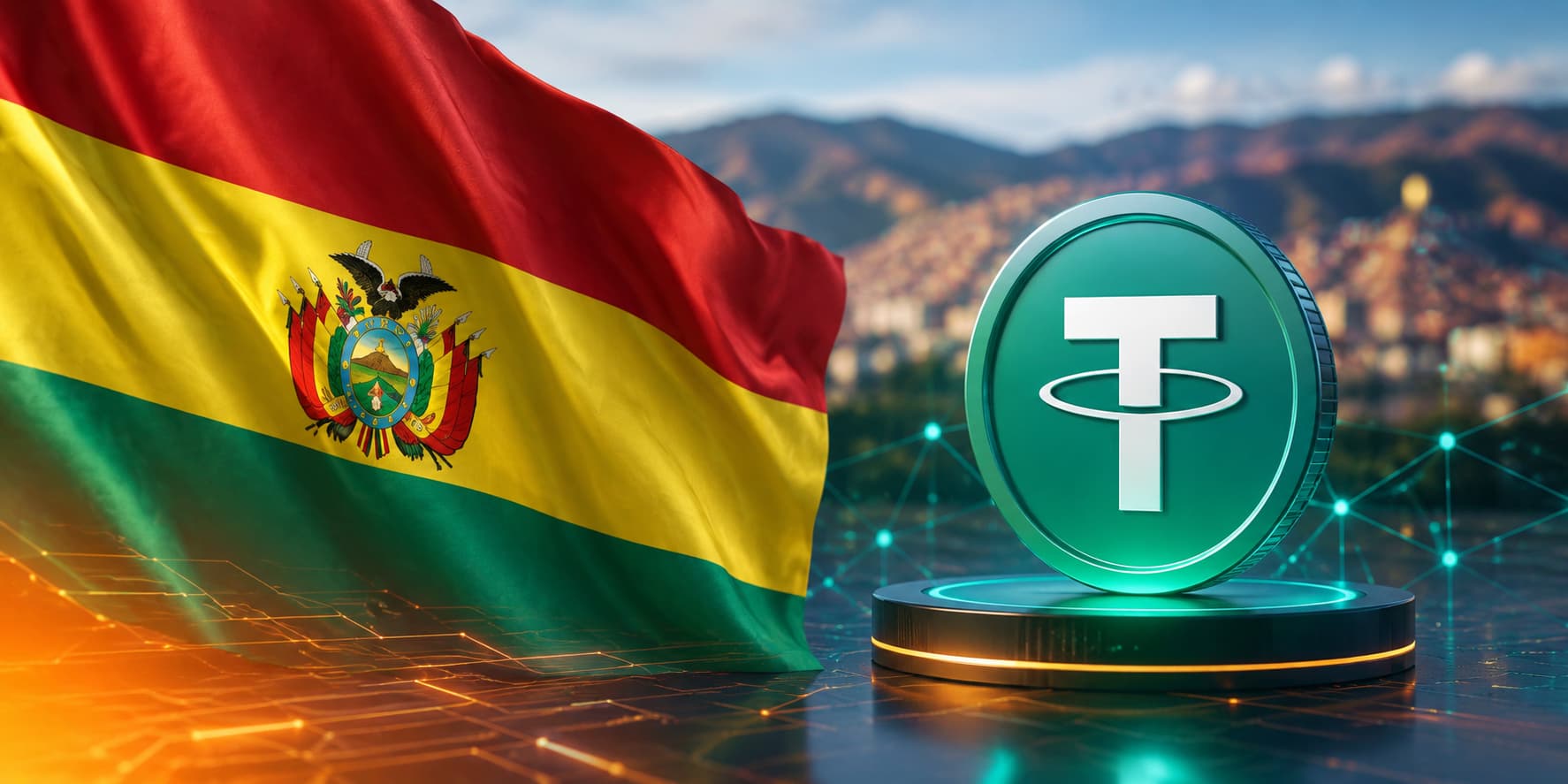


Bolivia is evaluating whether Tether’s USDT can become part of its national payment system, a move that would formally recognize the dollar-backed stablecoin for payments alongside the Bolivian boliviano and the U.S. dollar. The proposal, confirmed by Economy and Public Finance Minister José Gabriel Espinoza, remains under technical review and has not yet been approved.
The announcement comes as stablecoin usage has increased across Bolivia following a prolonged shortage of U.S. dollars. Businesses, importers and individuals have increasingly relied on USDT for cross-border transactions and preserving access to dollar-denominated value, prompting the government to examine whether the asset should be brought under a regulated financial framework instead of remaining largely outside the formal payment system.
Espinoza said Bolivia currently permits the use of digital assets after lifting its previous restrictions in 2024, but the country still lacks comprehensive regulations governing stablecoins. According to the minister, the government’s objective is to determine whether USDT can circulate as a recognized payment instrument while operating under clear legal and financial supervision. The review also comes as global compliance measures, including cases where Tether freezes USDT linked to sanctioned wallets, continue to shape stablecoin regulation.
Government review focuses on regulation
Authorities say the proposal is still at the evaluation stage, with regulators examining both the operational and legal implications before introducing any policy changes.
The government’s review includes:
- Whether USDT can be integrated into Bolivia’s national payment infrastructure.
- How regulated financial institutions would process stablecoin transactions.
- The legal treatment of USDT alongside the boliviano and the U.S. dollar.
- Oversight mechanisms for consumer protection and financial transparency.
Officials have not announced a timeline for completing the assessment.
FATF compliance remains a key challenge
One of the biggest issues under review is regulatory compliance. Bolivia remains on the Financial Action Task Force (FATF) grey list, meaning authorities face increased scrutiny over anti-money laundering (AML) and counter-terrorism financing controls. Government officials said any framework allowing USDT to circulate within the financial system would need to comply with international standards before implementation.
The minister noted that regulatory safeguards would be essential to prevent digital assets from being used for illicit financial activity while allowing legitimate commercial transactions.
Banks have already expanded USDT services
The government’s review follows growing adoption of stablecoin-related services by domestic financial institutions.
Recent developments include:
- Banco Unión integrated USDT into its Yasta digital wallet.
- Banco FIE launched crypto account services that allow customers to buy and sell USDT through its mobile application.
- Bolivian banks have gradually expanded regulated digital asset services following the country’s policy changes.
- USDT has become increasingly common in commercial transactions where access to U.S. dollars has been limited.
These developments indicate that financial institutions have already begun building infrastructure capable of supporting USDT cross-border payment services if new regulations are introduced.
Why the proposal matters
If Bolivia proceeds with the plan, it would represent one of the country’s largest digital asset policy developments since cryptocurrency restrictions were lifted in 2024.
Key points:
- The proposal does not make USDT legal tender.
- It remains a technical evaluation, not a final government decision.
- Any implementation would require new regulations and compliance standards.
- The initiative reflects growing demand for digital dollar-based payments amid Bolivia’s foreign currency shortage.
For now, the government’s priority is determining whether stablecoins can be integrated into the country’s financial system without weakening regulatory oversight. As global stablecoin adoption expands through initiatives such as USDT on Bitcoin and other blockchain networks, the outcome of Bolivia’s review could shape the country’s next phase of digital asset regulation and influence how other emerging economies approach stablecoins in domestic payment networks.
Disclaimer: Cryip's content is strictly for educational and informational purposes and does not constitute financial, legal, or investment advice. Cryptocurrency involves significant risk, and readers assume full responsibility for their own financial decisions. Asset references are never endorsements.
To make complex crypto topics accessible to readers at all experience levels, our team uses AI tools strictly to refine language, correct grammar, and simplify terminology. AI is never used to draft facts, source information, or form conclusions. Every article is fact-checked and approved by a human editor before publication. Read our full AI Use & Content Policy.