



A Florida man who lost $450,000 in a crypto romance scam didn’t report the crime because he assumed the money was gone for good. In a twist straight out of a “Florida Man” headline, authorities later tracked the stolen funds and showed up at his doorstep to return a portion of it. The victim had been convinced by an online romantic interest to invest in crypto, only realizing too late it was a scam. Law enforcement’s unexpected recovery effort turned what seemed like a total loss into a rare win in the fight against crypto fraud.
According to an official announcement from the Florida Attorney General’s Office, the victim was targeted through a romance-turned-investment scheme in which scammers built trust over time before convincing him to transfer funds into fraudulent crypto investments. Investigators noted that the victim initially believed the funds were permanently lost and did not even report the crime.
The case was part of a broader, multi-state investigation led by Florida’s Office of Statewide Prosecution and its Cyber Fraud Enforcement Unit (CFEU). Authorities revealed that the scam impacted victims across multiple counties and even extended beyond state lines.
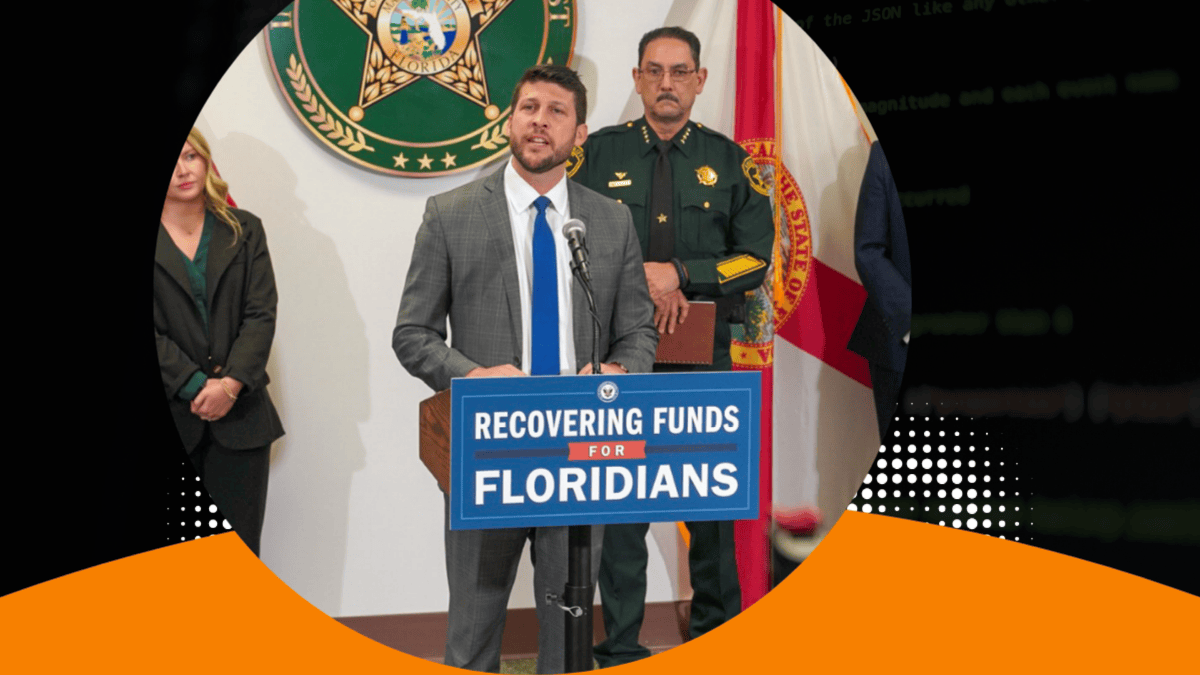
In a rare success story, law enforcement agencies were able to trace blockchain transactions and recover a significant portion of stolen assets. The operation resulted in a record-breaking $5.4 million in cryptocurrency recovered, with funds being returned to victims in Florida and other affected regions.

“In a record-breaking partnership with the Marion County Sheriff’s Office, our Cyber Fraud Enforcement Unit is setting the standard for cryptocurrency recovery. We are committed to tracking down these criminals and returning funds to their rightful owners.”
— Florida Attorney General James Uthmeier
Officials emphasized that crypto romance scams are becoming increasingly prevalent. These scams typically involve fraudsters posing as romantic partners online, gradually building emotional trust before introducing fraudulent investment opportunities. Victims are then encouraged to send funds, frequently in cryptocurrency, due to its perceived anonymity and irreversibility.
Florida Attorney General officials stressed that while recovery cases like this are uncommon, they demonstrate the growing capability of law enforcement to track illicit blockchain transactions. Authorities also warned that many victims, particularly older individuals, are often reluctant to report scams due to embarrassment or the belief that recovery is impossible.
Rising Threat to Crypto Users
The incident underscores a broader trend in the crypto ecosystem: the rise of highly coordinated fraud operations leveraging both emotional manipulation and technical sophistication. Criminal networks often operate internationally, using fake identities, spoofed investment platforms, and laundering techniques to obscure fund flows.
Despite these challenges, investigators note that blockchain transparency can sometimes work in favor of victims, allowing forensic tracing of transactions across wallets and exchanges.
Key Takeaways for Investors
- Avoid unsolicited investment opportunities, especially those introduced through online relationships
- Verify platforms through official regulatory or government sources
- Never send cryptocurrency to individuals you have not met or verified
- Report suspicious activity promptly to law enforcement or federal agencies
As crypto adoption continues to expand globally, cases like this serve as a stark reminder: while blockchain technology enables financial innovation, it also creates new vectors for fraud, particularly when combined with human vulnerability.
Bottom Line
The Florida case illustrates both the risks and the evolving response capabilities in the crypto fraud landscape. While one victim’s $450,000 loss was devastating, the successful recovery operation signals a shift toward more proactive enforcement in the digital asset space.
Source: Official Press Release – Florida Attorney General’s Office (April 14, 2026)
Crypto investors are reminded to verify all investment opportunities, avoid unsolicited romance-based financial advice online, and report suspected scams immediately to authorities and platforms.
Disclaimer: Cryip's content is strictly for educational and informational purposes and does not constitute financial, legal, or investment advice. Cryptocurrency involves significant risk, and readers assume full responsibility for their own financial decisions. Asset references are never endorsements.
To make complex crypto topics accessible to readers at all experience levels, our team uses AI tools strictly to refine language, correct grammar, and simplify terminology. AI is never used to draft facts, source information, or form conclusions. Every article is fact-checked and approved by a human editor before publication. Read our full AI Use & Content Policy.