


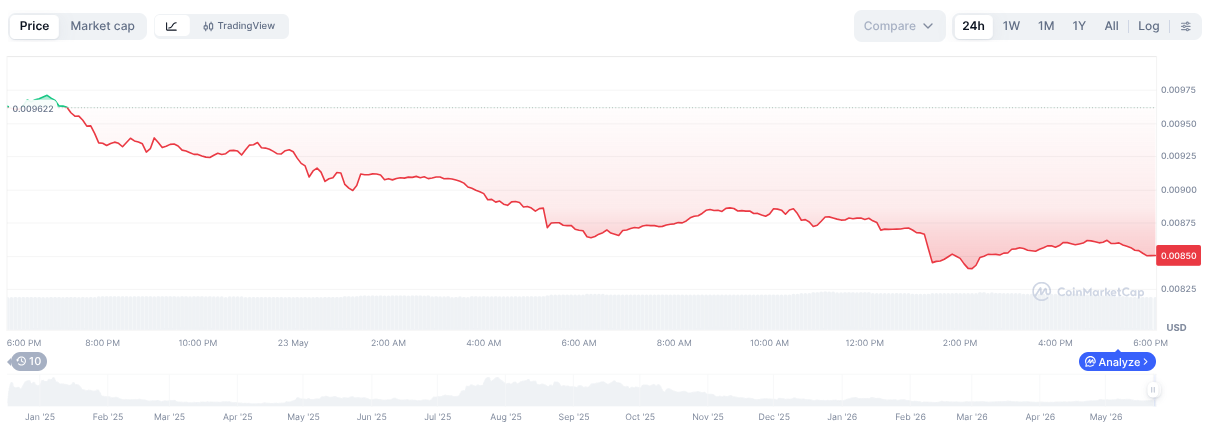
Pudgy Penguins’ native token, PENGU, fell sharply over the past 24 hours, making it one of the steepest decliners among the top-100 cryptocurrencies by market capitalization. The token dropped roughly 14% during the trading session, extending losses across the broader altcoin market as investors reduced exposure to higher-risk digital assets.
The decline comes during a wider market downturn that also affected major cryptocurrencies including Bitcoin and Ethereum. Market data showed Bitcoin losing more than 3% over the same period, while several meme and community-driven tokens posted deeper corrections. Tokens such as Jupiter’s JUP and Chiliz’s CHZ also recorded notable daily losses as altcoins lag behind Bitcoin during the broader market sell-off.
Broader Crypto Sell-Off Pressures High-Beta Tokens
Analysts tracking the move noted that PENGU’s decline appears tied more to broader market sentiment than to project-specific developments. Meme-related tokens and smaller-cap assets often react more aggressively during market corrections because they are considered “high-beta” trades assets that amplify broader market movements.
The total cryptocurrency market capitalization declined by roughly 3% in 24 hours, while investors shifted toward relatively safer positions such as Bitcoin or stablecoins. During the broader downturn, reports that Bitcoin falls to $74K further weakened investor confidence, causing speculative assets like PENGU to experience accelerated selling pressure.
PENGU’s trading volume remained elevated during the decline, suggesting active repositioning rather than thin liquidity conditions. Heavy trading activity during sharp moves can indicate short-term panic selling, leveraged liquidations, or traders rotating capital away from volatile sectors.
Altcoin Weakness Adds to Selling Pressure
The broader altcoin sector also showed signs of weakening risk appetite. Market observers pointed to a drop in the CoinMarketCap Altcoin Season Index, which tracks whether altcoins are outperforming Bitcoin over a set period.
A declining index generally signals traders moving defensively toward larger cryptocurrencies instead of speculative altcoins. That trend appeared to weigh heavily on tokens tied to internet culture, gaming, and NFT ecosystems, including PENGU.
Despite the price decline, no major negative announcement or confirmed operational issue from the Pudgy Penguins ecosystem emerged during the sell-off window. The absence of a project-specific catalyst has led analysts to view the move primarily as part of the broader market correction.
Key Price Levels in Focus
Traders are now watching whether PENGU can maintain support near the $0.0080 level. At the time of writing, the token was trading close to that range, and a sustained move below it could expose PENGU to additional downside pressure in the short term.
On the upside, stabilization in Bitcoin’s price could help ease broader altcoin weakness. Historically, meme and community tokens tend to recover after larger cryptocurrencies regain stability and overall market volatility declines. For now, sentiment across speculative crypto assets remains cautious as traders continue monitoring macroeconomic conditions, Bitcoin price action, and overall liquidity across digital asset markets.
FAQs
1. Why did PENGU price fall today?
PENGU declined mainly because of a broader cryptocurrency market sell-off. High-risk altcoins and meme-related tokens experienced heavier losses as traders reduced exposure to speculative assets.
2. Was there any negative news from Pudgy Penguins?
As of the latest market data, no confirmed project-specific issue or major negative announcement from Pudgy Penguins was linked to the decline.
3. How much did PENGU fall in 24 hours?
PENGU dropped approximately 14% during the 24-hour trading period, making it one of the weakest-performing top-100 crypto assets for the day.
4. What price levels are traders watching next?
Market participants are closely monitoring support around $0.0080. If that level fails, analysts expect additional downside risk in the near term.