



The cryptocurrency industry has transformed the way people invest, trade, and manage their wealth. Millions of investors worldwide now rely on crypto wallets, cryptocurrency exchanges, decentralized finance platforms, and blockchain applications to store and grow their digital assets. As cryptocurrency adoption continues to increase, cybercriminals are also evolving their tactics to target users more effectively.
One of the most alarming trends in recent years is the growing number of scams that exploit trusted applications. Instead of creating completely unknown platforms, scammers are increasingly impersonating popular crypto wallets, exchanges, and investment apps that users already recognize. By leveraging the trust associated with established brands, cybercriminals can convince victims to share sensitive information, install malicious software, or transfer funds without realizing they are being scammed. Fake crypto wallet apps, phishing websites, counterfeit browser extensions, and fraudulent support channels have become some of the most dangerous threats facing cryptocurrency investors today.
Pig butchering scams are particularly dangerous because scammers spend weeks or even months building trust through fake relationships before manipulating victims into making fraudulent cryptocurrency investments. Unlike traditional phishing attacks that rely on urgency, pig butchering scams exploit emotional connections and gradually convince victims to invest larger amounts of money over time.
Understanding why scammers specifically target trusted apps is essential for anyone involved in cryptocurrency investing. The more investors understand these tactics, the better prepared they will be to protect their digital assets from increasingly sophisticated crypto scams.
The Growing Problem of Cryptocurrency Scams
Cryptocurrency scams have become a global issue affecting both new and experienced investors. Unlike traditional financial systems, blockchain transactions are generally irreversible. Once cryptocurrency is sent to a scammer’s wallet address, recovering those funds can be extremely difficult or even impossible. This characteristic makes cryptocurrency particularly attractive to cybercriminals who want to move stolen funds quickly across international borders.
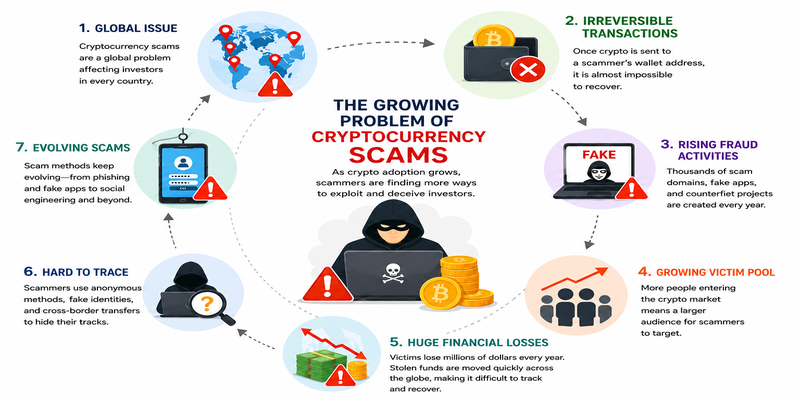
Researchers studying cryptocurrency fraud have identified thousands of scam domains, hundreds of fake applications, and numerous counterfeit cryptocurrency projects operating across the digital asset ecosystem. Academic studies have documented more than 1,500 scam domains and hundreds of fake crypto applications that specifically target cryptocurrency users. These scams have resulted in significant financial losses and continue to evolve as the industry grows.
The increasing popularity of cryptocurrency has created a larger pool of potential victims. As more people enter the crypto market, scammers gain access to a broader audience, making trusted applications an even more attractive target.
Why Trusted Apps Are the Perfect Target for Scammers
Trust is one of the most valuable assets in the digital world. Building trust from scratch is difficult, especially when asking users to store money, share personal information, or connect financial accounts. Instead of creating new brands, scammers find it much easier to exploit the reputation of companies that have already earned user confidence.
When users see a familiar logo, a recognizable application design, or a trusted wallet name, they naturally feel more comfortable interacting with the platform. Criminals understand this psychological behavior and take advantage of it by creating counterfeit versions of legitimate apps. These fake applications often look nearly identical to the original products, making it difficult for users to identify the difference.
The success of these scams is largely based on perception. Victims are not necessarily tricked because the scam is technically advanced. Instead, they are deceived because they believe they are interacting with a trusted service. This makes trusted apps one of the most effective tools for cybercriminals seeking to steal cryptocurrency.
The Psychology Behind Crypto Scam Success
Many people assume that only inexperienced users fall victim to cryptocurrency scams. However, research shows that even highly educated and technologically skilled individuals can be manipulated by sophisticated fraud schemes. Scammers understand how human psychology works and carefully design their attacks to exploit emotions such as trust, urgency, fear, greed, and curiosity.
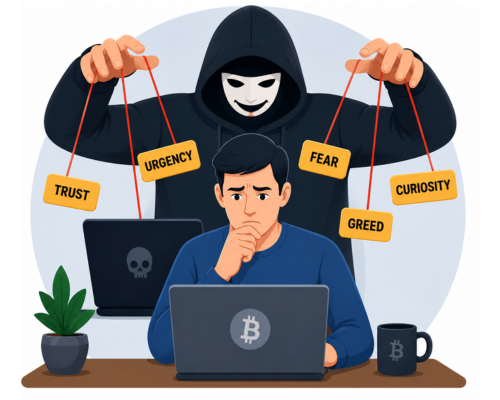
One common tactic is creating a sense of urgency. Users may receive messages claiming that their wallet has been compromised, their account requires immediate verification, or their funds are at risk. Under pressure, victims are more likely to act quickly without thoroughly verifying the legitimacy of the request.
Another powerful psychological trigger is familiarity. When users encounter a platform that resembles a well-known crypto wallet or exchange, their skepticism naturally decreases. The appearance of legitimacy often overrides caution, making it easier for scammers to obtain sensitive information or convince users to install malicious software.
Why Popular Crypto Wallets Are Frequently Impersonated
Not all cryptocurrency applications attract the same level of attention from cybercriminals. Scammers typically focus on the most popular crypto wallets because these platforms already have established trust within the cryptocurrency community. Instead of spending time building credibility for a fake project, criminals can simply imitate a well-known wallet brand and take advantage of the trust that millions of users have already placed in it.
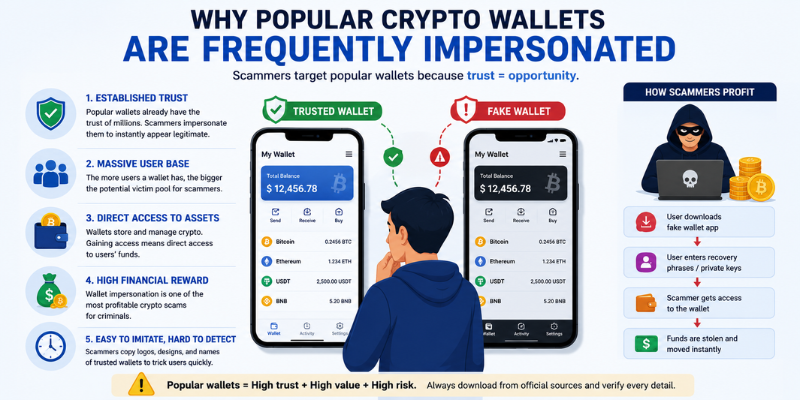
Popular cryptocurrency wallets serve as the primary gateway to digital assets. Since wallets store and manage cryptocurrency holdings, gaining access to a wallet can provide immediate financial rewards for scammers. This makes wallet impersonation one of the most profitable forms of crypto fraud currently operating in the industry.
Massive User Communities
One of the biggest reasons scammers target popular wallets is their enormous user base. Many leading cryptocurrency wallets have millions of users spread across multiple countries and blockchain networks. This creates a massive audience that scammers can target through phishing campaigns, fake advertisements, social media promotions, and counterfeit applications.
The larger the user base, the greater the number of potential victims. Even if only a small percentage of users fall for a scam, criminals can still generate substantial profits due to the sheer scale of these communities. Popular wallets essentially provide cybercriminals with access to a ready-made market of potential targets.
Strong Brand Recognition
Brand recognition plays a major role in the success of cryptocurrency scams. Users tend to trust applications they have heard about before, especially if those platforms are widely discussed within the crypto community. Scammers exploit this trust by copying logos, color schemes, website layouts, and user interfaces from legitimate wallet providers.
Many counterfeit wallet applications are designed so professionally that they appear virtually identical to the real product. In some cases, victims may not realize they are using a fake application until their funds have already been stolen. The trust associated with popular brands significantly reduces the amount of effort scammers need to invest in convincing users that their platform is legitimate.
Frequent Transactions
Active cryptocurrency users regularly send, receive, trade, swap, and stake digital assets. This constant activity creates numerous opportunities for cybercriminals to intercept victims during critical moments. Every wallet connection, token swap, or transaction approval creates a potential attack opportunity.
Scammers often target users while they are attempting to verify transactions, recover accounts, claim rewards, or interact with decentralized applications. Because active investors use their wallets frequently, cybercriminals have multiple opportunities to present convincing phishing pages, fake notifications, or fraudulent support requests.
Dependence on Recovery Phrases
The most valuable piece of information for a scammer is a wallet’s recovery phrase, commonly known as a seed phrase. Most cryptocurrency wallets rely on a 12-word or 24-word recovery phrase that grants complete control over the wallet and its associated assets.
Scammers understand that obtaining a seed phrase eliminates the need for technical hacking. Once a victim voluntarily enters their recovery phrase into a fake app or phishing website, the attacker gains immediate access to the wallet. Numerous fake crypto wallet scams specifically focus on tricking users into revealing their recovery phrases because it remains one of the easiest and most effective methods of cryptocurrency theft.
Common Cryptocurrency Scam Techniques Used on Trusted Apps
Modern crypto scams rarely rely on a single attack method. Instead, cybercriminals combine multiple techniques to increase their chances of success.
Some of the most common cryptocurrency scam methods include:
- Fake crypto wallet apps
- Phishing websites
- Fake customer support representatives
- Browser extension scams
- Investment platform scams
- Social engineering attacks
- Address poisoning attacks
- Fake recovery services
These scams are often distributed through social media platforms, search engine advertisements, messaging applications, and fraudulent websites that appear completely legitimate. Many victims do not realize they have been targeted until after their funds have disappeared.
How to Protect Yourself from Cryptocurrency Scams
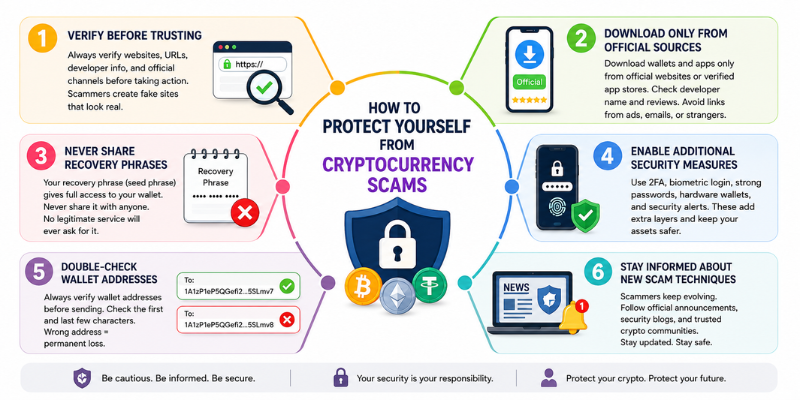
Protecting cryptocurrency assets requires a proactive approach to security. Because blockchain transactions cannot typically be reversed, prevention remains the most effective defense against crypto fraud.
Verify Before Trusting
One of the most important rules in cryptocurrency security is to verify everything before taking action. Just because a website, application, or support representative appears legitimate does not mean it can be trusted. Scammers are increasingly capable of creating convincing copies of legitimate platforms that look nearly identical to the real service.
Before entering login credentials, connecting a wallet, or approving a transaction, users should carefully verify URLs, developer information, official communication channels, and platform authenticity. Taking a few extra minutes to confirm legitimacy can prevent devastating financial losses that may never be recovered.
Download Only from Official Sources
Many cryptocurrency scams begin with the installation of a fake application. Fraudulent wallet apps are often distributed through phishing advertisements, unofficial app stores, malicious download links, and fake websites designed to imitate legitimate providers.
Investors should always download cryptocurrency wallets directly from the official website of the wallet provider or from verified app store listings. Before installing any application, users should verify the developer name, read authentic reviews, and ensure they are downloading the official version rather than a counterfeit copy.
Never Share Recovery Phrases
A recovery phrase is essentially the master key to a cryptocurrency wallet. Anyone who gains access to that phrase can immediately control the wallet and transfer its assets without requiring additional approval from the owner.
Legitimate wallet providers, cryptocurrency exchanges, and customer support teams will never request a user’s seed phrase. Any application, website, email, or support representative asking for recovery words should immediately be considered suspicious. Sharing a seed phrase is equivalent to handing over complete ownership of the wallet and all associated funds.
Enable Additional Security Measures
Although recovery phrase protection remains critical, additional security measures can significantly reduce the risk of account compromise. Features such as multi-factor authentication, biometric authentication, hardware wallets, transaction confirmations, and security alerts create multiple layers of protection.
While these safeguards cannot prevent losses if a user voluntarily reveals their seed phrase, they can effectively block many common attacks involving stolen passwords, unauthorized login attempts, and compromised devices. Multiple security layers force attackers to overcome several barriers rather than relying on a single point of failure.
Double-Check Wallet Addresses
Cryptocurrency transactions rely entirely on wallet addresses. Cybercriminals have developed techniques such as clipboard malware and address poisoning attacks that attempt to replace legitimate wallet addresses with attacker-controlled alternatives.
Before approving any transaction, users should carefully verify the destination address and compare it with the intended recipient. A single incorrect character can result in funds being permanently sent to the wrong wallet. Since cryptocurrency transactions are generally irreversible, address verification should become a routine habit for every investor.
Stay Informed About New Scam Techniques
The cryptocurrency industry evolves rapidly, and scammers constantly develop new methods to exploit users. Techniques that were common a year ago may be replaced by more sophisticated phishing campaigns, fake applications, AI-generated impersonation attacks, and advanced social engineering strategies.
Investors who stay informed about emerging threats are significantly more likely to recognize suspicious activity before becoming victims. Following official wallet announcements, cybersecurity research, and cryptocurrency security communities can provide valuable protection against new scam trends. Continuous education remains one of the strongest defenses against cryptocurrency fraud.
Conclusion
Scammers target trusted apps because trust dramatically increases the likelihood of success. By impersonating popular cryptocurrency wallets, exchanges, and financial platforms, cybercriminals can bypass user skepticism and exploit the confidence that legitimate brands have spent years building.
The rise of fake crypto wallet apps, phishing websites, fraudulent support services, and counterfeit investment platforms demonstrates how sophisticated cryptocurrency scams have become. Modern scams are no longer easy to identify, and many are specifically designed to deceive even experienced investors. As the cryptocurrency ecosystem continues to grow, crypto security and hacks have become major concerns for investors, highlighting the importance of staying vigilant against increasingly advanced cyber threats.
For anyone involved in cryptocurrency investing, the most important lesson is simple: trust should never replace verification. Every application, website, transaction request, and customer support interaction should be carefully verified before any sensitive information is shared. In an industry where transactions are often irreversible, a few minutes of caution can mean the difference between protecting your digital assets and losing them forever.
Disclaimer: Cryip's content is strictly for educational and informational purposes and does not constitute financial, legal, or investment advice. Cryptocurrency involves significant risk, and readers assume full responsibility for their own financial decisions. Asset references are never endorsements.
To make complex crypto topics accessible to readers at all experience levels, our team uses AI tools strictly to refine language, correct grammar, and simplify terminology. AI is never used to draft facts, source information, or form conclusions. Every article is fact-checked and approved by a human editor before publication. Read our full AI Use & Content Policy.