

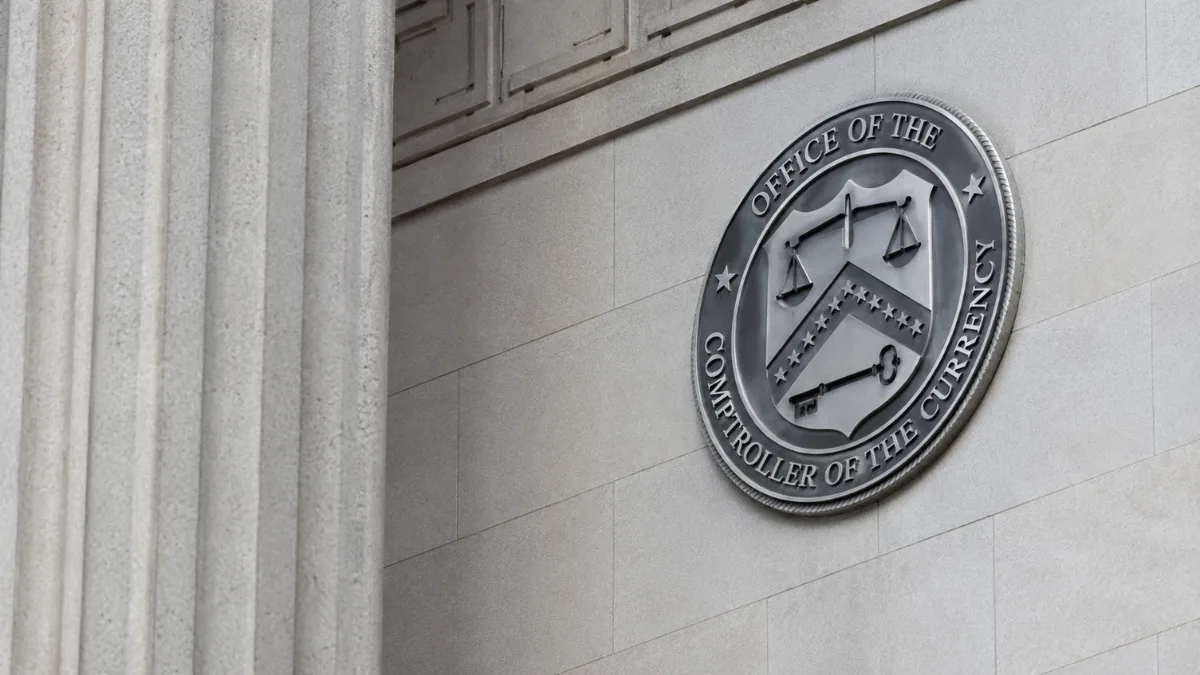


Circle has received final approval from the U.S. Office of the Comptroller of the Currency (OCC) to establish First National Digital Currency Bank, N.A., a federally regulated national trust bank that will operate as Circle National Trust. The approval marks a major regulatory milestone for the USDC issuer as it expands its digital asset infrastructure under federal supervision.
The newly approved trust bank will initially provide institutional-grade digital asset custody services and support Circle’s broader infrastructure strategy. Unlike a traditional commercial bank, Circle National Trust will not accept customer deposits or offer lending products. Instead, it will focus on fiduciary and custody services under the OCC’s oversight.
Circle has received final OCC approval to establish First National Digital Currency Bank, N.A., a national trust bank operating as Circle National Trust.
A major U.S. regulatory milestone that strengthens USDC infrastructure through federally regulated custody, with reserve… pic.twitter.com/GtThvFV5aW
— Circle (@circle) July 10, 2026
Circle Chairman and CEO Jeremy Allaire described the OCC approval as a milestone for the company’s long-term strategy to build regulated digital financial infrastructure.
“Federal oversight of our trust bank sets a new standard for transparency, governance, and scale for Circle’s infrastructure and unlocks a new phase of adoption, where leading financial institutions can build on public blockchains with clarity and confidence.”
Circle added that it plans to eventually transition management of the USDC reserve into the trust bank in a later phase after completing additional operational and regulatory requirements.
Approval Strengthens Circle’s Regulatory Position
The move comes as U.S. regulators and lawmakers continue developing a comprehensive framework for stablecoins. By operating under direct OCC supervision, Circle aims to align its infrastructure with emerging regulatory standards while expanding services for banks, financial institutions, and other enterprise customers.
Industry observers view the approval as a significant step toward integrating digital asset companies with the traditional financial system. National trust banks are authorized to provide custody and fiduciary services but do not engage in retail banking activities such as accepting deposits or issuing consumer loans.
Investors welcomed the announcement, with Circle shares rising in premarket trading following the news. Analysts said the approval could strengthen institutional confidence in USDC by placing key custody operations under federal oversight and providing a clearer regulatory foundation for future expansion.
Circle’s final approval follows a regulatory process that began with its OCC application in June 2025 and a conditional approval granted later that year. The company has steadily expanded its regulatory footprint over the past decade, becoming the first firm to receive a New York BitLicense in 2015 and the first global stablecoin issuer to comply with the European Union’s Markets in Crypto-Assets (MiCA) framework in 2024. Circle also holds regulatory licenses in the United Kingdom, Singapore, Bermuda, and Abu Dhabi while meeting Canada’s Value-Referenced Crypto Asset requirements.
The launch of Circle National Trust further positions the company to serve institutional participants seeking regulated digital asset custody while supporting the long-term growth of USDC within the evolving U.S. financial system.
Circle’s final OCC approval follows a series of moves by major digital asset firms seeking federal oversight in the United States. Yesterday, Sony secured conditional OCC approval to establish a stablecoin-focused national trust bank, while Coinbase received OCC approval for its crypto custody business in April 2026. Together, these developments highlight the increasing role of the OCC in regulating digital asset infrastructure and expanding institutional participation in the U.S. crypto market.
Circle Internet Group shares closed at $63.01, down 1.65% (-$1.06) during the regular trading session after fluctuating between roughly $62 and $65. In pre-market trading, the stock rebounded to approximately $70.02, representing an 11.13% gain (+$7.01) from the previous close. The sharp pre-market jump suggests investors reacted positively after the market closed, reversing the losses recorded during the regular session.
Disclaimer: Cryip's content is strictly for educational and informational purposes and does not constitute financial, legal, or investment advice. Cryptocurrency involves significant risk, and readers assume full responsibility for their own financial decisions. Asset references are never endorsements.
To make complex crypto topics accessible to readers at all experience levels, our team uses AI tools strictly to refine language, correct grammar, and simplify terminology. AI is never used to draft facts, source information, or form conclusions. Every article is fact-checked and approved by a human editor before publication. Read our full AI Use & Content Policy.