



- Ethereum remains the dominant chain but showed signs of capital outflow despite strong activity and fees.
- Solana demonstrated stability and strong trading activity, positioning itself as a major competitor.
- BSC led in user activity and transaction throughput, highlighting retail dominance.
- TRON maintained consistent growth with high fee generation despite lower DeFi activity.
- Bitcoin showed gradual expansion into DeFi, signaling ecosystem evolution.
- Base emerged as a strong Layer-2 with increasing adoption and consistent usage.
April 2026 delivered a dynamic month across major blockchain ecosystems, with notable shifts in Total Value Locked (TVL), trading volumes, fees, and user activity. This report breaks down key trends across Ethereum, Solana, BSC, TRON, Bitcoin, and Base, highlighting performance patterns and network behavior.
Ethereum
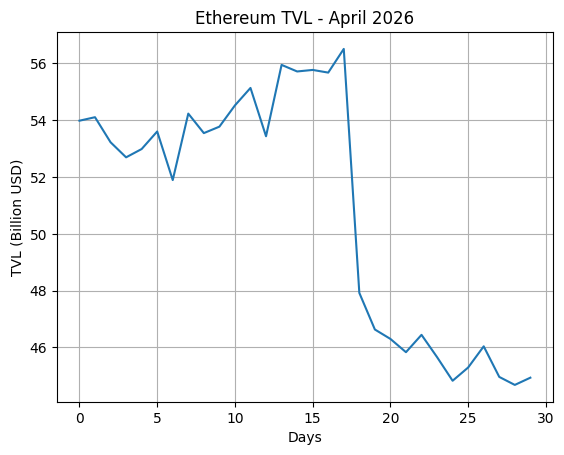
- Ethereum began April 2026 with a strong TVL of ~$54B and climbed steadily to a peak of ~$56.5B by April 18, reflecting strong capital inflows early in the month.
- A sharp decline followed after April 18, with TVL dropping below $48B and ending near ~$44.9B, indicating significant liquidity outflows or rotation to other chains.
- Chain fees increased dramatically in the second half of the month, consistently exceeding $1M/day, signaling network congestion and heightened demand.
- DEX trading volume remained highly volatile, with a major spike to ~$3.49B on April 19, suggesting intense trading activity or market events.
- Perpetual futures volume stayed consistently high between $1.3B–$1.6B, showing strong derivatives participation.
- Token market capitalization peaked near $292B before stabilizing, reflecting overall market strength despite TVL decline.
- Active addresses showed significant fluctuations, reaching a high of over 823K, indicating bursts of user engagement.
- The divergence between rising fees and falling TVL suggests users remained active despite capital outflows.
Solana
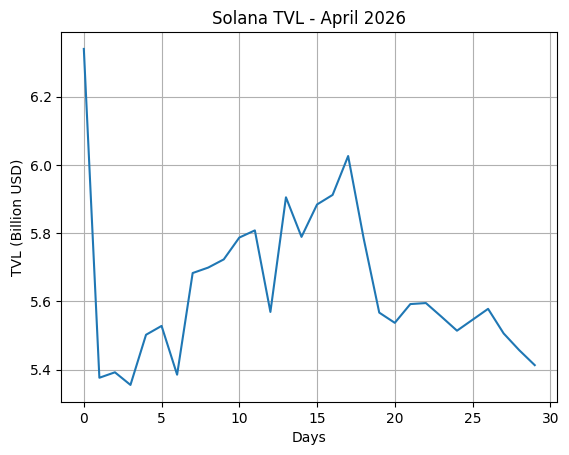
- Solana maintained a relatively stable TVL range between ~$5.3B and ~$6.0B, showing resilience compared to Ethereum’s volatility.
- The network peaked at ~$6.02B TVL mid-month, reflecting steady capital inflows and ecosystem growth.
- Chain fees remained consistent in the $400K–$600K range, indicating efficient and cost-effective transaction processing.
- DEX trading volume was strong at the beginning of the month, peaking at ~$2.9B on April 1, highlighting strong liquidity and user demand.
- Perpetual trading activity showed volatility, with peaks above $1.8B, suggesting active derivatives markets.
- Token market cap crossed $51B during mid-April before slightly declining, aligning with broader market trends.
- Another DEX spike occurred on April 28 (~$2.22B), indicating renewed trading interest late in the month.
- Overall, Solana demonstrated stability, scalability, and consistent user engagement throughout April.
BSC Chain
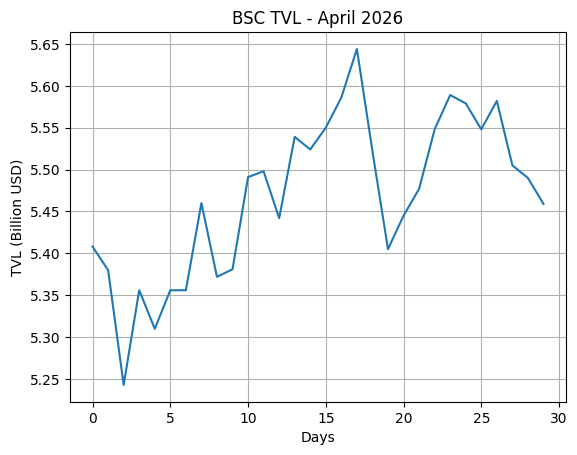
- BSC maintained a highly stable TVL between ~$5.3B and ~$5.6B, showing minimal volatility throughout April.
- DEX trading volume consistently remained strong, with peaks exceeding $1B around April 13–14, reflecting high DeFi activity.
- Perpetual trading volume stayed relatively stable in the $250M–$280M range, indicating steady derivatives participation.
- Active addresses consistently exceeded 2.5M and reached above 3M on multiple days, making BSC one of the most active chains in terms of users.
- Daily transactions peaked at over 19M, demonstrating BSC’s dominance in high-throughput, low-cost transactions.
- A notable anomaly occurred on April 19 with a sharp drop in active addresses and transactions, likely due to data inconsistency or temporary disruption.
- The network’s strength lies in retail adoption, gaming, and high-frequency transaction usage.
- BSC continues to lead in mass adoption metrics despite lower institutional capital compared to Ethereum.
TRON
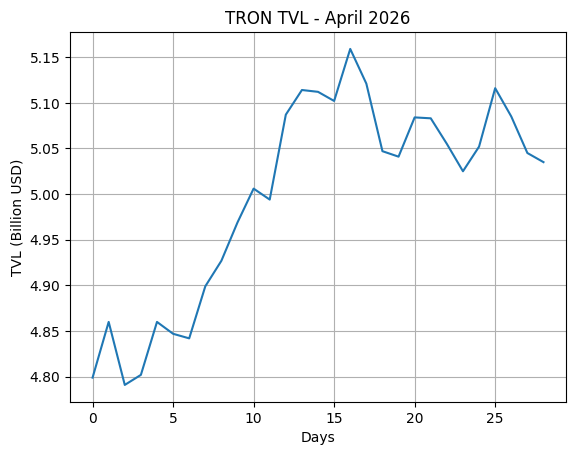
- TRON’s TVL showed gradual growth from ~$4.79B to above ~$5.15B, indicating steady capital inflows.
- Chain fees consistently remained above $1M on many days, highlighting strong network monetization.
- DEX trading volume remained relatively low compared to other chains, typically ranging between $30M–$70M.
- Perpetual trading activity showed periodic spikes, reaching up to ~$219M, indicating selective bursts of derivatives activity.
- The network demonstrated stable growth with minimal volatility in both TVL and activity.
- TRON’s ecosystem appears focused more on payments and stablecoin transfers rather than high-volume DeFi trading.
- Despite lower DEX activity, high fees suggest strong usage in other network functions.
- Overall, TRON maintains a consistent and predictable growth trajectory.
Bitcoin
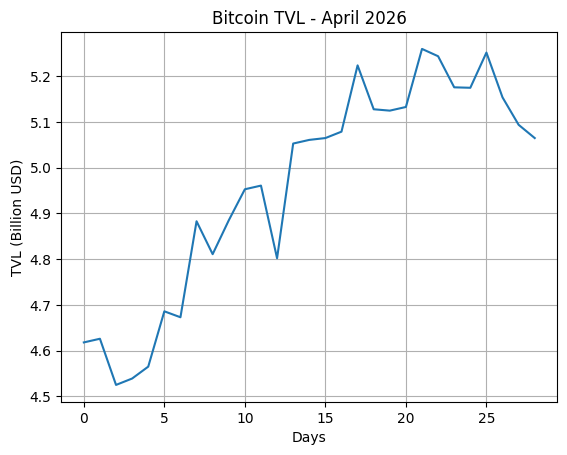
- Bitcoin TVL steadily increased from ~$4.6B at the start of April to over ~$5.25B mid-month, indicating growing adoption in DeFi or Layer-2 ecosystems.
- The growth trend remained relatively stable, with minor fluctuations and consolidation toward the end of the month.
- DEX-related activity showed occasional spikes, including values exceeding $1M, suggesting increasing on-chain activity.
- The gradual rise in TVL highlights expanding use cases beyond traditional store-of-value narratives.
- Bitcoin’s ecosystem remains less volatile compared to other chains, reflecting its maturity.
- Late-month stabilization around ~$5.06B suggests consolidation after growth.
- Increasing activity could be linked to scaling solutions and DeFi integrations.
- Bitcoin continues to evolve as a foundational layer for decentralized finance.
Base
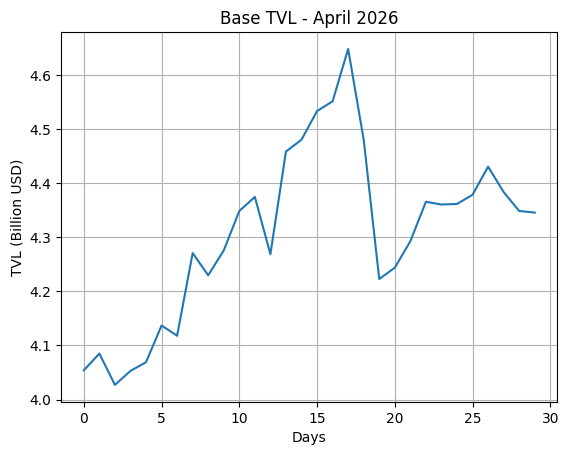
- Base showed strong growth, with TVL rising from ~$4.05B to a peak near ~$4.65B by mid-April.
- After reaching its peak, TVL experienced a sharp decline around April 19 before stabilizing near ~$4.34B.
- Chain fees remained consistently low, mostly under $120K, reinforcing Base’s position as a cost-efficient Layer-2 solution.
- DEX trading volume was strong, peaking above ~$1.17B on April 20, indicating growing liquidity and usage.
- Perpetual trading volume saw an early spike above $1B, followed by moderate activity throughout the month.
- Active addresses consistently remained above 400K, showing strong and sustained user engagement.
- The network experienced both growth and correction phases within the same month.
- Base continues to emerge as a key Layer-2 ecosystem benefiting from Ethereum scalability demand.
April 2026 highlighted a shifting landscape in blockchain ecosystems. While Ethereum remains the leader in capital and activity, alternative chains like Solana and BSC are capturing significant market share through efficiency and user growth. Meanwhile, Base and Bitcoin are steadily expanding their roles in the evolving decentralized economy. Monitoring these metrics over time provides critical insights into capital flows, user adoption, and the competitive positioning of blockchain networks.
Comparing March and April 2026 reveals a clear shift in market dynamics across major blockchain ecosystems. In March, most chains experienced peak activity around mid-month, with Ethereum reaching nearly $59.7B in TVL before closing stronger than April at ~$52.5B. In contrast, April showed a notable decline in Ethereum’s TVL toward ~$44.9B despite significantly higher chain fees and sustained derivatives activity, indicating increased usage but reduced capital retention. Solana also cooled slightly in April, with TVL dropping from March highs above $7B to a more stable $5.3B–$6.0B range, though trading volumes remained strong. BNB Smart Chain maintained consistency across both months, continuing to lead in user activity and transaction volume with minimal TVL fluctuations. Bitcoin showed improvement in April compared to March’s mid-month liquidity drop, stabilizing above $5B and signaling stronger DeFi participation. TRON remained stable across both months, continuing to generate high fees and dominate stablecoin usage despite relatively lower DEX volumes. Meanwhile, Base demonstrated continued growth momentum from March into April, although it experienced a mid-month correction before stabilizing, reflecting its evolving role in the Layer-2 ecosystem. Overall, while March was characterized by peak liquidity and expansion, April reflected consolidation, higher network usage, and a more competitive multi-chain environment.
The full blockchain metrics dataset is available for download on the official GitHub repository.
Disclaimer: Cryip's content is strictly for educational and informational purposes and does not constitute financial, legal, or investment advice. Cryptocurrency involves significant risk, and readers assume full responsibility for their own financial decisions. Asset references are never endorsements.
To make complex crypto topics accessible to readers at all experience levels, our team uses AI tools strictly to refine language, correct grammar, and simplify terminology. AI is never used to draft facts, source information, or form conclusions. Every article is fact-checked and approved by a human editor before publication. Read our full AI Use & Content Policy.