




- Bitcoin price dropped near $77,000 amid broad market pressure.
- Rising U.S. Treasury yields reduced investor appetite for risk assets.
- Higher inflation data weakened expectations for Federal Reserve rate cuts.
- Oil prices surged above $103 following renewed Middle East tensions.
- Japan’s rising bond yields added further global liquidity concerns.
- Markets are closely watching the Federal Reserve meeting scheduled for June 17.
Bitcoin Falls as Global Market Pressures Intensify
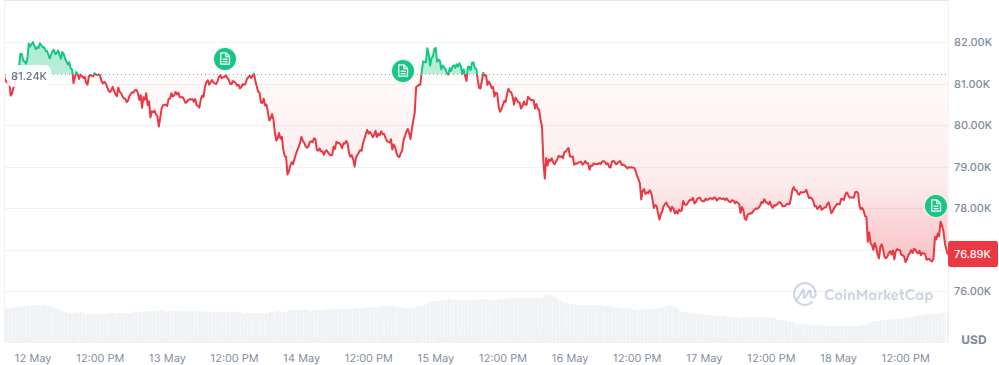
Bitcoin declined close to $77,000 as investors reacted to increasing pressure across global financial markets. The decline came as concerns grew around higher inflation, rising bond yields, uncertainty surrounding U.S. interest rate cuts, and renewed geopolitical tensions in the Middle East. Market participants monitored several macroeconomic developments that contributed to increased volatility across both traditional financial markets and cryptocurrencies. One of the major concerns was the continued rise in U.S. Treasury yields. Long-term government bond yields climbed to multi-year highs, increasing borrowing costs across the economy.
Higher bond yields typically reduce demand for risk assets such as cryptocurrencies and equities because investors can secure comparatively safer returns through government bonds. Rapid increases in yields have also historically been linked to tighter liquidity conditions and broader market instability. The growing U.S. debt burden added to investor concerns. U.S. debt levels were estimated at approximately $40 trillion, while rising interest costs continued to increase pressure on financial markets.
Inflation Data and Federal Reserve Expectations Remain in Focus
Recent inflation data in the United States reportedly came in above expectations, reducing market expectations that the Federal Reserve could begin cutting interest rates in the near term. Consumer inflation reportedly moved toward 3.8%, while producer prices also remained elevated. Investors are now closely watching the Federal Reserve policy meeting scheduled for June 17 for updated guidance on inflation and interest rates.
If inflation continues to rise, market attention could shift away from potential rate cuts toward the possibility of additional monetary tightening later this year. At the same time, oil prices added further inflation concerns. WTI crude oil surged above $103 following renewed geopolitical tensions and supply concerns linked to the Strait of Hormuz.
Reports of drone incidents, delays in peace negotiations, and the expiration of a waiver related to Russian crude sales contributed to concerns about global oil supply disruptions. The International Energy Agency reportedly warned that global oil inventories are declining at a record pace. Baker Hughes data also showed the U.S. rig count increased by five to 415.
Geopolitical Risks and Japan Bond Yields Add to Volatility
Geopolitical tensions intensified after U.S. President Donald Trump issued fresh warnings toward Iran regarding delays in a peace agreement, stating that the “clock is ticking.” Crypto market commentary also reflected rising concerns around the geopolitical situation.
Crypto Rover stated on social media that “something extremely bad could happen in 24 hours,” while referring to reports of a possible new U.S. military operation involving Iran.
Market participants also monitored Japan’s bond market after Japanese government bond yields climbed to historic highs. Japan had maintained near-zero interest rates for years, allowing investors to borrow cheaply and invest in overseas assets. Rising Japanese yields could potentially reduce overseas capital flows and tighten global liquidity conditions further, adding another pressure point for cryptocurrencies and equities.
Gold briefly moved below $4,500 before holding short-term support levels, while silver also declined below $75. Analysts noted that higher oil prices could reinforce expectations for prolonged higher interest rates, supporting both the U.S. dollar and bond yields. Investors continue to monitor inflation trends, geopolitical developments, oil prices, and upcoming Federal Reserve guidance as volatility remains elevated across financial markets.
FAQs
1. Why did Bitcoin price drop near $77,000?
Bitcoin declined near $77,000 as investors reacted to rising U.S. bond yields, higher inflation concerns, geopolitical tensions in the Middle East, and increasing oil prices.
2. How do rising bond yields affect Bitcoin?
Higher bond yields can reduce investor demand for risk assets like Bitcoin because government bonds begin offering comparatively safer returns.
3. Why are investors watching the Federal Reserve meeting?
Markets are closely monitoring the Federal Reserve’s June 17 meeting for guidance on inflation and potential interest rate decisions after recent inflation data came in above expectations.
4. How are oil prices connected to the crypto market?
Rising oil prices can increase inflation concerns globally, which may strengthen expectations for higher interest rates and create pressure on cryptocurrency markets.