



- Ethereum’s TVL declined from $46.09 billion to $44.07 billion during the week, while DEX trading activity dropped sharply toward the weekend.
- Solana recorded the strongest derivatives activity among major chains, with perpetual futures volume peaking at $5.29 billion on May 15.
- BSC Smart Chain maintained stable liquidity conditions with stablecoin market capitalization consistently holding near $17.85 billion.
- TRON continued dominating stablecoin settlement activity, sustaining more than $90 billion in stablecoin market capitalization throughout the week.
- Bitcoin’s market capitalization declined from $1.645 trillion to $1.565 trillion as overall crypto market momentum weakened.
- Base remained one of the strongest Layer-2 ecosystems, with DEX trading volume surpassing $1 billion on May 15.
Ethereum
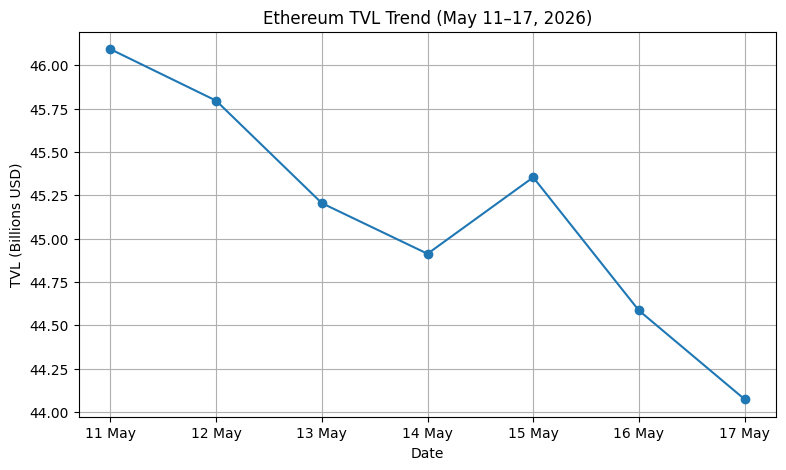
Ethereum started the week with strong network positioning, supported by more than $46 billion in TVL and over $285 billion in token market capitalization. However, sentiment weakened steadily through the week as both TVL and market cap trended downward, suggesting capital outflows and reduced investor confidence across the ecosystem. By May 17, TVL had fallen below $44.1 billion while token market capitalization slipped to nearly $263 billion.
Trading activity on Ethereum also softened after an initially active start. DEX volume remained above $1 billion between May 11 and May 15, peaking at nearly $1.7 billion on May 14, before declining sharply to $661.64 million by May 17. Perpetual futures volume stayed relatively stable above $1.2 billion throughout the week, indicating that derivatives traders remained active despite weaker spot market momentum.
Network fees and revenue reflected changing market participation. Fees dropped from over $1 million on May 11 to just $290,386 on May 17, while revenue contracted significantly from $551,346 on May 15 to only $86,597 by the weekend. Active addresses fluctuated heavily, briefly reaching 675,221 on May 13 before falling back below 500,000 later in the week. Transaction counts remained stable near 2 million daily, showing that base-layer usage stayed resilient even as speculative activity cooled.
Solana
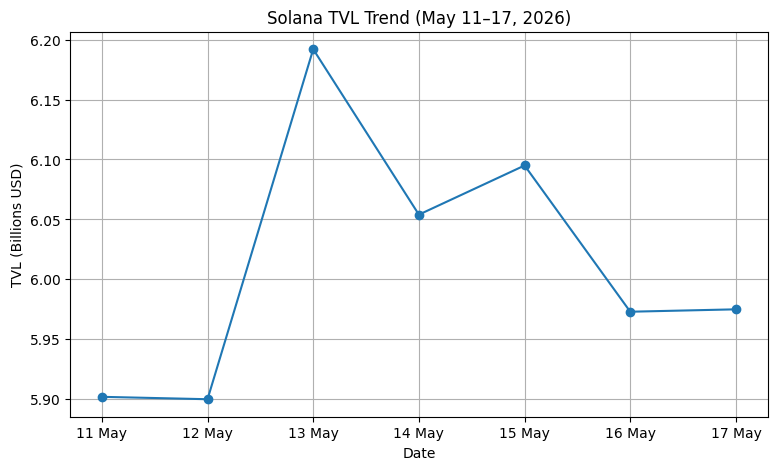
Solana maintained one of the strongest trading environments among major blockchains during the week, driven by consistently high DEX and perpetual futures activity. DEX volume remained above $1.5 billion for most of the week before dropping sharply during the final two days. Meanwhile, perpetual futures volume surged dramatically, reaching a weekly high of $5.295 billion on May 15, highlighting aggressive speculative trading and strong participation in leveraged markets.
Despite the surge in derivatives activity, Solana’s token market capitalization declined steadily from $55.7 billion to almost $50 billion by May 17. The drop reflected broader market weakness and profit-taking pressure across the ecosystem. However, TVL stayed relatively stable around the $6 billion level, showing that core DeFi liquidity remained intact despite market volatility.
Stablecoin capitalization on Solana expanded meaningfully during the week, climbing from $14.7 billion to over $16.3 billion before slightly easing. This increase suggested continued inflows into the network’s liquidity ecosystem. Solana also preserved its position as one of the highest-throughput blockchains, consistently processing between 71 million and 79 million transactions per day, reinforcing strong user engagement and network scalability.
BSC Chain
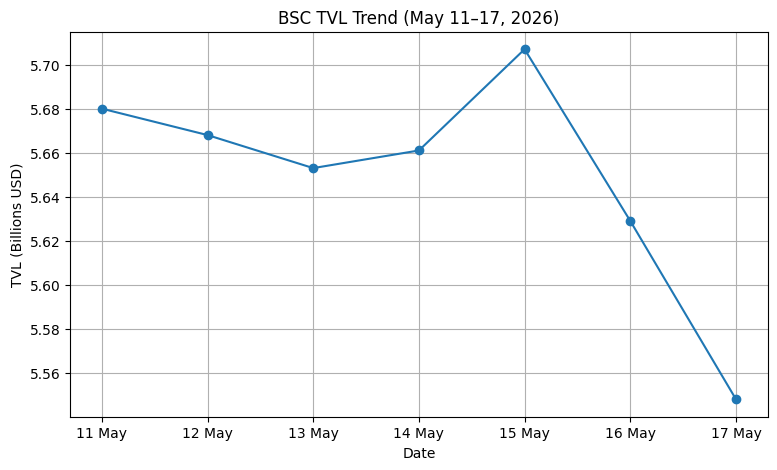
BSC Chain displayed relatively stable ecosystem performance throughout the week, with TVL remaining tightly range-bound between $5.54 billion and $5.70 billion. The chain benefited from strong retail participation, as active addresses consistently stayed above 2.3 million daily. Transaction activity also remained elevated, averaging roughly 15 million transactions per day, highlighting continued usage across DeFi, gaming, and payment-related applications.
Trading activity improved during the middle of the week as DEX volume climbed to more than $823 million on May 14, reflecting increased liquidity and stronger market engagement. However, volumes gradually weakened toward the weekend, falling below $500 million by May 17. Perpetual futures trading remained relatively stable around the $250 million range for most sessions before collapsing sharply to just $1.89 million on the final day, indicating a sudden drop in leveraged trading activity.
One of BSC Chain’s strongest metrics remained its stablecoin liquidity base, which consistently held near $17.85 billion across the entire week. This stability suggested that users continued to rely heavily on the network for transfers, payments, and low-cost trading activity despite broader market weakness affecting other ecosystems.
TRON
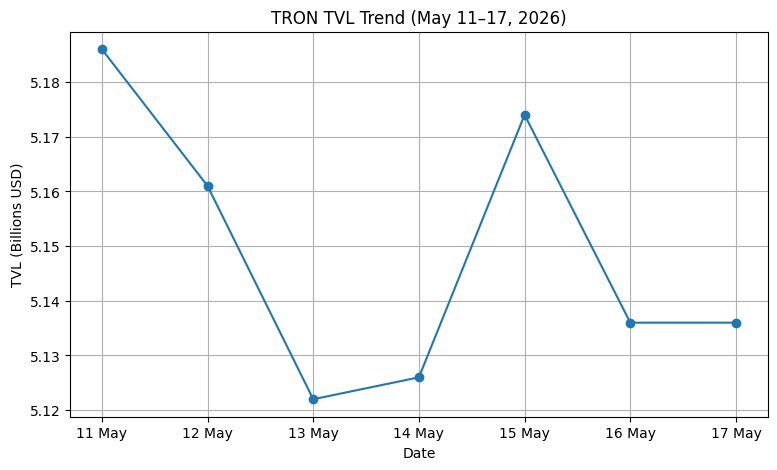
TRON continued to demonstrate exceptional stability compared with other major blockchains during the week. TVL remained consistently above $5.1 billion, while token market capitalization stayed close to $33 billion throughout the reporting period. The network’s biggest strength remained its dominance in stablecoin activity, with stablecoin market capitalization holding firmly above $90 billion every day.
TRON generated some of the highest chain fees and revenues among all listed blockchains, consistently producing over $1 million daily for most of the week. Unlike many chains where revenue sharply diverged from fees, TRON maintained nearly identical fee and revenue figures, reflecting efficient monetization of on-chain activity. Although chain fees declined toward the weekend, the network still produced more revenue than most competing ecosystems.
User activity on TRON remained exceptionally strong. Active addresses ranged between 3.6 million and 4.25 million daily, significantly outperforming most competitors in raw user count. Daily transactions consistently exceeded 11 million, reinforcing TRON’s role as a heavily utilized network for stablecoin transfers and payment-related activity. However, DEX trading volume stayed relatively modest compared with Ethereum and Solana, indicating that the network’s strength remained concentrated in payments and stablecoin settlement rather than broader DeFi speculation.
Bitcoin
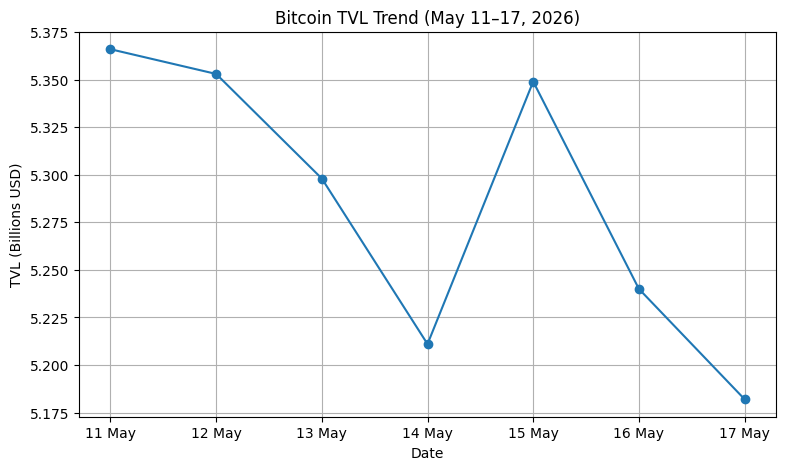
Bitcoin experienced a gradual cooling trend during the week as market capitalization declined from $1.645 trillion to approximately $1.565 trillion by May 17. TVL also trended lower, slipping from $5.36 billion to $5.18 billion. The decline reflected softer overall crypto market conditions and reduced speculative momentum following earlier gains.
On-chain network activity remained relatively healthy despite weaker price-related metrics. Active addresses generally ranged between 570,000 and 670,000 during the week, while daily transactions consistently remained above 600,000. This stability suggested that Bitcoin’s core transactional usage and settlement demand remained intact even during periods of market uncertainty.
Trading volumes across Bitcoin-related DeFi and derivatives markets were more volatile. DEX volume fluctuated significantly, falling as low as $222,390 on May 15 before rebounding sharply above $588,000 by May 17. Perpetual futures volume stayed comparatively muted throughout the week, remaining below $12 million daily, indicating more cautious leveraged positioning among traders.
Base
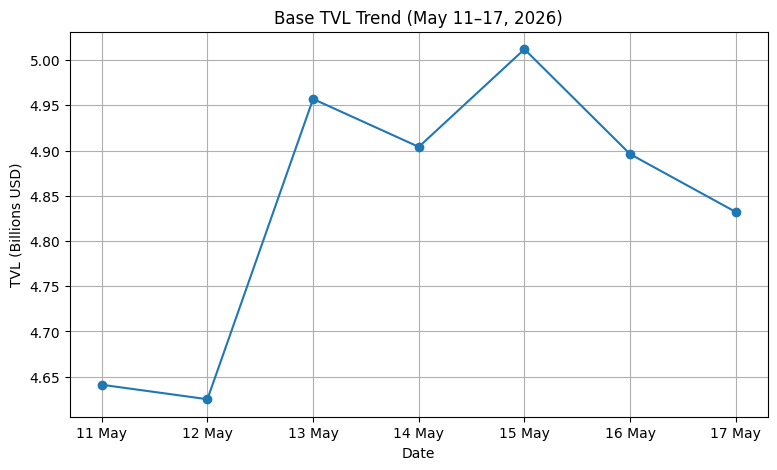
Base continued to strengthen its position as one of the leading Ethereum Layer-2 ecosystems during the week. TVL remained close to the $5 billion level, briefly surpassing $5 billion on May 15 before easing slightly over the weekend. Stablecoin capitalization remained highly stable near $4.8 billion, highlighting sustained liquidity and capital retention within the ecosystem.
Trading activity across Base expanded significantly in the middle of the week. DEX volume climbed steadily and exceeded $1 billion on May 15, reflecting growing adoption of decentralized applications and trading protocols on the network. Perpetual futures volume also increased notably, reaching nearly $295 million on May 14 before declining during the final two days of the week.
Base maintained strong transaction throughput throughout the period, consistently processing between 6 million and nearly 10 million daily transactions. Although active addresses fluctuated between 366,000 and 451,000, overall usage remained robust. The network’s relatively low fees and growing ecosystem activity continued to support its expansion within the broader Ethereum scaling landscape.
The week of May 11–17, 2026, highlighted diverging trends across major blockchain ecosystems as broader crypto market momentum weakened. Ethereum experienced declining TVL, falling fees, and softer DEX activity, reflecting reduced speculative participation. Solana remained one of the strongest performers in trading activity, particularly in perpetual futures markets, although its token market capitalization declined alongside broader market weakness. BSC Chain maintained steady liquidity and user activity, supported by strong stablecoin balances and high daily transaction counts.
TRON continued to dominate stablecoin settlement activity and generated some of the highest network revenues among major chains, reinforcing its position as a leading payments-focused blockchain. Meanwhile, Bitcoin saw softer market capitalization and muted derivatives activity despite stable on-chain participation from users. Base continued strengthening its role within the Ethereum Layer-2 ecosystem, supported by resilient TVL, strong DEX growth, and consistent transaction throughput. Overall, the data suggested that while speculative trading activity weakened across several networks toward the end of the week, stablecoin liquidity, user participation, and infrastructure usage remained relatively strong across the broader blockchain sector.
Weekly Comparison: (May 04–10 vs May 11–17, 2026)
- Ethereum: Ethereum recorded weaker performance during May 11–17, with declining TVL, lower DEX volume, and reduced network fees compared with the previous week.
- Solana: Solana maintained strong trading momentum, with perpetual futures volume surging significantly higher than the May 04–10 period despite softer token market capitalization.
- BSC Chain: BSC Chain sustained stable liquidity, high transaction throughput, and strong retail activity across both weeks, although DEX trading volume weakened slightly in the second week.
- Bitcoin: Bitcoin experienced lower market capitalization and softer trading activity during May 11–17, while overall network participation remained stable.
- TRON: TRON continued dominating stablecoin activity with strong fees and transaction counts, though DEX and perpetual trading activity cooled compared with the prior week.
- Base: Base maintained resilient TVL and user activity, but trading volumes and fee generation softened during the May 11–17 period. The May 11–17 period reflected weaker crypto market sentiment compared with May 04–10, with lower speculative activity across several major blockchain ecosystems.
Disclaimer: Cryip's content is strictly for educational and informational purposes and does not constitute financial, legal, or investment advice. Cryptocurrency involves significant risk, and readers assume full responsibility for their own financial decisions. Asset references are never endorsements.
To make complex crypto topics accessible to readers at all experience levels, our team uses AI tools strictly to refine language, correct grammar, and simplify terminology. AI is never used to draft facts, source information, or form conclusions. Every article is fact-checked and approved by a human editor before publication. Read our full AI Use & Content Policy.