

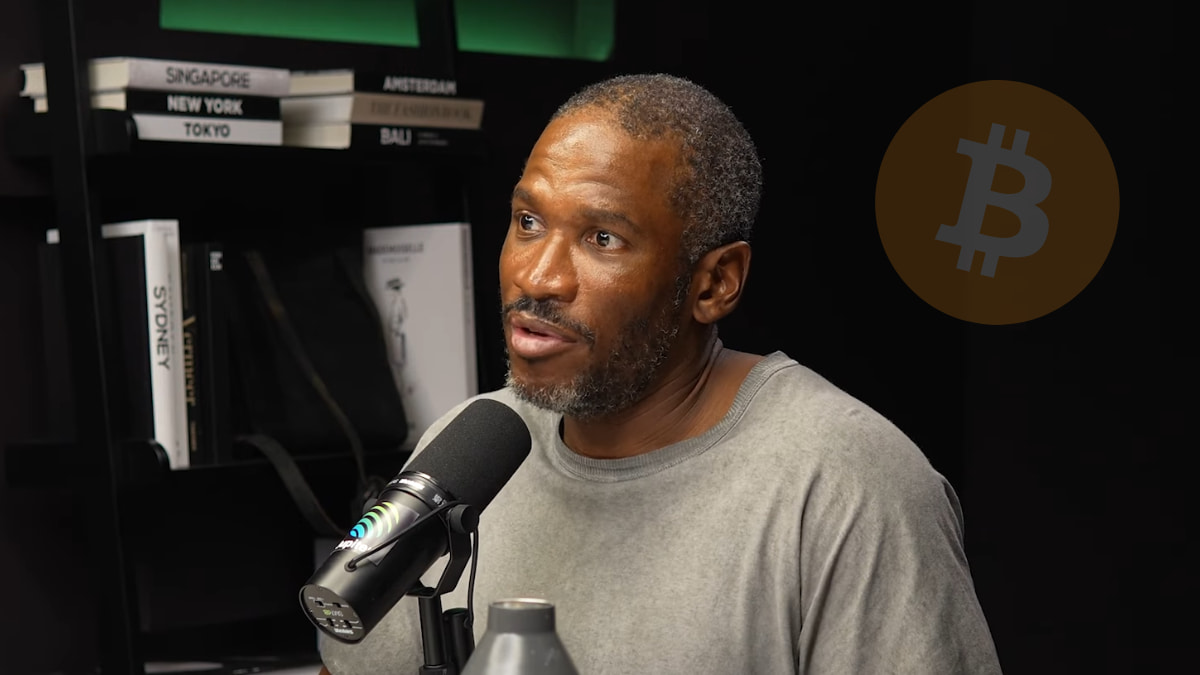


Arthur Hayes published an essay on August 10 arguing that the US Treasury and Japan’s finance ministry are engineering a stronger yen through a specific mechanism, one that will eventually force the Federal Reserve to expand its balance sheet and send bitcoin higher. In the ten days between the currency intervention he’s describing and the essay itself, bitcoin did move, twice. Neither move matches the story he’s telling.
My essay “Yen-quake” walks readers through how Buffalo Bill Bessent plans to manipulate the dollar-yen exchange rate and turn the money printer back on.
“While a weak, weaker, and weakest yen propelled global asset markets higher over the past decade, like all good things for… pic.twitter.com/4tXwuKMFPg
— Arthur Hayes (@CryptoHayes) August 11, 2026
June 16: The Bank of Japan raises its policy rate to 1%, the highest since 1995.
July 14-16: Finance Minister Katayama floats a possible shift in the GPIF pension fund’s mandate toward domestic assets; Japan’s government separately says no such change is planned.
July 31: The Bank of Japan holds its rate at 1% and warns inflation could exceed its 2% target.
July 31-August 1: Japan and the US jointly buy yen for the first time since 1998.
August 3: Bitcoin falls more than 2% to about $62,300.
August 10: Bitcoin climbs to four-day highs above $65,000; Hayes publishes “Yen-quake.”
What Tokyo and Washington actually did
On July 31 and August 1, Japan’s Ministry of Finance and the US Treasury bought yen together for the first time since 1998. Finance Minister Katayama Satsuki said the action “countered excessive volatility and disorderly movements” in the currency and that Japan “will not hesitate to conduct further joint intervention.
” Treasury Secretary Scott Bessent said the US “will not hesitate to participate” either, adding that Washington “strongly supports Japan’s decisive market and monetary steps to correct the substantial undervaluation of the yen.” Between the two governments, they spent close to $96 billion over the two sessions, according to Bank of Japan data, pulling the yen off a 1986-era low near 164 per dollar to roughly 155.
Hayes’s essay lays out three ways Japan could get to a stronger yen: the Bank of Japan raises rates hard, the government pushes public institutions like the pension fund GPIF to sell foreign assets and buy domestic ones, or the finance ministry repos its US Treasury holdings to the Fed for dollars and uses those dollars to buy yen directly. He calls the third option the one Washington and Tokyo actually prefer, because it strengthens the yen without forcing Japan to dump the roughly $1.14 trillion in Treasuries it holds, the largest stake of any foreign government.
The part that’s still just a request
That third option runs through the Fed’s FIMA Repo Facility, which currently caps how much any single country can draw at $60 billion. Bessent has pushed for that ceiling to be raised so Japan can lean on it more heavily. The Fed, now three months into Kevin Warsh’s term as chair. Nothing about the mechanism Hayes describes as “preferred” has actually happened yet. It’s a request sitting in front of a new Fed chair.
The Bank of Japan raised its policy rate to 1% in June, the highest since 1995, and held there on July 31 while warning that underlying inflation could run above its 2% target. That’s the central bank doing exactly the thing Hayes says is politically off the table.
What bitcoin actually did, and why
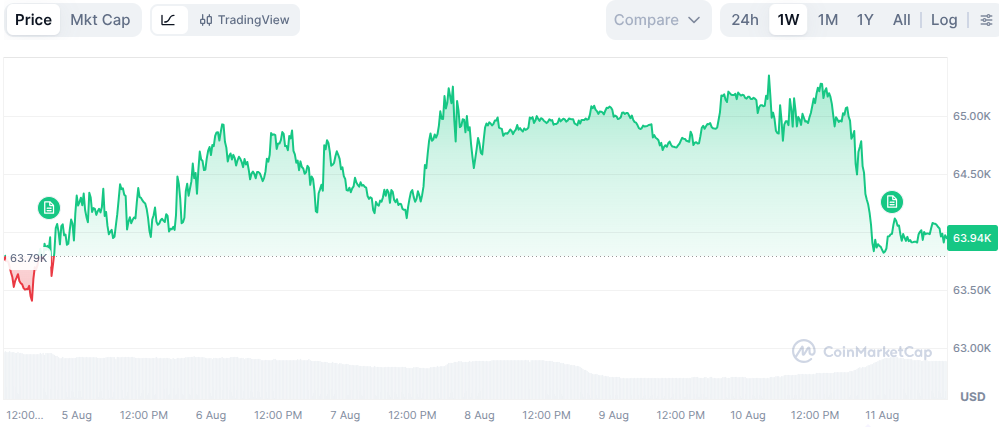
At the time of writing at 6:05 am UTC, Bitcoin (BTC) was trading at $63,940, down 1.75% over the past 24 hours, while the cryptocurrency remained marginally higher over the past week at $63,934, up 0.25%. The data points to short-term selling pressure despite a relatively stable weekly performance.
Bitcoin fell more than 2% on August 3, dropping from around $63,000 to about $62,300, in the days right after the intervention and Bessent’s pledge of more to come. The instinct to blame a yen carry-trade unwind is a reasonable one.
It happened before: in August 2024, an unexpected Bank of Japan rate hike to 0.25% strengthened the yen and bitcoin fell from about $62,000 to roughly $49,000 in a week, close to a fifth of its value, as investors who had borrowed cheap yen to fund other bets sold those bets to cover their losses.
This time looks different. Trading data from the days around the intervention show bitcoin moving in step with the broader dollar rather than the yen specifically, which is closer to the opposite of what a carry-trade unwind would produce. By August 10, the day Hayes published his essay, bitcoin had climbed back to four-day highs above $65,000.
That rally lined up with a weaker than expected July jobs report, which cut the odds of a Fed rate increase in September. It’s a plausible explanation with no connection to the yen mechanism at all. Both of the real price moves this month, the drop and the recovery, trace more cleanly to the dollar and to US labor data than to anything happening between the Ministry of Finance and the Fed. Arthur Hayes accumulated 1,293 ETH through two on-chain transactions on July 15.
The pension fund option nobody has settled
Hayes ranks the GPIF route as politically harder than the repo option, which is why he expects Washington and Tokyo to skip it. But Katayama had already floated a possible shift in the fund’s mandate toward domestic assets in mid-July, before the intervention. Japan’s government has separately said there is no plan to change GPIF’s target allocation. Both statements are on the record.
If Tokyo ends up needing to sell Treasuries outright, rather than temporarily repo them, or if Japanese bond yields keep climbing on their own (the two-year JGB yield has already reached 1.545%), that tightens financial conditions instead of loosening them. Higher yields at home give Japanese investors a reason to bring money back regardless of what the Fed does with FIMA, and tighter conditions are not historically bitcoin’s friend.
The trades riding along with the thesis
Buried in the same essay are specific recommendations: Ethereum as what Hayes calls a “large cap sleeper,” and Ethena’s ENA token, currently about 75% below its highs, for what he describes as a possible five to ten times return. Hayes runs Maelstrom, a crypto investment fund, and has previously disclosed buying into tokens before promoting them publicly, including a stake in ENA ahead of a governance vote tied to the protocol months before this essay.
A review of two dozen of his public market calls over the past two years found only two that held up against what actually happened, and Hayes has said as much himself, describing six of his last eight predictions as failures.
What would actually prove this right
A Fed decision to raise the FIMA counterparty limit, followed by Japan visibly drawing on it, would be a concrete step toward the mechanism Hayes describes. A resolution of the GPIF mandate question, in either direction, would settle one of the two options he says Japan is avoiding.
And if a future yen move starts pulling bitcoin down the way the 2024 rate hike did, rather than tracking the dollar the way this month’s moves did, that would suggest the carry-trade channel is back in play. Until one of those things happens, the yen-to-bitcoin story is a mechanism on paper, tested against a month of price action that hasn’t gone the way it predicts.
Disclaimer: Cryip's content is strictly for educational and informational purposes and does not constitute financial, legal, or investment advice. Cryptocurrency involves significant risk, and readers assume full responsibility for their own financial decisions. Asset references are never endorsements.
To make complex crypto topics accessible to readers at all experience levels, our team uses AI tools strictly to refine language, correct grammar, and simplify terminology. AI is never used to draft facts, source information, or form conclusions. Every article is fact-checked and approved by a human editor before publication. Read our full AI Use & Content Policy.