




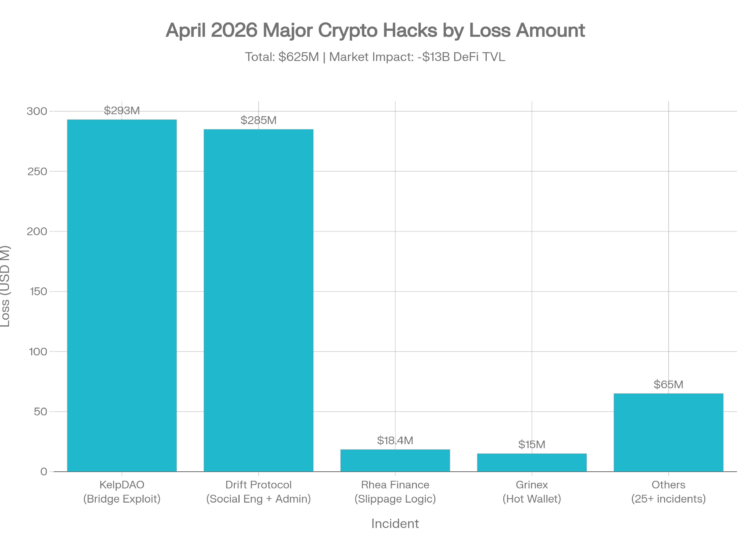
In the world of cryptocurrency, security breaches have become painfully familiar, but April 2026 stands apart as a month of unprecedented scale and frequency. According to multiple on-chain analytics platforms, the crypto ecosystem suffered 28 to 30 separate hacks and exploits, resulting in total losses estimated between 625 million dollars. This makes April 2026 the worst month for crypto hacks in recent history, surpassing previous benchmarks and pushing 2026 year-to-date losses well above 770 million dollars.
Two massive incidents dominated the damage. On April 1, Solana-based perpetuals protocol Drift Protocol lost approximately 285 million dollars. On April 18, liquid restaking platform KelpDAO saw roughly 293 million dollars drained through its bridge. Together, these two events accounted for around 90-95% of April’s total stolen funds. The remaining 26+ incidents, though smaller individually, highlighted widespread vulnerabilities across bridges, lending protocols, exchanges, wallets, and infrastructure layers.
The Drift Protocol Heist: A Masterclass in Persistence
The month began dramatically on April 1 when Drift Protocol, one of Solana’s leading decentralized perpetual futures exchanges, was drained of 285 million dollars. The attack with medium-to-high confidence to North Korean state-sponsored actors associated with UNC4736 and the Lazarus Group. Reports indicate the group spent roughly six months on preparation. They built trust with contributors by posing as legitimate quantitative traders, engaged at industry events, and even deposited capital before compromising privileged admin access.
Once inside, the attackers whitelisted a worthless token (CVT), manipulated pricing, and executed rapid withdrawals using pre-signed transactions. The core drainage occurred in approximately 12 minutes, wiping out more than 50% of the protocol’s TVL at the time. Drift’s team publicly confirmed it was not an April Fool’s prank and stressed that the root cause was a long-term social engineering campaign rather than a direct smart contract flaw. The incident caused sharp price declines in related tokens and significant user impact.
KelpDAO and the Bridge Vulnerability Crisis
On April 18, KelpDAO suffered the largest single exploit of the year. Attackers exploited a minimal single-validator verification setup in the protocol’s LayerZero-powered cross-chain bridge. They forged a message that allowed minting of approximately 116,500 unbacked rsETH tokens valued at around 293 million dollars. These tokens were promptly used to borrow ETH on Aave and other platforms, creating bad debt positions and triggering liquidity crunches across DeFi markets.
KelpDAO responded by pausing contracts across mainnet and L2s. Justin Sun and other figures called for negotiation with the exploiter. Recovery initiatives included DAO proposals, commitments of over 130,000 ETH from various ecosystem participants (including ConsenSys and Aave Labs), and controlled liquidation plans. The incident exposed ongoing risks in cross-chain messaging and bridge security configurations.
North Korea’s Shadow Over Crypto Theft
A deeply concerning pattern in April 2026 was the prominent role of North Korean-linked hacking groups. Analytics firms attributed a substantial share, up to 76% of major 2026 thefts in some estimates, to Lazarus Group and affiliated operations. These state-sponsored actors have evolved sophisticated tactics that combine long-term social engineering, malware deployment, and precise exploitation of DeFi mechanics. The Drift hack exemplifies this patient approach: months of reconnaissance and relationship-building allowed them to bypass technical safeguards that would catch simpler attacks.
Such operations carry geopolitical implications, as stolen funds may support activities beyond traditional financial oversight. Industry experts emphasize that defending against these threats requires enhanced operational security, rigorous vetting of team interactions, continuous monitoring, and reduced reliance on single points of privilege.
Heightened Fear, Massive DeFi Outflows, and Price Pressure
The hacks severely affected market sentiment and liquidity throughout April. The Drift exploit on April 1 created early caution, especially in the Solana ecosystem. The KelpDAO incident on April 18 triggered far broader contagion.
In the 48 hours following the KelpDAO hack, DeFi Total Value Locked (TVL) plunged by more than 13 billion dollars (from around 99 billion to approximately 86 billion dollars). Aave alone saw roughly 8.4 billion dollars in deposit outflows as users withdrew funds amid bad debt fears and rsETH exposure. Multiple lending protocols faced double-digit TVL drops, with market freezes worsening the panic. Ethereum recorded heavy TVL losses (around 17-18% for the month), and Solana also came under pressure.
Broader crypto markets reflected this risk-off mood. Bitcoin showed some resilience but faced volatility, while Ethereum and DeFi-related tokens suffered more, with AAVE dropping around 16-20% in the immediate aftermath. The steady flow of smaller hacks kept negative sentiment alive, reducing liquidity and driving capital away from higher-risk DeFi strategies. By month-end, DeFi TVL hit some of its lowest levels in a year.
Smaller Exploits Reveal Systemic Issues
Beyond the major events, April witnessed relentless smaller attacks. Rhea Finance on NEAR lost 18.4 million dollars via a slippage protection flaw (with significant recovery). Grinex suffered a 15 million dollar hot wallet hack. Additional incidents included Volo Vaults (3.5M dollars), Purrlend (1.5M dollars), Hyperbridge (2.5M dollars), and many others involving access control, oracle issues, and infrastructure compromises.
Common underlying causes included insufficient timelocks, rushed governance, minimal bridge verification, and inadequate testing. The volume of incidents suggests many teams prioritize speed over security maturity.
Lessons from April’s Carnage: What Must Change in DeFi
April 2026 has clearly shown that DeFi’s rapid growth has outpaced its security standards. The concentration of losses in bridge exploits and admin compromises, along with nearly daily smaller incidents, highlights recurring issues such as weak key management, poorly configured bridges, missing timelocks, and social engineering risks. These problems are not new, but they continue to cause massive, preventable damage.
For users: Stick to protocols with multiple independent audits, active bug bounties, and transparent operations. Diversify across chains, carefully check bridge and oracle risks before depositing, avoid chasing very high yields, and practice good self-custody habits like using hardware wallets.
For teams and the ecosystem: Security must become a core priority, not an afterthought. Strong multisig setups with timelocks, regular testing, real-time monitoring, and transparent post-mortems are essential. Greater collaboration on bridge standards, insurance funds, and threat sharing can help prevent future outbreaks.
April’s events serve as a serious reminder: without stronger security at every level, trust in DeFi will remain fragile.
Disclaimer: Cryip's content is strictly for educational and informational purposes and does not constitute financial, legal, or investment advice. Cryptocurrency involves significant risk, and readers assume full responsibility for their own financial decisions. Asset references are never endorsements.
To make complex crypto topics accessible to readers at all experience levels, our team uses AI tools strictly to refine language, correct grammar, and simplify terminology. AI is never used to draft facts, source information, or form conclusions. Every article is fact-checked and approved by a human editor before publication. Read our full AI Use & Content Policy.