
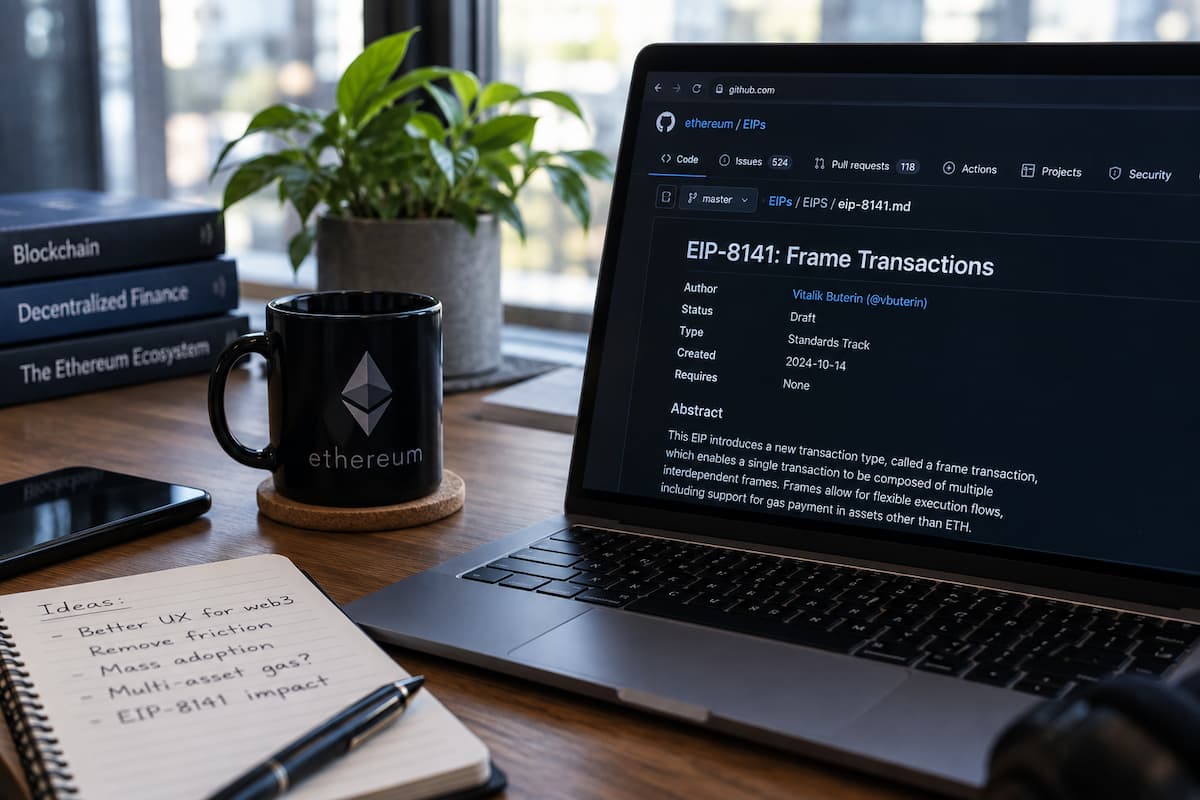


- EIP-8141, also called the Frame Transaction proposal, has been locked into Ethereum’s roadmap for a future upgrade.
- It would let a transaction split into multiple linked frames, one of which can cover gas in an asset other than ETH.
- The change targets a specific complaint from new users: needing to hold ETH just to pay for a transaction denominated in something else.
Ethereum’s core developers have advanced EIP-8141, formally titled the Frame Transaction proposal, into the specification track for a future network upgrade. The proposal solves a specific and long-standing friction point: on Ethereum today, every transaction requires ETH to pay gas, even a transaction whose entire purpose is moving a stablecoin that has nothing to do with ETH. A user holding only USDC, for instance, cannot send it without first acquiring a small amount of ETH from somewhere else.
What a Frame Transaction Actually Does
The proposal’s technical core, laid out in the EIP text maintained in Ethereum’s official EIPs repository, introduces a transaction type that can bundle multiple linked actions, called frames, into a single atomic operation. In practice, this allows one frame to handle a payment in a stablecoin or other token, and a separate, linked frame to cover the gas cost, potentially paid by a third party such as an application or a sponsor, or converted automatically from the token the user already holds. The transaction only succeeds if every frame in it succeeds, which is what keeps the arrangement safe from a scenario where the payment goes through but the gas coverage fails, or the reverse.
This is not the first attempt at solving the same problem. Account abstraction proposals going back several years, including EIP-7702, have chipped away at the requirement that every wallet behave like a plain externally owned account that can only pay gas in ETH. EIP-8141’s contribution is making gas sponsorship and multi-asset payment a native part of how a transaction is constructed, rather than something built on top through a separate smart-contract wallet layer, which is the difference between a workaround and a protocol-level fix.
Why the Timeline Matters More Than the Code
Ethereum’s most consequential upgrades take years from proposal to mainnet activation, moving through testnets and client implementation before ever reaching users. EIP-8141 being locked into a future upgrade’s specification is a meaningful milestone, since it means the idea has cleared the core developer review that most proposals never survive, but it is not the same as the feature being live. The gap between “specified” and “shipped” is exactly where a proposal like this has historically stalled or been redesigned, so the honest read today is that the direction is set, not that the friction it targets has actually gone away yet.
Disclaimer: Cryip's content is strictly for educational and informational purposes and does not constitute financial, legal, or investment advice. Cryptocurrency involves significant risk, and readers assume full responsibility for their own financial decisions. Asset references are never endorsements.
To make complex crypto topics accessible to readers at all experience levels, our team uses AI tools strictly to refine language, correct grammar, and simplify terminology. AI is never used to draft facts, source information, or form conclusions. Every article is fact-checked and approved by a human editor before publication. Read our full AI Use & Content Policy.