




Strategy’s 840,447 Bitcoin now sit roughly $1.95 billion above the company’s own cost basis, after Bitcoin’s price climbed to $77,710 as of 11:08 UTC on Aug. 21, 2026. The swing happened without a single share or coin changing hands. Bitcoin simply moved.
A Four-Day, $12 Billion Swing
On Aug. 17, 2026, with Bitcoin trading around $63,500, Strategy’s position was underwater by nearly $10 billion against its average purchase price of $75,385 per coin. By 22:50 UTC on Aug. 20, as Bitcoin climbed to roughly $72,700, that gap had narrowed to about $2.25 billion. By 11:08 UTC on Aug. 21, with Bitcoin at $77,710, the position had crossed into a gain of about $1.95 billion.
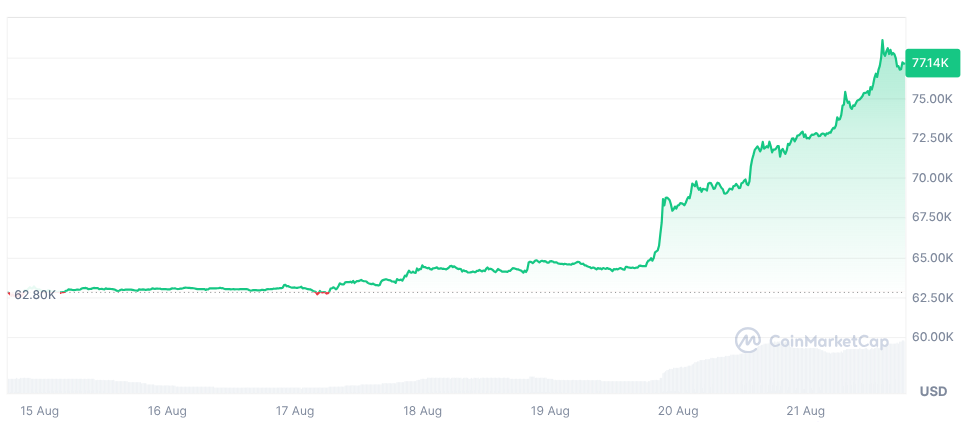
That is a swing of close to $12 billion in four trading days, driven entirely by the market price of the coin Strategy holds, not by any purchase or sale. The company’s own securities filing puts its total cost basis at $63.36 billion for the 840,447 Bitcoin it holds as of August 9. At the 11:08 UTC Aug. 21 price, that stake is worth roughly $65.3 billion.
Bitcoin’s rally has coincided with a wave of short-position liquidations across the market and renewed policy attention on the crypto industry, though the exact mix of causes behind any single day’s move is difficult to isolate.
MSTR Still Trades Below the Value of Its Own Bitcoin
Strategy’s stock, ticker MSTR, has moved with the Bitcoin rally but not in lockstep. Shares gained more than 12% on Aug. 19 and continued climbing into the Aug. 21 session, trading premarket at $119.71, up 6.51% from the prior close of $112.39, according to the company’s live dashboard as of 13:29 UTC on Aug. 21.
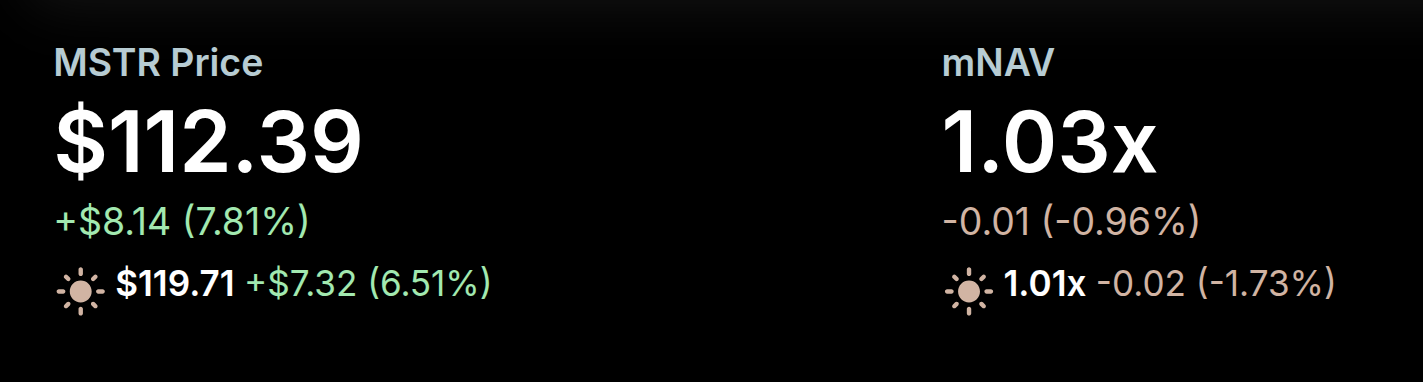
For much of August, the stock traded at a discount to the market value of its Bitcoin holdings on a per-share basis, a reversal of the premium that defined much of the company’s history as a Bitcoin buyer.
As of the same 13:29 UTC, Strategy’s dashboard puts that multiple, known as mNAV, back above parity at 1.03x. Third-party trackers checked hours earlier the same day showed figures as low as 0.77x, highlighting how quickly the metric can change and how methodology differences can affect the reported figure.
What the Paper Gain Doesn’t Erase
Strategy sold roughly 6,900 Bitcoin over five separate transactions in 2026. Only the first sale, in late May, was priced above the company’s average cost basis.
The four that followed, in June, July and early August, were executed at prices between roughly $60,000 and $64,262 per coin, all below the $75,385 the company paid on average.
“When I say ‘Never Sell Your Bitcoin,’ I speak as one saver to another, I have never sold mine. Not one satoshi. Strategy is not my wallet,” Saylor said.
Those dividend obligations now run above a billion dollars a year, and they don’t shrink when Bitcoin’s price rises, whatever the balance sheet shows on any given morning.
Strategy’s Position in the Bitcoin Treasury Race
Strategy remains the largest corporate holder of Bitcoin by a wide margin, and it has fared better than most companies that copied its model.
One Bitcoin-treasury imitator, Nakamoto Holdings, has lost 96% of its value since May after a share unlock exposed how much of its rise had been speculation. Roughly a third of the more than 170 public companies now holding Bitcoin on their balance sheets trade below the value of those holdings.
Disclaimer: Cryip's content is strictly for educational and informational purposes and does not constitute financial, legal, or investment advice. Cryptocurrency involves significant risk, and readers assume full responsibility for their own financial decisions. Asset references are never endorsements.
To make complex crypto topics accessible to readers at all experience levels, our team uses AI tools strictly to refine language, correct grammar, and simplify terminology. AI is never used to draft facts, source information, or form conclusions. Every article is fact-checked and approved by a human editor before publication. Read our full AI Use & Content Policy.