



Introduction
The cryptocurrency market is built on transparency. Every transaction, wallet interaction, and token movement is permanently recorded on a public blockchain. However, while this information is technically available to everyone, understanding what it actually means can be difficult. Most blockchain explorers display long wallet addresses, transaction hashes, and raw data that provide little context to the average user.
This is where Arkham Intelligence comes in. Arkham is a blockchain analytics platform that uses artificial intelligence to transform complex blockchain data into actionable insights. Instead of viewing anonymous wallet addresses, users can identify exchanges, institutions, crypto funds, project treasuries, and notable market participants. By connecting on-chain activity (transactions and actions recorded directly on a blockchain) to real-world entities, Arkham helps traders, investors, researchers, and crypto enthusiasts better understand what is happening behind the scenes in the crypto market.
Whether you’re new to blockchain analytics or looking to improve your research process, this guide will explain everything you need to know about Arkham Intelligence and how to use it effectively.
What Is Arkham Intelligence?
Arkham Intelligence is an AI-powered blockchain analytics platform designed to track, analyze, and identify blockchain entities across multiple networks. The platform combines public blockchain data with machine learning and intelligence gathering techniques to create detailed profiles of wallets and organizations operating within the crypto ecosystem.
Unlike traditional blockchain explorers, which focus primarily on transactions, Arkham focuses on intelligence. Its goal is to answer questions such as who owns a wallet, where funds are moving, and how different entities interact with each other. At its core, Arkham helps transform blockchain transparency into useful information that users can act on.
Example: Imagine you see a wallet moving $50 million worth of Bitcoin. A normal blockchain explorer will only show a long wallet address.
Arkham may identify that wallet as belonging to an exchange, crypto fund, whale investor, or project treasury. This helps you understand who is moving the funds instead of looking at anonymous blockchain data.
Key Features of Arkham Intelligence
Arkham provides a wide range of tools that simplify blockchain analysis and research. Some of its most notable features include:
- AI-powered wallet identification
- Whale and smart money tracking
- Portfolio analytics
- Transaction visualization
- Exchange flow monitoring
- Real-time alerts
- Multi-chain support
- Intel Exchange marketplace
Together, these features make Arkham one of the most comprehensive blockchain intelligence platforms available today.
Why Is Arkham Intelligence Important?
Blockchain technology provides transparency, but transparency alone does not guarantee understanding. Every day, billions of dollars worth of cryptocurrencies move between wallets, exchanges, protocols, and institutions. Without proper analytics tools, it can be difficult to determine who is behind these transactions or why they are happening.
Arkham helps bridge this information gap by providing context around blockchain activity. Instead of simply seeing assets move between addresses, users can understand whether a transfer originated from an exchange, an institutional investor, a protocol treasury, or a whale wallet.
This additional layer of intelligence can help users identify market trends, monitor investment activity, and make more informed decisions.
Recent examples: Arkham Intelligence data helped identify a wallet linked to Ethereum co-founder Joseph Lubin that moved 110,001 ETH worth over $168 million after more than three years of inactivity. The platform also tracked a transfer of 10,422 BTC worth approximately $739 million from wallets linked to Mt. Gox, demonstrating how blockchain analytics can reveal significant market activity and monitor major cryptocurrency movements.
In Simple Terms: Think of blockchain data like a giant spreadsheet with millions of rows. The information is public, but it can be difficult to understand. Arkham acts like a translator that turns complicated blockchain activity into information that is easier to read and analyze.
How Does Arkham Intelligence Work?
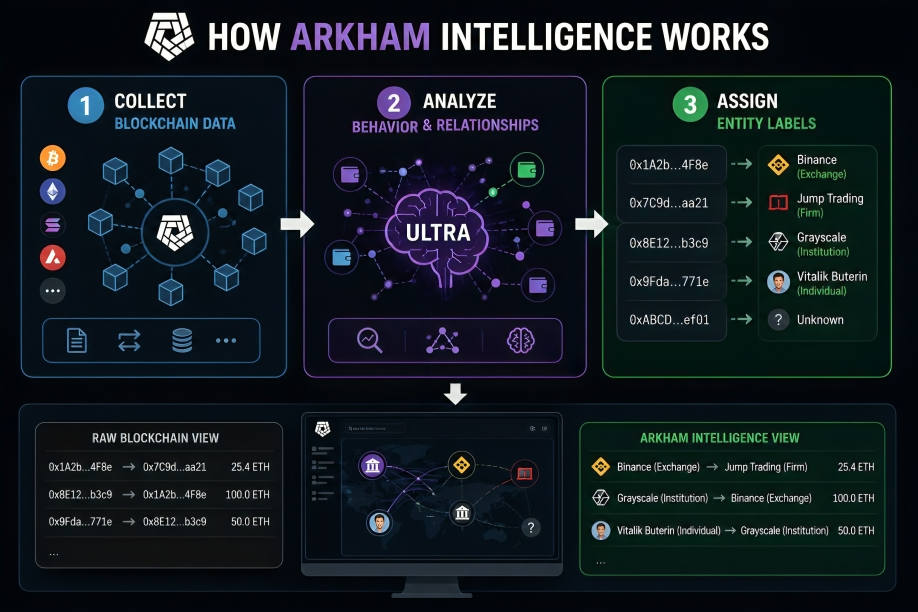
Arkham’s technology revolves around its proprietary artificial intelligence engine called Ultra. The platform collects vast amounts of blockchain data and analyzes transaction patterns, wallet interactions, asset holdings, and behavioral trends.
Using machine learning and entity clustering techniques, Arkham attempts to identify the organizations or individuals behind wallet addresses. The system continuously processes new data and improves its ability to recognize relationships between wallets and entities.
The process generally involves three stages:
- Collecting blockchain transaction data
- Analyzing wallet behavior and relationships
- Assigning entity labels and classifications
As a result, users can view blockchain activity through an intelligence-focused lens rather than raw transaction records.
Simple Example: If several wallet addresses regularly interact with the same exchange account, receive funds from the same source, and follow similar transaction patterns, Arkham’s AI may group them together and label them as belonging to a specific entity. This process helps users identify important market participants more quickly.
Getting Started With Arkham Intelligence
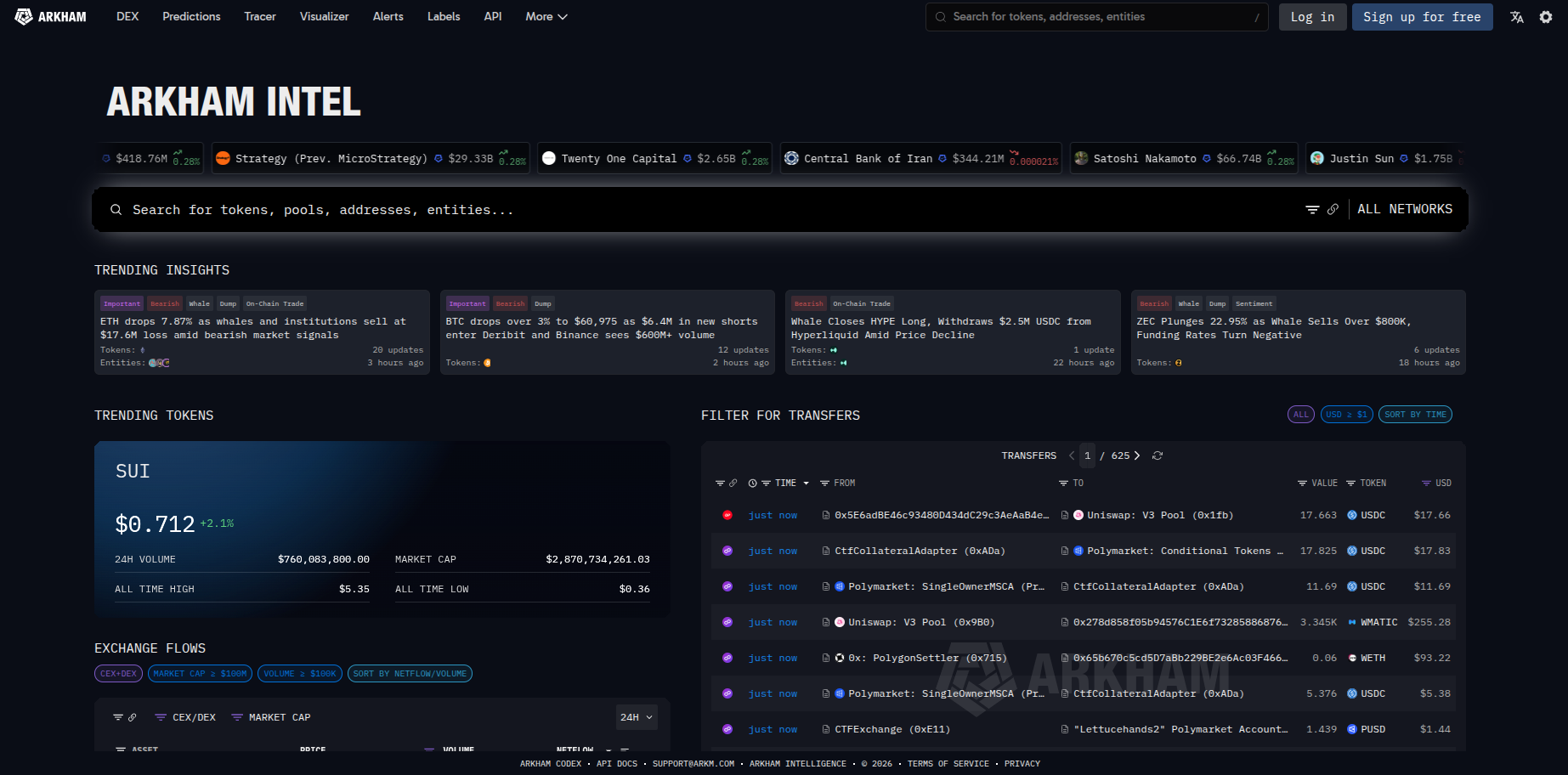
For beginners, getting started with Arkham is relatively straightforward. After creating an account, users gain access to a dashboard containing a variety of analytics and monitoring tools.
The dashboard serves as the central hub for all on-chain research activities. From here, users can search for wallets, analyze portfolios, track large transactions, and monitor market movements in real time.
Rather than trying to learn every feature at once, beginners should focus on understanding the platform’s core tools before exploring advanced functionality.
Is Arkham Intelligence Free to Use?
Arkham offers a free version that allows users to explore wallets, monitor transactions, and access many of its core analytics features. Some advanced tools and premium features may require a paid subscription.
For most beginners, the free version provides more than enough functionality to learn blockchain analytics, track wallet activity, and understand how funds move across blockchains.
How Beginners Can Use Arkham in 5 Minutes
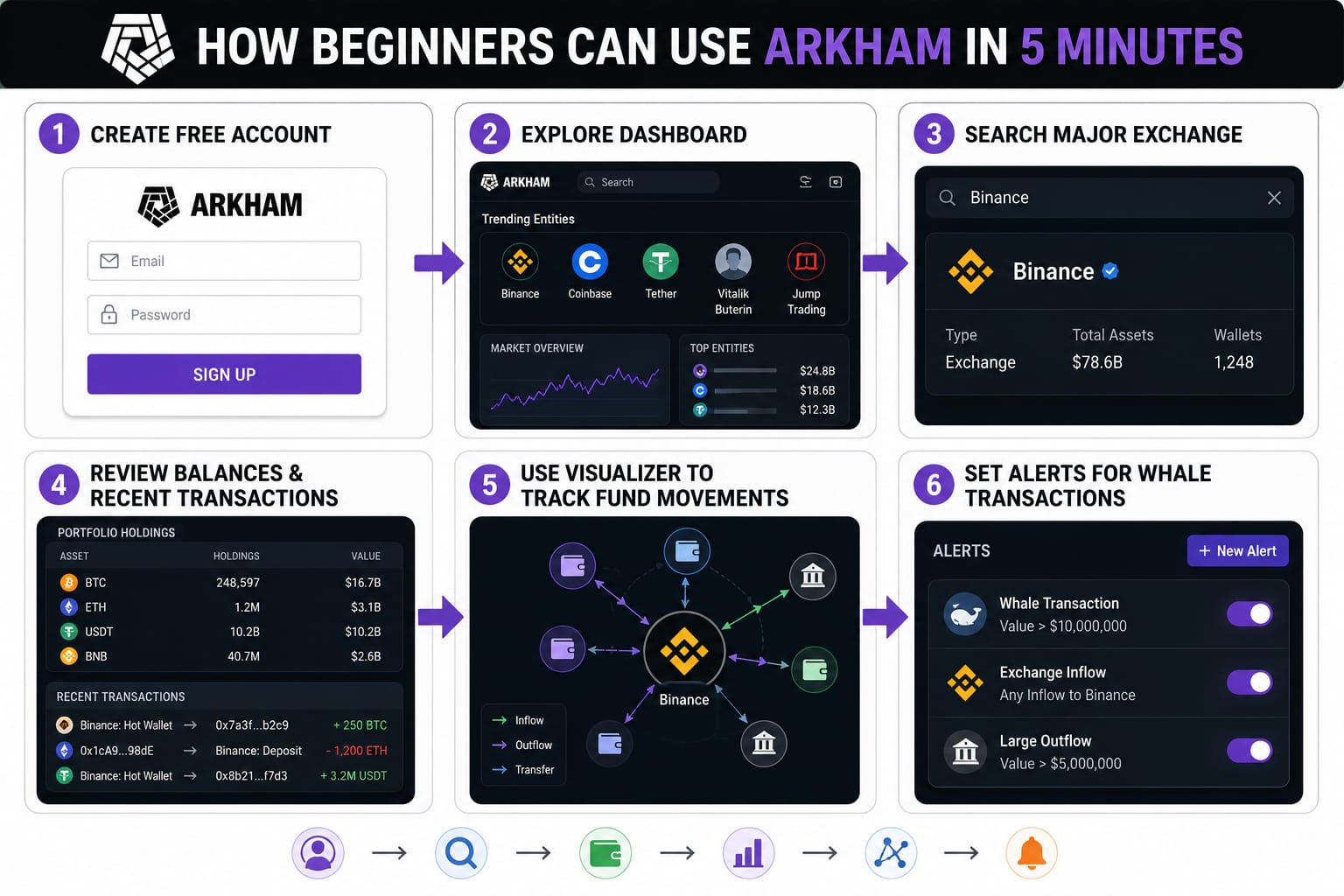
If you’re completely new to Arkham Intelligence, follow these simple steps:
- Create a free Arkham account.
- Open the dashboard and explore trending entities.
- Search for a major exchange like Binance or Coinbase.
- Review wallet balances and recent transactions.
- Use the Visualizer to track fund movements.
- Set alerts for whale transactions and exchange flows.
By following these steps, beginners can quickly learn how blockchain intelligence platforms work without feeling overwhelmed.
Understanding the Arkham Dashboard
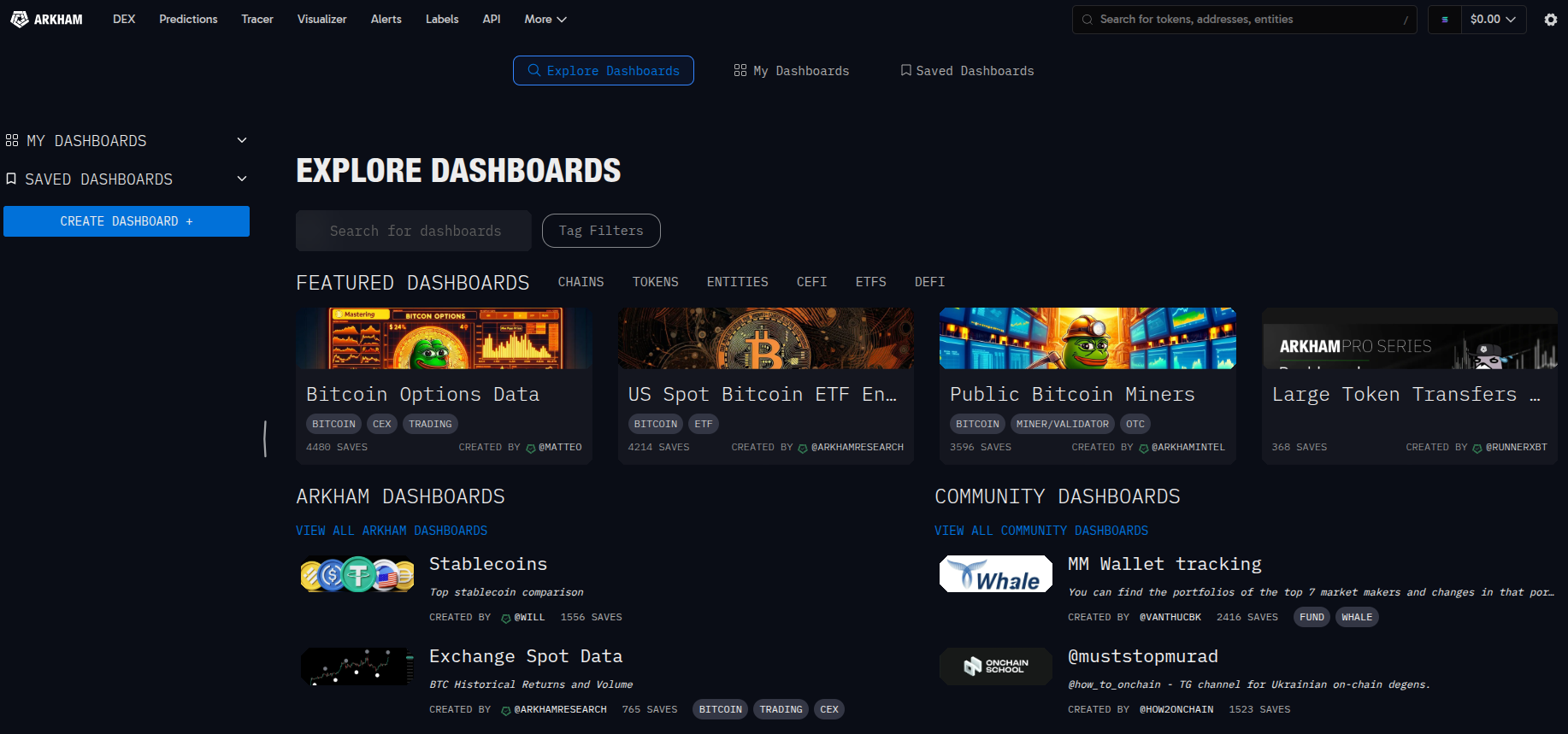
The Arkham dashboard provides a high-level overview of market activity and blockchain intelligence. It is designed to help users quickly identify important developments without manually reviewing thousands of transactions.
The dashboard typically includes:
- Search functionality
- Recent large transfers
- Exchange activity
- Trending entities
- Market intelligence feeds
- Wallet monitoring tools
Spending time exploring the dashboard is one of the best ways for new users to become familiar with how blockchain analytics works.
How to Search for Wallets and Entities
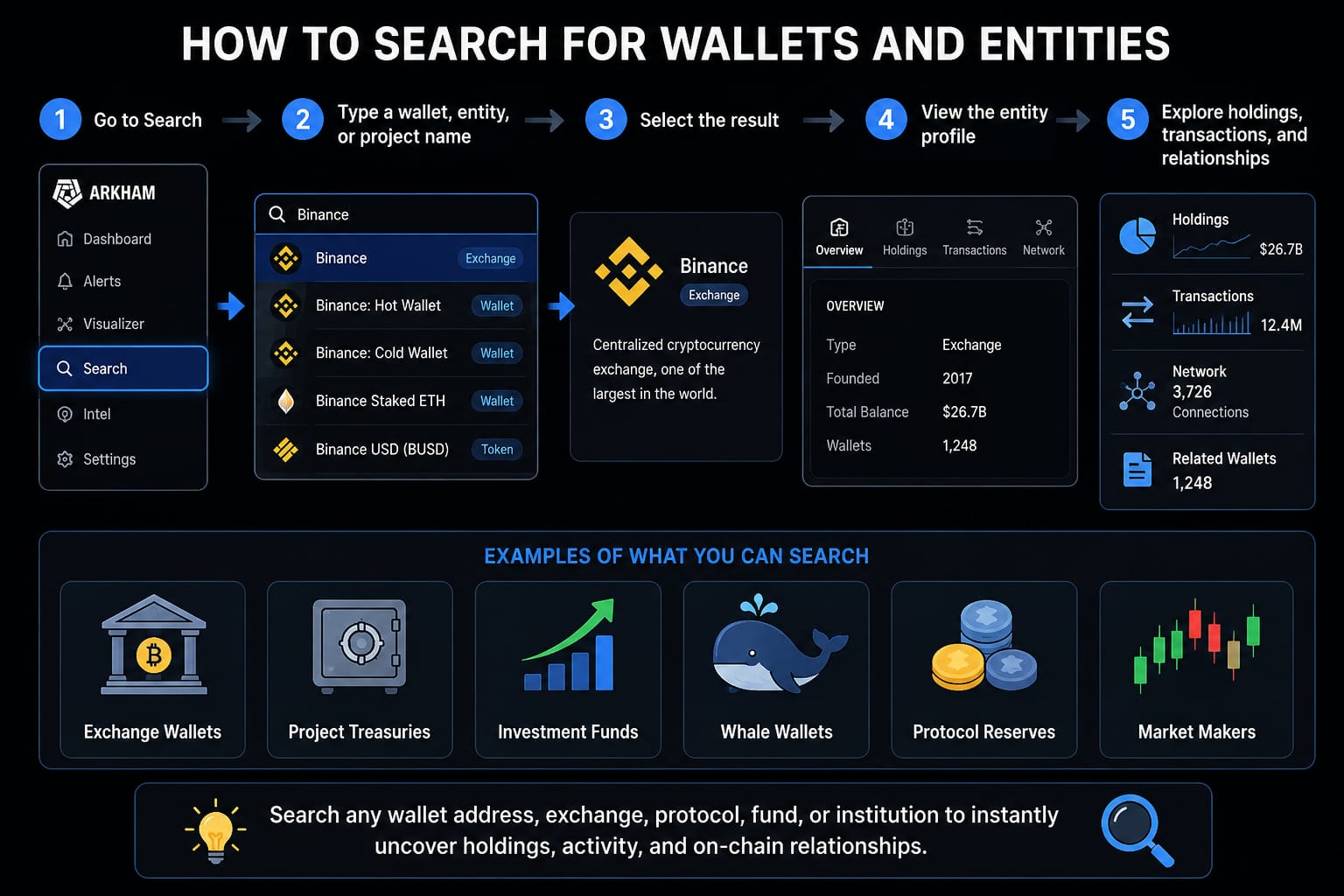
One of Arkham‘s most powerful features is its search system. Users can search for wallet addresses, exchanges, protocols, crypto funds, institutions, and other blockchain entities.
When a search result is available, Arkham displays a detailed profile containing information about the entity’s holdings, transaction history, and wallet relationships.
This allows users to quickly investigate market participants and gain insight into their behavior.
For example, users can research:
- Exchange wallets
- Project treasuries
- Investment funds
- Whale wallets
- Protocol reserves
- Market makers
Instead of analyzing blockchain data manually, users can immediately access a structured overview of the entity’s activity.
Understanding Wallet Analytics
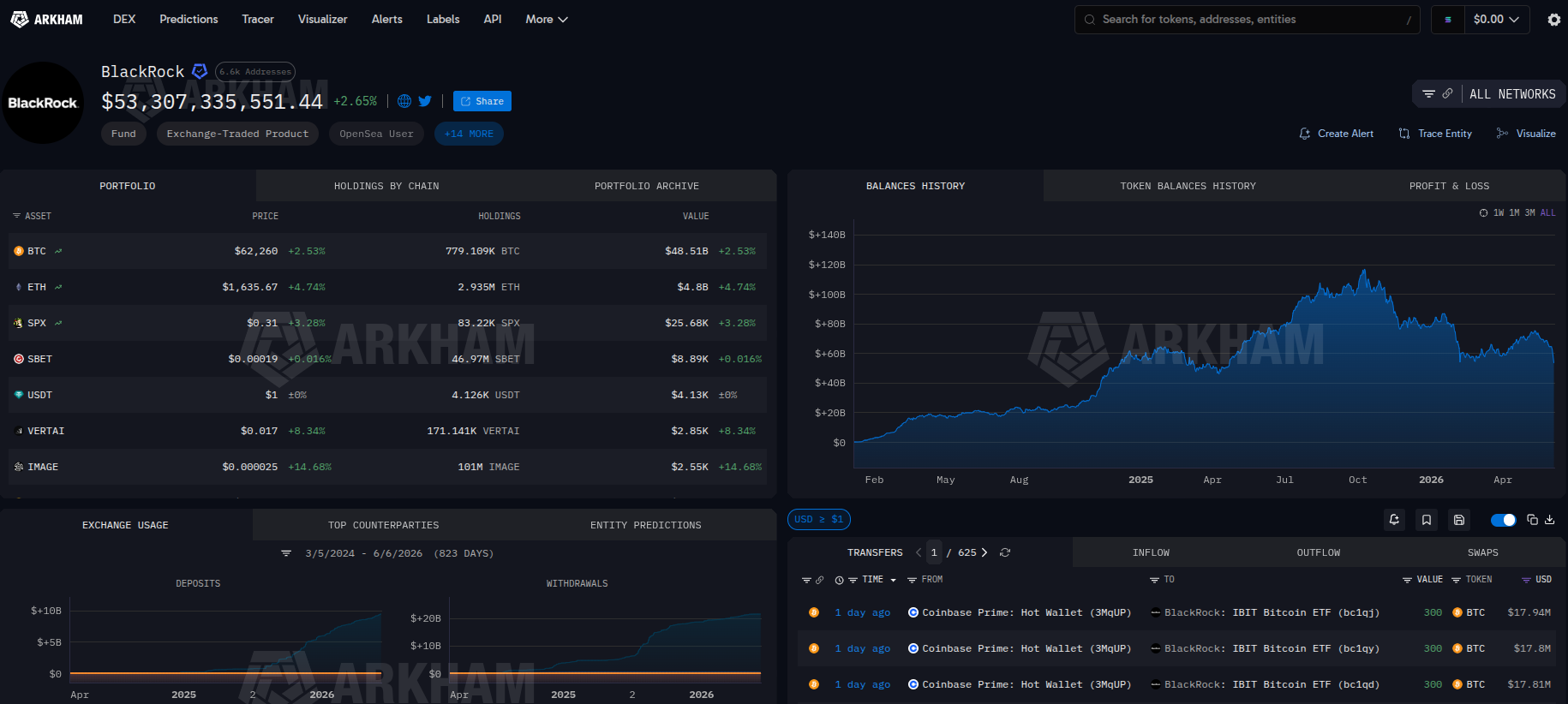
Every wallet page on Arkham contains detailed analytics that help users evaluate blockchain activity. These pages provide significantly more information than traditional blockchain explorers.
Users can review portfolio balances, asset allocations, historical holdings, transaction histories, and wallet interactions from a single screen.
Important information often includes:
- Total portfolio value
- Token holdings
- Historical balance changes
- Recent transactions
- Counterparty activity
- Exchange interactions
These insights make it easier to understand how funds move throughout the crypto ecosystem.
What Beginners Should Look For
- Total portfolio value
- Largest token holdings
- Recent transactions
- Exchange deposits and withdrawals
These four metrics usually provide enough information to understand what a wallet is doing.
Tracking Whales and Smart Money
One of the most popular use cases for Arkham Intelligence is whale tracking. In cryptocurrency markets, whales are individuals or organizations that control large amounts of digital assets and can influence market movements.
By monitoring whale activity, users can identify emerging trends before they become widely discussed. Large purchases, exchange withdrawals, and accumulation patterns can often provide clues about future market behavior.
Smart money tracking focuses on monitoring experienced investors, institutions, and successful market participants whose actions may signal valuable opportunities.
Common activities users monitor include:
- Large token purchases
- Major token sales
- Stablecoin accumulation
- Exchange deposits
- Exchange withdrawals
Following these movements can provide a deeper understanding of market sentiment and investor confidence.
Using the Visualizer Tool
The Visualizer is one of Arkham’s most unique and beginner-friendly features. Instead of reading transaction histories line by line, users can view a graphical representation of how funds move between wallets and entities.
The Visualizer displays connections between addresses and helps users identify relationships that may not be obvious through raw transaction data alone.
This tool is particularly useful for:
- Investigating hacks
- Tracking stolen funds
- Following whale activity
- Mapping wallet relationships
- Understanding transaction routes
For beginners, the Visualizer often provides the easiest introduction to blockchain intelligence because it transforms complex data into a visual format.
Think of the Visualizer as Google Maps for crypto transactions, showing where funds come from and where they move next.
Monitoring Exchange Flows
Exchange flow analysis is another popular feature within Arkham Intelligence. Exchange flows track the movement of cryptocurrencies into and out of centralized exchanges.
Many traders monitor these flows because they can provide clues about market sentiment.
When assets move onto exchanges, it may indicate that investors are preparing to sell. Conversely, when assets leave exchanges, it often suggests long-term holding behavior or accumulation.
Key metrics include:
- Exchange inflows
- Exchange outflows
- Net exchange balance changes
- Stablecoin movements
- Large transfer activity
Although exchange flows should not be used as standalone indicators, they can provide valuable context when combined with other market data.
Setting Up Alerts
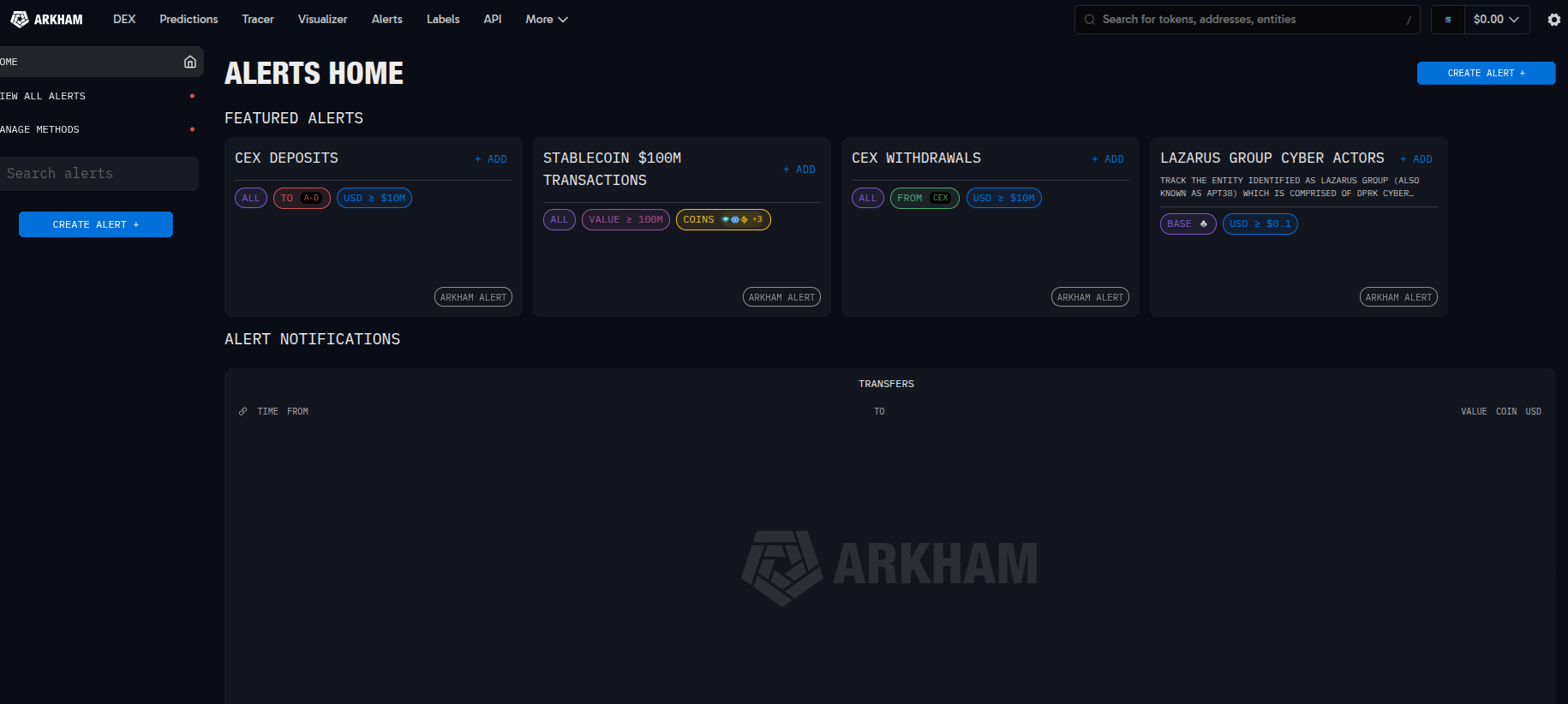
Monitoring blockchain activity manually can be time-consuming. To solve this problem, Arkham allows users to create custom alerts for specific wallets, entities, and transactions. Once configured, alerts automatically notify users when important events occur.
Popular alert types include:
- Whale transactions
- Exchange deposits
- Exchange withdrawals
- Token purchases
- Stablecoin transfers
- Wallet balance changes
This feature helps users stay informed without constantly monitoring the platform.
What Is the Intel Exchange?
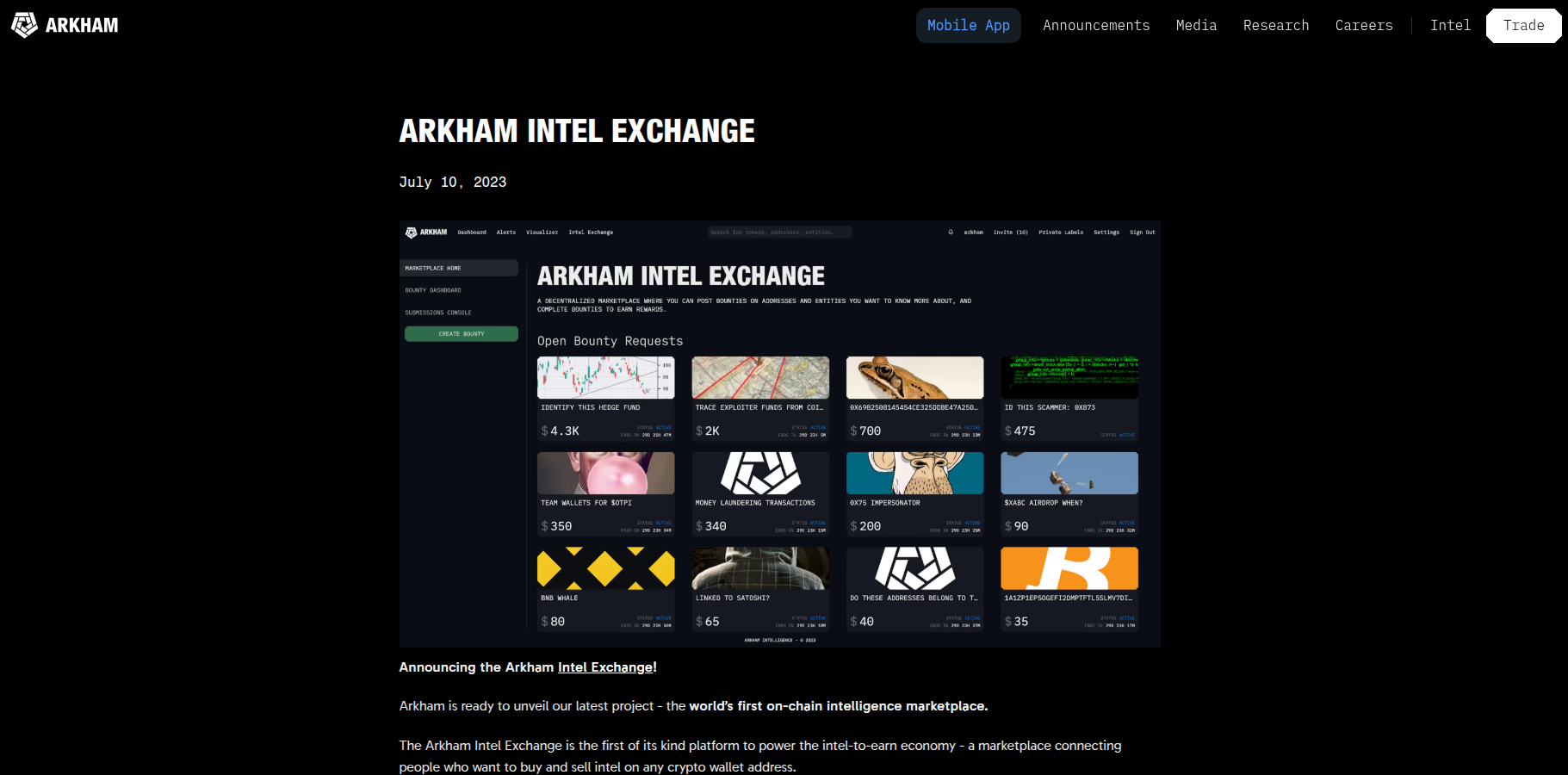
The Intel Exchange is one of Arkham’s most innovative features. It functions as a marketplace where users can buy and sell blockchain intelligence using ARKM tokens.
Users can create bounties requesting information about wallets, exploits, hacks, or suspicious transactions. Researchers then investigate the request and submit their findings. If the submitted intelligence is accepted, the researcher receives a reward.
The Intel Exchange creates financial incentives for blockchain investigations and has introduced a unique intelligence economy within the crypto industry.
Common use cases include:
- Wallet identification
- Scam investigations
- Exploit analysis
- Fund tracing
- Blockchain research
This feature distinguishes Arkham from most traditional blockchain analytics platforms.
Understanding the ARKM Token
ARKM is the native utility token of the Arkham ecosystem. It plays an important role within the Intel Exchange and broader platform infrastructure. The token is primarily used to facilitate transactions between users and researchers participating in intelligence-related activities.
ARKM can be used for:
- Creating bounties
- Purchasing intelligence
- Rewarding researchers
- Participating in ecosystem activities
As the platform grows, ARKM continues to serve as the foundation of Arkham’s incentive system.
Advantages of Using Arkham Intelligence
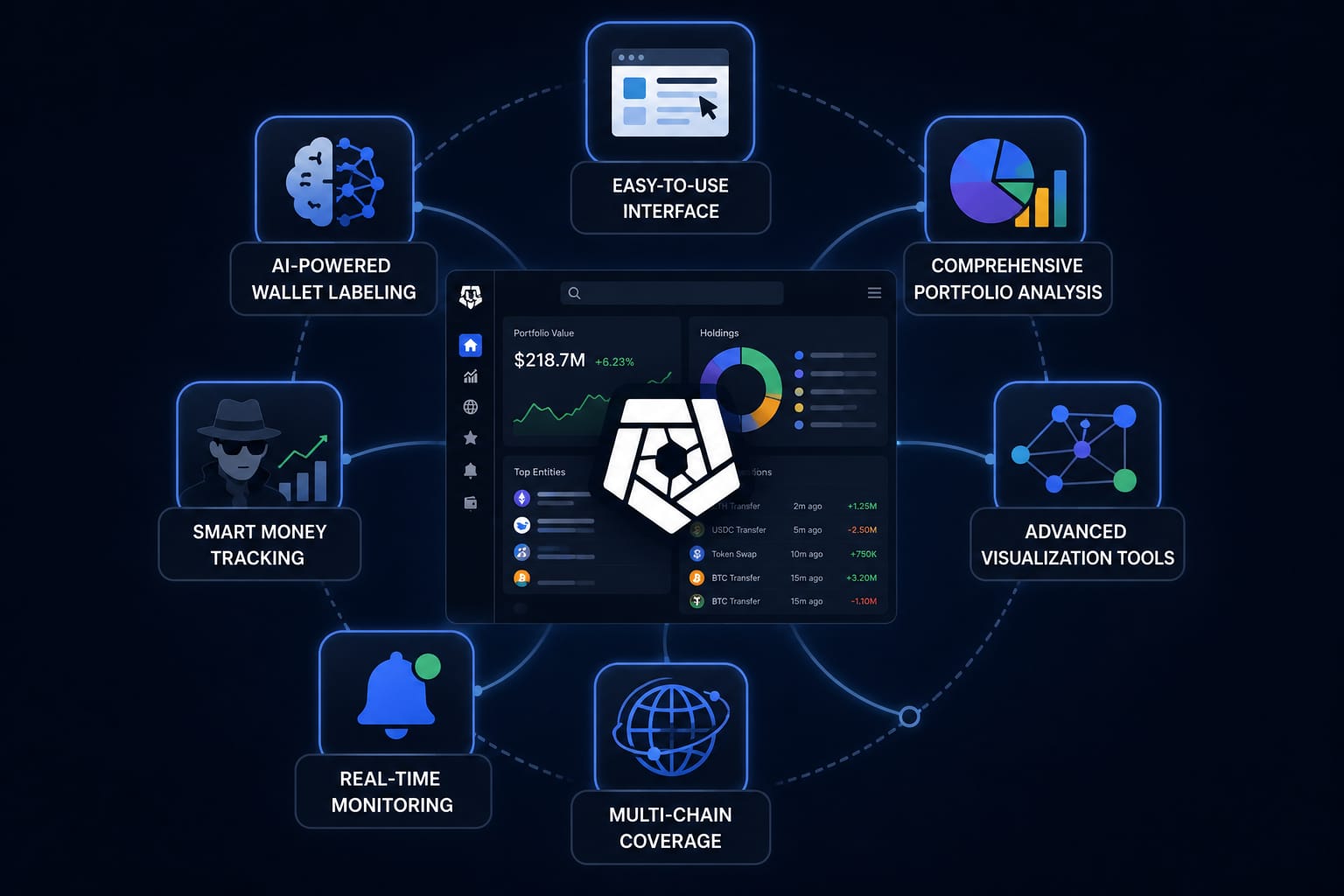
Arkham has gained popularity because it combines powerful analytics with an accessible user experience. The platform makes blockchain intelligence available to users who may not have advanced technical knowledge.
Some of the platform’s biggest strengths include:
- Easy-to-use interface
- AI-powered wallet labeling
- Comprehensive portfolio analysis
- Smart money tracking
- Advanced visualization tools
- Real-time monitoring
- Multi-chain coverage
These features allow users to conduct professional-grade blockchain research with minimal technical expertise.
Limitations and Criticisms
While Arkham offers many advantages, it is not without controversy. Some members of the crypto community have expressed concerns regarding privacy and wallet deanonymization.
Because Arkham attempts to connect wallet addresses with real-world entities, critics argue that it challenges one of cryptocurrency’s core principles: pseudonymity.
Other limitations include:
- Some wallet labels may be inaccurate
- Not all wallets can be identified
- Advanced analytics require experience
- Certain datasets may remain incomplete
Users should always verify information independently before making investment or research decisions.
Who Should Use Arkham Intelligence?
Arkham Intelligence is suitable for anyone interested in understanding blockchain activity at a deeper level. While professional analysts and institutions use the platform extensively, beginners can also benefit from its intuitive interface and visual analytics tools.
The platform is particularly valuable for individuals who want to move beyond basic price analysis and explore what is actually happening on-chain.
- Traders monitoring whale activity and market sentiment
- Investors researching project treasuries and token movements
- Analysts studying capital flows and blockchain trends
- Journalists investigating blockchain-related events
- Security researchers tracking suspicious transactions
- Crypto enthusiasts learning about on-chain analytics
Regardless of experience level, Arkham provides valuable insights that can improve blockchain research and market understanding.
Common Beginner Mistakes When Using Arkham
Many new users misunderstand blockchain analytics and make avoidable mistakes.
- Assuming every whale transaction will move the market
- Trusting wallet labels without verification
- Ignoring broader market conditions
- Following only one wallet instead of multiple signals
- Making investment decisions based on a single transaction
Arkham is most effective when used as a research tool alongside technical analysis, fundamental analysis, and market news.
If you’re interested in applying the concepts covered in this guide, explore our latest on-chain analysis reports, including the Weekly On-Chain Report, Monthly On-Chain Analysis, and Q1 2026 On-Chain Metrics Report to see how blockchain data is used to track network activity, whale movements, and market trends across major ecosystems.
Final Thoughts
For beginners, Arkham Intelligence offers one of the easiest ways to start exploring on-chain analytics. Instead of reading confusing wallet addresses and transaction hashes, users can follow labeled entities, track major investors, monitor exchange flows, and visualize how funds move across blockchains.
While no analytics platform is perfect, Arkham simplifies blockchain research and helps users gain a deeper understanding of the cryptocurrency market. By learning how to use features such as wallet search, whale tracking, alerts, and the Visualizer, beginners can gradually develop valuable on-chain analysis skills and make more informed decisions in the crypto ecosystem.
Ready to explore real-world blockchain trends? Visit our on-chain analysis section for deeper insights into wallet activity, whale movements, and market behavior.
FAQs
1. What is Arkham Intelligence used for?
Arkham helps users track wallets, monitor transactions, identify entities, and analyze blockchain activity.
2. How does Arkham identify wallet owners?
It uses AI and wallet clustering techniques to connect blockchain addresses with exchanges, institutions, and other entities.
3. Is Arkham Intelligence beginner-friendly?
Yes. Its dashboard, wallet search tools, and Visualizer make blockchain analytics easier for beginners.
4. How is Arkham different from a blockchain explorer?
Unlike traditional explorers, Arkham adds entity labels, wallet intelligence, and advanced analytics.
5. Can Arkham help investigate crypto scams?
Yes. Users can trace wallet activity and follow fund movements to analyze suspicious transactions.
6. Can Arkham Intelligence predict crypto prices?
No. Arkham provides analytics and insights, but it does not predict future cryptocurrency prices.
Disclaimer: Cryip's content is strictly for educational and informational purposes and does not constitute financial, legal, or investment advice. Cryptocurrency involves significant risk, and readers assume full responsibility for their own financial decisions. Asset references are never endorsements.
To make complex crypto topics accessible to readers at all experience levels, our team uses AI tools strictly to refine language, correct grammar, and simplify terminology. AI is never used to draft facts, source information, or form conclusions. Every article is fact-checked and approved by a human editor before publication. Read our full AI Use & Content Policy.