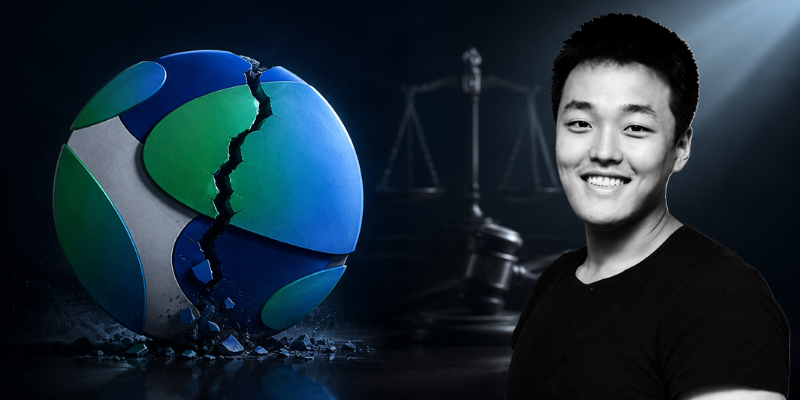


The Singapore International Commercial Court (SICC) has ruled that Terraform Labs Pte Ltd and its co-founder Do Kwon are liable for fraud related to the 2022 collapse of the TerraUSD (UST) stablecoin. The court ordered the defendants to pay more than 3 million US dollars in damages to a group of 40 investors. According to Bloomberg, This decision completes the second phase of a larger representative action that began with 275 plaintiffs. These investors claimed major financial losses after UST dramatically lost its dollar peg and crashed in May 2022. The judgment highlights how misleading statements about algorithmic stablecoin stability can result in legal liability under Singapore law.
Background of the Case
The Terra ecosystem’s collapse erased nearly $40 billion in market value within days, sending shockwaves through the global crypto market. UST, designed to maintain a one-to-one peg with the US dollar through algorithmic mechanisms, lost its stability, triggering a death spiral that also devastated its sister token LUNA.
The fallout also intensified scrutiny of Singapore’s crypto ecosystem, with regulators and law enforcement taking a tougher stance on digital asset-related misconduct. That broader enforcement trend has been reflected in several high-profile cases involving crypto fraud and financial crimes.
Investors in the Singapore lawsuit claimed that Terraform Labs and Kwon made false representations about UST’s reliability and risk profile, inducing them to purchase the tokens. In earlier proceedings ([2025] SGHC(I) 17), the SICC found that several key representations by the defendants were fraudulent and had induced reliance by certain claimants. Damages were assessed on a reliance basis, focusing on actual losses suffered rather than hypothetical expectations.
A subsequent appeal ([2026] SGCA(I) 1) refined aspects of how damages should be calculated in volatile crypto markets, including the appropriate “cut-off” date after which investors could no longer reasonably claim losses. The appellate court largely upheld the findings of fraud and liability while adjusting individual awards.
Details of the Latest Ruling
In Monday’s decision, the court focused on a subset of 40 plaintiffs and awarded compensation based on factors such as the volume of UST held and the timing of their investments. While the $3 million+ payout represents only a portion of the total claims, it provides a concrete legal victory for affected investors and paves the way for further proceedings in the broader case.
Legal experts view this as a landmark for the crypto industry in Singapore, demonstrating that existing fraud and misrepresentation laws apply to digital asset projects. The SICC’s handling of this representative action, the first of its kind in the court, may serve as a model for future cross-border crypto disputes.
Broader Implications
Do Kwon and Terraform Labs continue to face multiple legal challenges worldwide, including criminal proceedings in the United States and South Korea. The Singapore ruling adds to the mounting pressure on crypto founders to ensure transparency in their communications with investors.
Authorities across Asia have also been pursuing other financial crime investigations involving digital assets and corporate misconduct, reflecting increased regional cooperation in tackling complex cross-border cases. For the plaintiffs, the decision offers partial recourse, though recovery may depend on the defendants’ assets and ongoing bankruptcy-related proceedings involving Terraform Labs.
This case highlights the growing scrutiny on stablecoins and algorithmic finance, as regulators and courts worldwide seek to protect retail investors from high-risk crypto products marketed as “safe.
Disclaimer: Cryip's content is strictly for educational and informational purposes and does not constitute financial, legal, or investment advice. Cryptocurrency involves significant risk, and readers assume full responsibility for their own financial decisions. Asset references are never endorsements.
To make complex crypto topics accessible to readers at all experience levels, our team uses AI tools strictly to refine language, correct grammar, and simplify terminology. AI is never used to draft facts, source information, or form conclusions. Every article is fact-checked and approved by a human editor before publication. Read our full AI Use & Content Policy.