
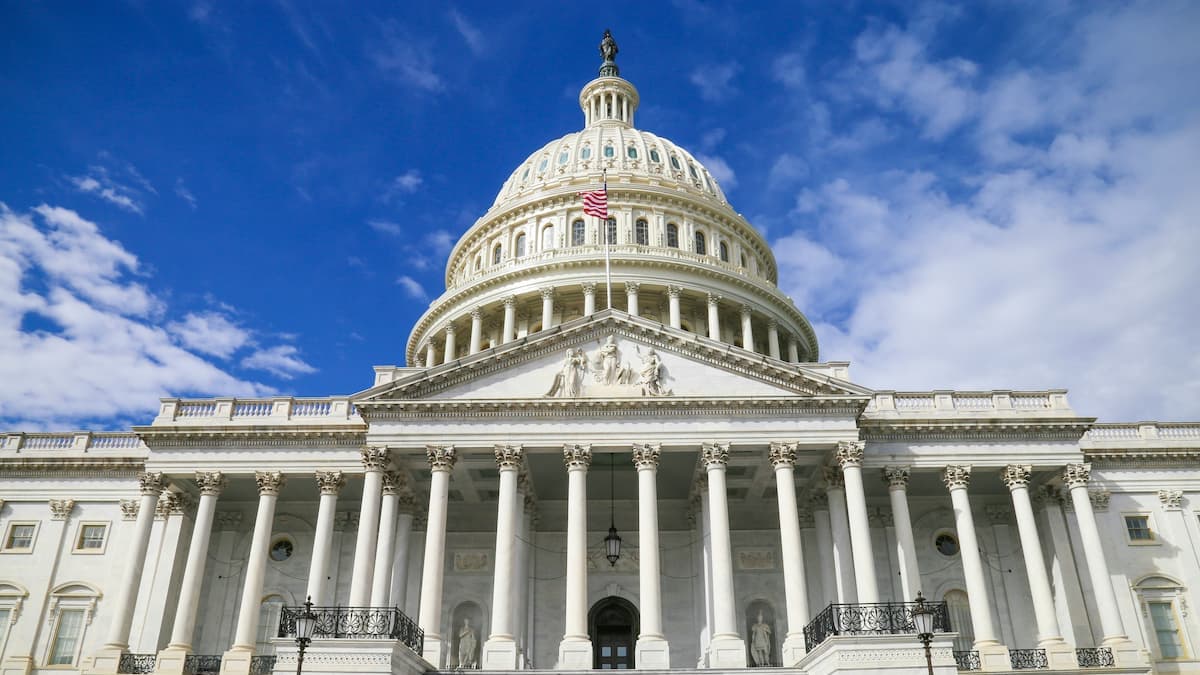


Senate Delays CLARITY Act Vote Until After August Recess. Senate Majority Leader John Thune confirmed the delay Thursday, pushing a procedural vote on the crypto market structure bill to September, when the Senate returns with roughly 14 working days to pass it before breaking again for the midterm campaign trail.
Thune framed the delay as a scheduling problem solved by patience: “We’re getting that queued up first thing when we come back.” The Senate’s own procedural rules suggest patience was never really the constraint.
What the Delay May Signal
Filing a cloture motion (the procedural step that forces an end to debate and sets up a final vote) before the Senate’s Friday departure, rather than after lawmakers return Sept. 14, would have moved the earliest possible floor vote up by exactly one day, from Sept. 16 to Sept. 15. Set against the unresolved 50-vote question, that absence points to a different read: leadership doesn’t believe a day of lead time changes a vote count that’s still short by seven to nine senators.
The Senate’s Friday floor time was already committed elsewhere: a government funding measure, a Russia sanctions bill, and a slate of nominations all had time agreements limiting debate. CLARITY did not. It’s possible cloture wasn’t filed simply because there was no room left on the schedule, not because leadership judged the vote unwinnable.
The Bigger Problem the Delay Is Covering For
Three disputes remain open around the Clarity Act claims: a government-ethics provision aimed at President Trump, who disclosed making more than $1 billion from his crypto businesses in 2025; illicit-finance language; and unresolved Agriculture Committee provisions. Trump had agreed to ethics language brokered by Sen. Cynthia Lummis, but Senate Democrats and Republican Sen. Thom Tillis objected. Tillis and Sen. Ruben Gallego sent a counter-proposal to the White House in late July; as of Thursday, the White House hadn’t responded.
A Tight September Window for CLARITY
The Senate returns Sept. 14 and has about 14 working days across September and October before the next recess for midterm campaigning. Every one of those days will also compete with the same government-funding fight and Russia-sanctions business that already ate into August’s floor time. A legislative staffer following the bill said it would easily have a chance at passage in September if the outstanding issues get resolved first, a condition that continues to weigh on CLARITY Act passage odds, the same conditional that’s been attached to CLARITY since May.
GENIUS Faced the Same Fight and Passed Anyway
The CLARITY Act isn’t the first crypto bill where Trump’s own conflicts of interest became a sticking point. Warren and Merkley raised nearly identical objections about Trump family crypto ties before the GENIUS Act’s 2025 Senate vote, and GENIUS passed anyway, 68-30. What’s different this time is that Trump’s 2025 financial disclosure, released by the Office of Government Ethics on June 30, 2026, put a number on it: roughly $1.4 billion in crypto-related income, filed on 927 pages versus eight for President Obama’s final disclosure. Sen. Angela Alsobrooks, part of the coalition that helped pass GENIUS, is now one of two Democrats who rejected CLARITY’s ethics language outright.
Timeline
- Jul. 17, 2025: CLARITY Act passes the House, 294-134
- May 12, 2026: Senate Banking Committee releases 309-page compromise text
- May 14, 2026: Senate Banking Committee approves compromise, 15-9
- Jun. 1, 2026: Placed on Senate Legislative Calendar
- Jul. 22, 2026: Republican ethics draft published; Gallego and Alsobrooks reject it
- Jul. 27, 2026: Senate sets CLARITY aside for other floor priorities
- Aug. 6, 2026: Thune confirms vote delayed to September
FAQs
1. What does the CLARITY Act actually do?
It would create a federal framework dividing crypto oversight between the SEC and CFTC, similar to how existing securities and commodities law works for traditional assets.
2. Why does it need 60 votes?
Senate rules require 60 votes to end debate (invoke cloture) and move to a final vote on most legislation; Republicans hold 53 seats, so they need Democratic crossover votes to advance it.
3. What happens if it doesn’t pass in 2026?
The bill would have to be reintroduced in the next Congress, with realistic enactment pushed to mid-2027 at the earliest.
Disclaimer: Cryip's content is strictly for educational and informational purposes and does not constitute financial, legal, or investment advice. Cryptocurrency involves significant risk, and readers assume full responsibility for their own financial decisions. Asset references are never endorsements.
To make complex crypto topics accessible to readers at all experience levels, our team uses AI tools strictly to refine language, correct grammar, and simplify terminology. AI is never used to draft facts, source information, or form conclusions. Every article is fact-checked and approved by a human editor before publication. Read our full AI Use & Content Policy.