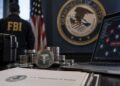



Wintermute USA LLC, the New York-based affiliate of London crypto market maker Wintermute, registered as a broker-dealer with the U.S. Securities and Exchange Commission and became a member of the Financial Industry Regulatory Authority on Aug. 6, 2026. The registration lets the firm trade traditional equities and equity options, act as an authorized participant for exchange-traded products including those tied to digital assets, and self-clear digital-asset securities transactions (settle its own trades directly, without routing them through a third-party clearing firm), all for its own proprietary account.
Good morning, USA 🇺🇸
Wintermute USA is now an SEC-registered broker-dealer and FINRA member (https://t.co/7rQGL6UzX6)
The registration marks Wintermute’s entry into U.S. regulated markets and strengthens our coverage of institutional counterparties in the region pic.twitter.com/IBZBbAB7GP
— Wintermute (@wintermute_t) August 6, 2026
Wintermute’s First Step Into U.S. Securities
A crypto-native trading firm holding a U.S. broker-dealer license is still rare. Wintermute’s own CEO, Evgeny Gaevoy, framed the registration as proof of a long-held view at the firm:
“Digital asset markets will evolve in more than one direction.”
Wintermute has built its business entirely inside crypto-native venues since 2017; this license is its first direct foothold inside the plumbing of traditional U.S. securities markets, where it currently holds none.
An 18-Month Push Into U.S. Markets
The registration is the latest step in a sequence Wintermute laid out itself, in public, over roughly eighteen months.
- February 2025: Announces a renewed U.S. focus at Consensus Hong Kong.
- May 2025: Opens its New York headquarters and appoints Ron Hammond as Head of Policy and Advocacy.
- September 2025: Submits recommendations to the SEC’s Crypto Task Force on tokenized securities.
- Late September 2025: Holds discussions with SEC Commissioner Hester Peirce and the Crypto Task Force.
- October 2025: Seeks clarification on Customer Protection Rule exemptions for own-account, on-chain settlement.
- August 2026: Receives SEC and FINRA registration as a self-clearing broker-dealer.
The progression shows that the broker-dealer registration was not an isolated approval but the outcome of a broader U.S. expansion strategy. Alongside establishing a physical presence in New York, Wintermute spent months engaging with regulators on how tokenized securities should be traded, settled, and custodied within the existing U.S. securities framework. The authority granted in August 2026 closely aligns with the regulatory positions the firm had advocated throughout that process.
What Wintermute Asked For, and What It Got
The overlap between Wintermute’s SEC filings and the scope of its new registration is narrow but specific. The September 2025 submission covered three areas: clarity for dealers trading tokenized securities, room for DeFi markets to operate without triggering dealer registration, and confirmation that network tokens like bitcoin and ether aren’t securities, amid the SEC’s broader focus on SEC crypto fraud and digital-asset regulation. Only the first area shows up in the actual registration. The DeFi carve-out and the network-token question remain open; nothing in Wintermute USA’s new authority touches either.
The October follow-up letter was narrower and more precise, asking the SEC to confirm that a dealer trading tokenized securities solely for its own account, without hosting a wallet or providing brokerage services for the counterparty, could settle those trades on-chain without triggering the bank-account requirements of the Customer Protection Rule. That’s close to a plain description of what Wintermute USA’s registration now permits. Wintermute wasn’t the only firm pushing similar language. Ledger raised comparable self-custody questions with the same Task Force in April 2026. Whether Wintermute’s specific filings shaped the SEC’s eventual position, or the firm structured its own registration to fit an exemption theory the agency never formally endorsed, isn’t something the registration alone settles.
Two Paths to the Same License
Wintermute reached broker-dealer status by applying directly. One of its larger rivals, GSR, took a different route. In October 2025, GSR agreed to acquire Equilibrium Capital Services, a dormant, already-registered broker-dealer, rather than build a license from scratch. GSR’s chief strategy officer, Joshua Riezman, said at the time that no other major crypto market maker held a U.S. broker-dealer license and predicted more would follow. The acquisition closed in June 2026, with the entity renamed GSR Securities, about two months before Wintermute’s registration cleared.
| Wintermute | GSR | |
|---|---|---|
| Method | Direct SEC/FINRA application | Acquired an existing registered shell (Equilibrium Capital Services) |
| Timeline | Feb. 2025 intent to Aug. 2026 registration (18 months) | Oct. 2025 acquisition agreement to June 2026 FINRA approval (8 months) |
| Scope | Proprietary trading, ETP AP status, self-clearing | Broader brokerage platform for institutional clients |
What Registration Doesn’t Buy Yet
Gaevoy has said he wants Wintermute to compete with Jump Trading, Jane Street and Citadel Securities within three to five years. That is a long way from where the firm stands today. BlackRock’s iShares Bitcoin Trust, which held $43.2 billion at the end of June, lists roughly a dozen authorized participants in its prospectus, including Jane Street, Citadel Securities, Virtu Americas, Goldman Sachs and JPMorgan. None of them is a crypto-native trading firm. Wintermute’s new registration makes it eligible to seek that kind of role; it does not yet have it. Coverage of the announcement suggests Wintermute has already lined up ETF issuers as clients. The next twelve months should show whether registration converts into an actual seat: specifically, whether Wintermute lands authorized-participant status on a live digital-asset ETP, or wins any designated-market-maker role on a national exchange, or follows the broader industry trend toward U.S. stock trading in UK markets. Absent either, the license remains eligibility rather than market share.
Timeline
- Feb. 19, 2025: Gaevoy signals a new U.S. focus
- May 15, 2025: Wintermute opens its New York HQ, hires Ron Hammond
- Sept. 3, 2025: Wintermute’s first written submission to the SEC Crypto Task Force
- Sept. 16, 2025: Wintermute meets with Commissioner Peirce and the Task Force
- Oct. 2, 2025: Rival GSR agrees to acquire a FINRA-registered broker-dealer shell
- Oct. 27, 2025: Wintermute’s follow-up letter on self-clearing exemptions
- June 10, 2026: GSR completes its acquisition, renamed GSR Securities
- Aug. 6, 2026: Wintermute USA registers directly with the SEC and FINRA
FAQs
1. What does a broker-dealer license actually let Wintermute USA do?
It can trade stocks and options, act as an authorized participant creating and redeeming shares of exchange-traded products (including crypto ETPs), and self-clear digital-asset securities trades, all only for its own account, not on behalf of outside clients.
2. Why do crypto market makers want U.S. broker-dealer status?
Without it, firms like Wintermute and GSR can’t legally participate in the authorized-participant and market-making roles that traditional finance firms hold inside regulated U.S. securities markets, including crypto ETFs.
3. What does “self-clear” mean here?
It means Wintermute USA can settle its own digital-asset securities trades directly, using its own systems and wallet infrastructure, instead of routing them through a third-party clearing firm.
Disclaimer: Cryip's content is strictly for educational and informational purposes and does not constitute financial, legal, or investment advice. Cryptocurrency involves significant risk, and readers assume full responsibility for their own financial decisions. Asset references are never endorsements.
To make complex crypto topics accessible to readers at all experience levels, our team uses AI tools strictly to refine language, correct grammar, and simplify terminology. AI is never used to draft facts, source information, or form conclusions. Every article is fact-checked and approved by a human editor before publication. Read our full AI Use & Content Policy.