
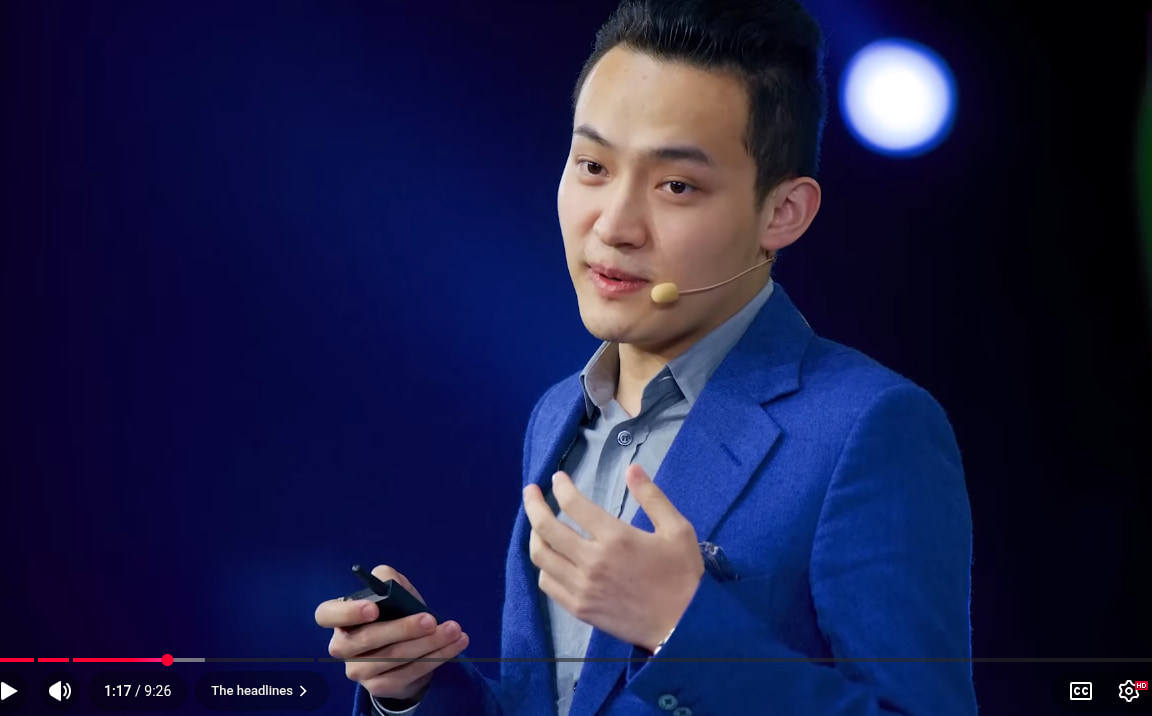


A federal judge in California ruled today that Justin Sun’s individual claims against World Liberty Financial will stay in open court, rejecting the company’s bid to move the entire dispute into private arbitration and seal the record. The judge also declined to send all of the company-related claims to arbitration, instead ordering Sun and World Liberty to negotiate which of those claims belong in court and which go to arbitration.
The ruling keeps alive the possibility that discovery in the case surfaces details World Liberty would rather keep private, including how its token contract actually works. Sun, an early and major investor in World Liberty’s WLFI token, is suing over what his complaint describes as a hidden backdoor that lets the company freeze, restrict, or burn any holder’s tokens without notice. He says World Liberty used that power against him.
What Sun’s Lawsuit Alleges
Today, my counsel appeared in California federal court to oppose World Liberty Financial’s @worldlibertyfi efforts to force our dispute into secret arbitration proceedings and seal documents from public view.
We argued forcefully that this case belongs in open court—and the…
— H.E. Justin Sun 👨🚀 🌞 (@justinsuntron) August 20, 2026
Sun invested $45 million in World Liberty’s token sale, an infusion his complaint credits with helping turn a struggling raise into one that ultimately reached $550 million. According to Sun’s complaint, World Liberty then froze his WLFI holdings, an amount independently confirmed at about $9 million, using a freeze function embedded in the smart contract.
Sun says he obtained a court order barring World Liberty from destroying or reallocating his tokens while the case proceeds, and he’s suing for hundreds of millions of dollars in damages.
Sun also says World Liberty has built the same freeze capability into USD1, its stablecoin. That claim isn’t purely hypothetical. World Liberty froze USD1-linked addresses tied to the exchange HTX earlier this year, saying it was complying with UK sanctions rules after Huobi Global was designated over alleged Russian sanctions-evasion activity. HTX disputed that characterization and delisted USD1 in response, saying the frozen funds belonged to ordinary users.
World Liberty’s Response
World Liberty has rejected Sun’s allegations. Chief executive Zach Witkoff has called the lawsuit “a desperate attempt to deflect attention from Sun’s own misconduct” and said Sun’s claims are “entirely meritless,” adding that Sun’s own conduct forced the company to act to protect itself and its users. Co-founder Eric Trump dismissed the suit without addressing its specific claims.
The company has also countersued Sun for defamation in Florida state court. Its attorney, Tom Clare, said in a statement that Sun “chose to defame World Liberty,” doing so “repeatedly, publicly, and to millions of followers,” and that the company is “eager to expose the falsity of Sun’s statements in court and in public.”
The Financial Picture Around the Case
World Liberty’s broader financial structure as evidence the company may struggle to pay a judgment if he wins. World Liberty has deposited roughly 5 billion WLFI tokens, about half its treasury, as collateral on the lending platform Dolomite, borrowing at least $75 million against it, including its own USD1.
Dolomite was co-founded by a person Sun’s complaint identifies as World Liberty’s chief technology officer; other reporting has instead described that person as an adviser to the company. Sun’s complaint says industry analysts have compared the arrangement to the kind of circular leverage that preceded FTX’s collapse.
Separately, World Liberty co-founder Chase Herro is named in an unrelated Dough Finance investor lawsuit. Investor Jonathan Lopez alleges Herro diverted about $2.5 million; the case remains unresolved.
The table below separates what’s actually before the judge from what Sun cites only as supporting context.
| Dispute | Issue | Status | In Ruling? |
|---|---|---|---|
| Sun’s WLFI/USD1 suit | Sun alleges WLFI freeze function was used against his holdings. | Individual claims stay in court; company claims split. | Yes |
| World Liberty’s Dolomite borrowing | ~5B WLFI pledged; at least $75M borrowed. | No lawsuit; arrangement defended. | No |
| Dough Finance investor suit | Investor alleges Herro diverted ~$2.5M. | Unresolved; trial set for April 2026. | No |
Sun’s Own History With Similar Claims
Sun has drawn a comparison to an earlier dispute of his own. He has separately accused First Digital Trust and its agent, Vincent Chok, of misappropriating roughly $500 million in reserves backing the TUSD stablecoin, which he says contributed to a de-pegging of the related FDUSD token and its removal from Binance trading pairs.
First Digital’s chief executive has pushed back, saying the company acted as a custodian, not a fiduciary, over those funds. Sun cites that episode as the reason he now says he’s watching World Liberty and USD1 closely.
- Token Sale: Sun Invests $45 Million in WLFI: Justin Sun invests $45 million in World Liberty Financial’s WLFI token sale, according to his complaint.
- After the Investment: Sun’s WLFI Holdings Are Frozen: Sun alleges that World Liberty used a freeze mechanism embedded in the WLFI smart contract to restrict his holdings.
- April 2026: Sun Files Federal Lawsuit: Sun brings his dispute with World Liberty before a federal court in California, seeking damages and challenging the treatment of his WLFI holdings.
- 2026: World Liberty Files Defamation Suit: World Liberty separately countersues Sun for defamation in Florida, arguing that he publicly made false statements about the company.
- August 20, 2026: California Court Keeps Sun’s Individual Claims in Court: The judge rejects World Liberty’s attempt to move the entire dispute into private arbitration and keeps Sun’s individual claims in federal court.
Public reporting on today’s ruling has not identified the presiding judge or the case’s docket number, and the description of the Dolomite co-founder as World Liberty’s chief technology officer, versus an adviser, remains contested. Both points should be treated as open, not settled.
Disclaimer: Cryip's content is strictly for educational and informational purposes and does not constitute financial, legal, or investment advice. Cryptocurrency involves significant risk, and readers assume full responsibility for their own financial decisions. Asset references are never endorsements.
To make complex crypto topics accessible to readers at all experience levels, our team uses AI tools strictly to refine language, correct grammar, and simplify terminology. AI is never used to draft facts, source information, or form conclusions. Every article is fact-checked and approved by a human editor before publication. Read our full AI Use & Content Policy.