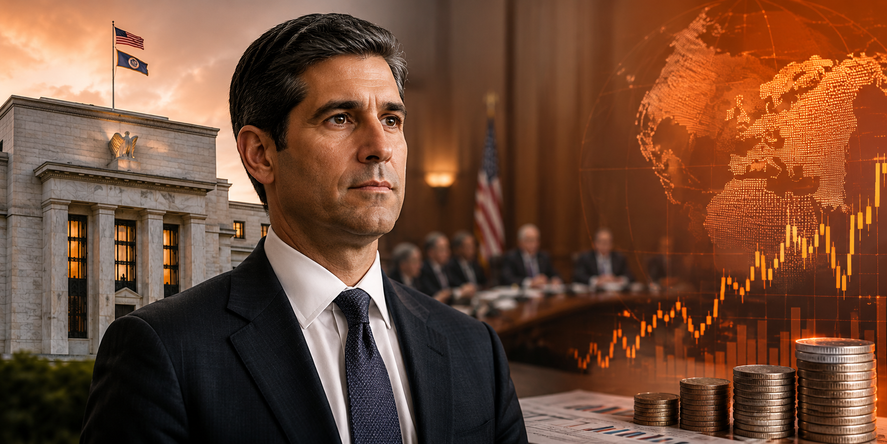


The U.S. Senate has confirmed Kevin Warsh as the next chair of the Federal Reserve in a narrow 54–45 vote, underscoring growing political divisions surrounding the future direction of U.S. monetary policy.
Warsh will officially replace Jerome Powell after Powell’s term ends this week. The vote largely followed party lines, with Pennsylvania Senator John Fetterman becoming the only Democrat to support the nomination. It marked the closest Senate confirmation margin for a Federal Reserve chair since the current approval process began in 1977.
The confirmation arrives at a sensitive moment for the U.S. economy as inflation remains elevated and President Donald Trump continues publicly pressuring the Federal Reserve to reduce interest rates ahead of the 2026 election cycle.
Inflation and Energy Costs Create Immediate Challenge
Warsh takes over leadership of the central bank while inflation pressures continue to weigh on consumers and financial markets. Recent data showed U.S. inflation rising at an annual rate of 3.8% in April, its fastest pace in nearly a year.
Much of the recent inflation surge has been driven by rising global energy prices following disruptions tied to conflict in the Middle East and shipping instability around the Strait of Hormuz. Higher costs for food, housing, and airfare have also contributed to broader inflation concerns across the economy.
Under normal conditions, the Federal Reserve typically maintains or raises interest rates when inflation remains persistent in order to slow borrowing and spending. However, Trump has repeatedly argued that lower rates are necessary to strengthen economic growth and support financial markets.
That pressure could place Kevin Warsh in a difficult position as he begins leading a Federal Reserve committee that remains divided over whether rates should stay elevated for longer. Market participants are also tracking major policy developments in Washington, including the U.S. Senate crypto regulation vote, as regulatory decisions continue to influence broader investor sentiment.
Warsh Promises to Protect Fed Independence
During his Senate confirmation hearing, Warsh attempted to reassure lawmakers that the Federal Reserve would remain independent from political influence.
He stated that he would not act as a “sock puppet” for the White House and emphasized the importance of preserving the credibility of the central bank. At the same time, lawmakers remain focused on broader financial reforms, including the U.S. Senate Banking Committee CLARITY crypto bill, as Washington continues debating the future of cryptocurrency regulation.
Senator Elizabeth Warren argued that the nomination risked politicizing the Federal Reserve during a period of economic uncertainty and volatile global markets. The relationship between Trump and Powell had become increasingly hostile over the past several years, with the president repeatedly criticizing Powell for refusing to cut rates aggressively enough.
Long Wall Street and Fed Background
Warsh is one of the youngest individuals ever appointed to the Federal Reserve Board, having joined as a governor in 2006 at age 35. During the 2008 financial crisis, he worked closely with then-chair Ben Bernanke on emergency measures aimed at stabilizing the financial system.
Before entering public service, Warsh worked in investment banking and later developed strong connections within influential business circles. He is married to Jane Lauder, a member of the family behind The Estée Lauder Companies.
Financial markets are now closely watching whether Warsh will maintain the Federal Reserve’s cautious stance on inflation or gradually move toward the rate cuts favored by the Trump administration.
FAQs
1. Why is Warsh’s confirmation important?
His confirmation could shape the future direction of U.S. interest rates and influence how independent the Federal Reserve remains from political pressure.
2. What economic challenges does Warsh face?
Warsh takes over as inflation remains elevated due to rising energy, housing, and consumer costs, while political leaders continue demanding lower interest rates.
3. Why are markets closely watching the Federal Reserve?
Federal Reserve decisions on interest rates affect borrowing costs, inflation, stock markets, business investment, and overall economic growth.
Disclaimer: Cryip's content is strictly for educational and informational purposes and does not constitute financial, legal, or investment advice. Cryptocurrency involves significant risk, and readers assume full responsibility for their own financial decisions. Asset references are never endorsements.
To make complex crypto topics accessible to readers at all experience levels, our team uses AI tools strictly to refine language, correct grammar, and simplify terminology. AI is never used to draft facts, source information, or form conclusions. Every article is fact-checked and approved by a human editor before publication. Read our full AI Use & Content Policy.