
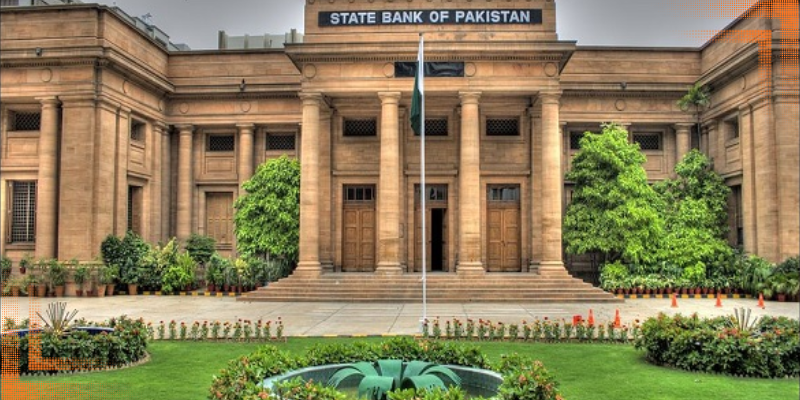


- SBP permits licensed VASPs to open bank accounts
- 2018 crypto banking ban effectively ended
- Accounts must be segregated and non-interest-bearing (PKR)
- Banks required to follow AML/CFT compliance
- PVARA established as licensing and regulatory authority
- Banks prohibited from holding or investing in virtual assets
SBP Enables Banking Access for Licensed Crypto Firms
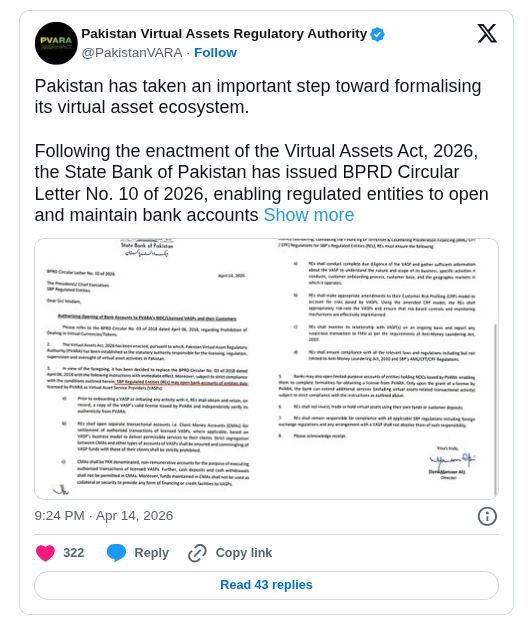
The State Bank of Pakistan has issued a circular allowing banks to open and maintain accounts for entities licensed by the Pakistan Virtual Assets Regulatory Authority (PVARA). The accounts must be segregated and non-interest-bearing, denominated in Pakistani rupees. This development marks the end of restrictions imposed in 2018 on crypto-related banking activities, enabling licensed Virtual Asset Service Providers (VASPs) to access formal financial services.
Compliance Requirements and Banking Restrictions: Banks are required to verify PVARA-issued licenses before onboarding VASPs. They must also conduct due diligence, perform risk profiling, monitor transactions, and report suspicious activities in line with AML/CFT requirements. Despite allowing banking access, the central bank has prohibited financial institutions from holding, trading, or investing in virtual assets using their own or customer funds.
Regulatory Framework Under Virtual Assets Act 2026
The move follows the enactment of the Virtual Assets Act, 2026, which establishes PVARA as the regulatory authority responsible for licensing and compliance of virtual asset firms. The circular, BPRD Circular Letter No. 10 of 2026, formalizes the integration of VASPs into Pakistan’s regulated financial system under a structured framework.
Pakistan has also engaged with global crypto firms, including signing a memorandum of understanding with Binance in December to explore tokenization of up to $2 billion in assets. Initial clearances have also been granted to Binance and HTX to begin licensing processes. This regulatory shift reflects coordination between policymakers, regulators, and industry stakeholders as the country advances toward a regulated digital asset ecosystem.
Disclaimer: Cryip's content is strictly for educational and informational purposes and does not constitute financial, legal, or investment advice. Cryptocurrency involves significant risk, and readers assume full responsibility for their own financial decisions. Asset references are never endorsements.
To make complex crypto topics accessible to readers at all experience levels, our team uses AI tools strictly to refine language, correct grammar, and simplify terminology. AI is never used to draft facts, source information, or form conclusions. Every article is fact-checked and approved by a human editor before publication. Read our full AI Use & Content Policy.