
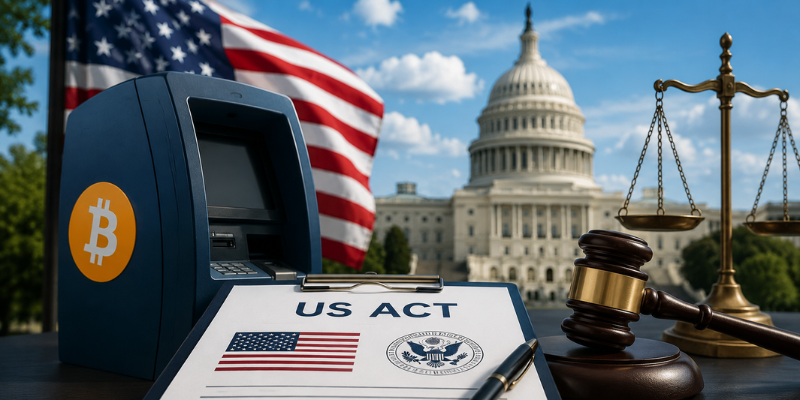


U.S. lawmakers are seeking tougher safeguards for cryptocurrency ATMs after fraud losses tied to the machines surged across the country, prompting the introduction of a bipartisan bill aimed at protecting consumers from scams.
Representatives Sean Casten (D-IL) and María Elvira Salazar (R-FL) have introduced the Stop Crypto ATM Scams Act, legislation that would establish federal standards for cryptocurrency ATM operators while introducing new protections for users. The proposal comes amid growing concern over fraud schemes that frequently target senior citizens and first-time cryptocurrency users.
Unlike efforts in some states to ban cryptocurrency kiosks entirely, the federal bill focuses on strengthening oversight through anti-money laundering (AML) requirements, identity verification procedures, transaction limits, consumer disclosures, and cooperation with law enforcement.
Crypto ATM Fraud Losses Continue to Climb
The legislation follows a sharp increase in reported crypto ATM scams across the United States. According to data cited by lawmakers, Americans lost more than $333 million to crypto ATM-related fraud in 2025. Older Americans have been among the most affected groups, with individuals aged 60 and above accounting for a significant share of reported losses.
Scammers commonly impersonate government officials, law enforcement officers, bank employees, or technical support representatives before directing victims to deposit cash into cryptocurrency kiosks. Because crypto transactions are generally irreversible, victims often struggle to recover their funds once the transfers are completed.
Casten said the legislation is intended to address a growing form of financial exploitation that disproportionately affects seniors and vulnerable consumers while preserving legitimate access to digital asset services.
What the Stop Crypto ATM Scams Act Would Do
The proposed legislation would introduce a range of federal requirements for crypto ATM operators.
Key provisions include:
- Mandatory anti-money laundering and fraud-prevention programs.
- Customer identity verification requirements.
- Daily transaction limits for new users.
- Clear scam warnings and consumer disclosures.
- Reporting requirements for suspicious transactions.
- Enhanced cooperation with law enforcement agencies investigating fraud.
Under the proposal, new customers would face a daily transaction limit of $2,000 and a cumulative limit of $10,000 during their first 14 days of activity. Lawmakers argue that these restrictions could help prevent victims from transferring large amounts of money before recognizing potential scams.
Supporters of the bill say stronger safeguards are necessary as fraudsters increasingly exploit cryptocurrency ATMs to quickly move funds beyond the reach of traditional banking protections.
Crypto ATM Fraud Has Drawn Increasing Government Attention
The Stop Crypto ATM Scams Act is the latest in a series of efforts by U.S. authorities to address fraud linked to cryptocurrency kiosks. Federal agencies, including the FBI and the Federal Trade Commission (FTC), have repeatedly warned consumers about scams involving Bitcoin and cryptocurrency ATMs. Authorities say fraudsters frequently pressure victims into making immediate deposits through kiosks by posing as government officials, law enforcement officers, bank representatives, or technical support personnel.
The House legislation also follows a separate Senate proposal introduced by Senator Dick Durbin in 2025. The Crypto ATM Fraud Prevention Act sought similar protections, including transaction limits for new users, mandatory fraud warnings, anti-fraud policies, and refund mechanisms for certain victims who quickly report fraudulent transactions.
Together, these efforts signal growing concern among policymakers that cryptocurrency ATMs require stronger consumer protection measures as fraud losses continue to rise.
Federal Proposal Arrives as States Increase Scrutiny
The legislation comes as state governments across the country pursue their own responses to crypto ATM-related fraud. Earlier this month, Delaware lawmakers advanced House Bill 441, a proposal that would prohibit cryptocurrency kiosks throughout the state and require existing machines to be removed within 90 days if enacted. State officials cited growing fraud losses and consumer protection concerns as key reasons for supporting the measure.
Delaware’s proposal reflects a broader trend of increasing regulatory scrutiny surrounding cryptocurrency ATMs. Policymakers in several jurisdictions have expressed concerns that kiosks are being used by scammers to target elderly individuals and inexperienced cryptocurrency users.
The growing pressure on operators has fueled debate over whether stricter regulations or outright bans represent the most effective approach to reducing fraud.
Global Pressure on Crypto ATM Industry
Regulatory scrutiny of cryptocurrency ATMs is also expanding beyond the United States. In Canada, policymakers have discussed stricter controls on crypto ATMs, including proposals that could significantly limit or eliminate their use, following a rise in fraud cases and money laundering concerns. The discussions reflect a broader global trend as regulators examine whether existing safeguards are sufficient to protect consumers from increasingly sophisticated cryptocurrency scams.
As digital asset adoption grows worldwide, governments are increasingly focusing on crypto kiosks as part of wider efforts to combat financial crime and strengthen consumer protections.
Industry Faces Growing Regulatory Pressure
The latest proposal adds to a series of regulatory actions affecting the cryptocurrency sector in recent months. Governments worldwide have increased oversight of digital asset platforms, exchanges, and related services as authorities seek to combat fraud, money laundering, and illicit financial activity. Cryptocurrency ATMs have become a particular focus due to their accessibility and the rapid nature of transactions conducted through the machines.
Industry advocates argue that crypto ATMs provide an important entry point for users who lack access to traditional banking services or prefer in-person cryptocurrency purchases. However, regulators maintain that stronger compliance measures are necessary to address persistent fraud risks.
The growing regulatory burden has already had a significant impact on parts of the industry. Earlier this year, Bitcoin Depot, once North America’s largest Bitcoin ATM operator, filed for Chapter 11 bankruptcy and shut down thousands of kiosks across the United States. The company pointed to mounting compliance costs, stricter state regulations, transaction limits, and ongoing legal challenges as key factors behind its financial difficulties. As a result, the industry now faces growing pressure to balance accessibility with consumer protection requirements.
What Comes Next
The Stop Crypto ATM Scams Act will now move through the congressional process, where lawmakers will debate whether new federal safeguards are needed as crypto ATM fraud continues to rise across the United States.
If approved, the legislation would create nationwide compliance standards for crypto ATM operators while introducing new protections designed to reduce losses among consumers.
The proposal marks one of the most significant federal efforts to date targeting cryptocurrency ATM fraud and signals that policymakers are placing increasing attention on consumer protection within the rapidly evolving digital asset industry.
Disclaimer: Cryip's content is strictly for educational and informational purposes and does not constitute financial, legal, or investment advice. Cryptocurrency involves significant risk, and readers assume full responsibility for their own financial decisions. Asset references are never endorsements.
To make complex crypto topics accessible to readers at all experience levels, our team uses AI tools strictly to refine language, correct grammar, and simplify terminology. AI is never used to draft facts, source information, or form conclusions. Every article is fact-checked and approved by a human editor before publication. Read our full AI Use & Content Policy.