

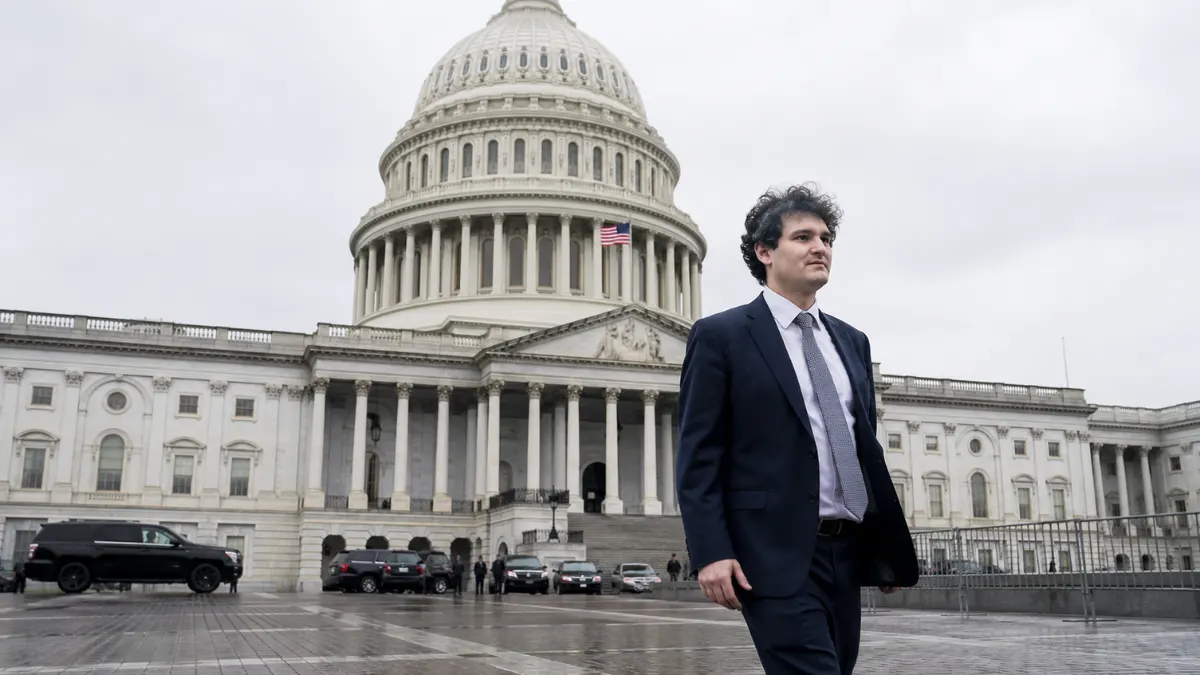


The U.S. Senate has unanimously Adopted a bipartisan resolution declaring that former FTX CEO Sam Bankman-Fried should not receive a presidential pardon, commutation, or any other form of federal clemency, marking one of the strongest congressional rebukes against the convicted crypto executive since the collapse of FTX.
Agreed to by unanimous consent: S. Res. 772, A resolution expressing the sense of the #Senate that under no circumstances should Samuel Bankman-Fried receive executive clemency, including a pardon or commutation, and affirming the Senate’s commitment to the rule of law and…
— Senate Press Gallery (@SenatePress) July 15, 2026
The resolution (S.Res. 772) was adopted by unanimous consent on July 15 after being introduced in June by Senators Ruben Gallego (D-Ariz.) and Cynthia Lummis (R-Wyo.), the ranking members of the Senate Banking Committee’s Digital Assets Subcommittee. Although the resolution is non-binding and cannot legally prevent a presidential pardon, it formally records the Senate’s position that Bankman-Fried should remain fully accountable for his crimes.
Senate Sends Bipartisan Message
The resolution comes after reports that Bankman-Fried sought presidential clemency through the U.S. Department of Justice’s Office of the Pardon Attorney earlier this year. While the petition does not guarantee any executive action, lawmakers moved quickly to express unified opposition to any potential relief.
Senator Ruben Gallego said Bankman-Fried took advantage of millions of Americans and has shown little remorse for the financial harm caused by FTX’s collapse. Senator Cynthia Lummis added that the former executive did not merely lose customer funds but knowingly took them, arguing that he has already received due process and should serve his sentence without executive intervention.
Resolution Cites Massive Financial Harm
The Senate resolution recalls that Bankman-Fried was convicted in 2023 on multiple federal charges, including wire fraud, securities fraud, commodities fraud, money laundering conspiracy, and related financial crimes. In March 2024, he was sentenced to 25 years in federal prison after prosecutors described the FTX collapse as one of the largest financial frauds in U.S. history.
Lawmakers noted that the FTX collapse resulted in more than $8 billion in customer asset shortfalls, while bankruptcy administrators continue recovering and distributing assets to creditors.
In a separate legal development, U.S. prosecutors have urged a federal judge to reject Bankman-Fried’s request for a new trial, arguing that he failed to present newly discovered evidence capable of overturning his fraud conviction. The filing adds to a series of legal setbacks as lawmakers continue opposing any form of executive clemency.
- 25 years – Federal prison sentence imposed on Sam Bankman-Fried in March 2024.
- More than $8 billion – Estimated customer funds lost following FTX’s collapse.
- Unanimous approval – The Senate adopted S.Res. 772 by unanimous consent on July 15.
Why the Resolution Matters
Although Congress cannot block a presidential pardon, the Senate resolution serves as an official statement of congressional opinion. Lawmakers argue that granting clemency in this case would undermine accountability for large-scale financial fraud and weaken public confidence in the U.S. justice system.
The resolution also warns that executive clemency could reduce the deterrent effect of federal prosecutions and send the wrong message to executives responsible for significant investor losses. It concludes that Bankman-Fried should “under no circumstances” receive a pardon, commutation, or any other form of federal clemency.
Part of a Broader Crypto Policy Shift
The bipartisan support behind the resolution is notable because Gallego and Lummis have worked together on several digital asset initiatives despite representing different political parties. Their joint sponsorship reflects a shared commitment to investor protection and accountability following one of the crypto industry’s most damaging failures.
The resolution comes as Congress continues advancing digital asset legislation, with the FTX collapse remaining a key reference point in debates over investor protection and crypto market oversight.
What Happens Next?
The Senate resolution does not limit the President’s constitutional authority to grant pardons or commute federal sentences. However, its unanimous passage places Congress officially on record in opposition to any future executive clemency for Bankman-Fried.
Unless a president chooses to take action, Bankman-Fried will continue serving his 25-year prison sentence while the FTX bankruptcy process moves forward and administrators work to maximize recoveries for affected customers and creditors.
Earlier this year, Bankman-Fried also drew attention after suggesting he could create a new cryptocurrency following his eventual release from prison, a remark that sparked debate across the crypto industry.
Disclaimer: Cryip's content is strictly for educational and informational purposes and does not constitute financial, legal, or investment advice. Cryptocurrency involves significant risk, and readers assume full responsibility for their own financial decisions. Asset references are never endorsements.
To make complex crypto topics accessible to readers at all experience levels, our team uses AI tools strictly to refine language, correct grammar, and simplify terminology. AI is never used to draft facts, source information, or form conclusions. Every article is fact-checked and approved by a human editor before publication. Read our full AI Use & Content Policy.