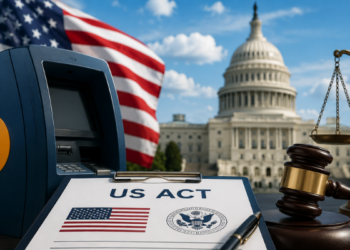



- A federal judge pushed Roman Storm’s Tornado Cash retrial to April 26, 2027, an order entered Aug. 25, with his motion for acquittal from the first trial still undecided.
- A jury convicted Storm in August 2025 of running an unlicensed money-transmitting business, but deadlocked on the two more serious counts, money laundering conspiracy and sanctions conspiracy, which prosecutors now plan to retry.
- Court filings show Chainalysis, the government’s own blockchain-tracing vendor, ran a Tornado Cash relayer and earned fees from it during the period at issue, and was shielded from testifying about it at trial.
Roman Storm will not face a jury again until April 26, 2027, under a scheduling order U.S. District Judge Katherine Polk Failla entered Aug. 25, months later than the October 2026 trial date prosecutors had asked for.
One thing before I start: everything in this post is public information from my own docket. None of it is new, and I’m not revealing anything you can’t already find in the court filings yourself.
The retrial just got pushed to April 26, 2027. The order came down today (Dkt.…
— Roman Storm 🇺🇸 🌪️ (@rstormsf) August 25, 2026
The Two Counts Back in Play
A Manhattan jury convicted Storm in August 2025 of conspiring to run an unlicensed money-transmitting business, the charge tied to Tornado Cash’s operation as a crypto mixer, a tool that pools and shuffles cryptocurrency to obscure where it came from.
It deadlocked on two more serious charges, conspiracy to commit money laundering and conspiracy to violate U.S. sanctions law, after prosecutors argued Tornado Cash moved more than $1 billion for hackers and other criminals.
Those two counts are what the April retrial will decide. SDNY’s Illicit Finance and Money Laundering Unit chief, Tara La Morte, told a New York City Bar Association event in 2024 that the office wanted “the industry to take notice,” calling Tornado Cash “an example” of bringing crypto into compliance, a comment now filed on Storm’s own docket.
The Relayer Chainalysis Ran
The same docket holds a detail the jury never heard. Chainalysis, the blockchain analytics firm whose tracing work underpinned the government’s case, told the court in a July 2025 filing that it had operated “a relayer node” for Tornado Cash “for a period in 2022.” A relayer submits Tornado Cash withdrawals on a user’s behalf for a fee, the same role Storm was accused of enabling.
Prosecutors confirmed in a hearing that Chainalysis’s own relayer earned fees this way, while separately telling the court there was “zero evidence” Storm knew about it. When Storm’s lawyers subpoenaed Chainalysis employees to testify, the company moved to quash the subpoena, and a prosecutor told the court:
“we agree with the position outlined in the motion.”
A judge later asked prosecutors whether they had told Chainalysis it was “potentially subject to investigation or prosecution.” Their answer: they had “discussed at a high level” the relayer issue with Chainalysis’s counsel the night before, not that the company faced scrutiny of its own. The defense learned a Chainalysis witness planned to invoke the Fifth Amendment days later, and only found out about that call after the fact, from Chainalysis’s own lawyer.
A Question DOJ Declined to Answer
The delay also stretches the case past a shift in the Justice Department’s own public position. At the Bitcoin 2026 conference in April, Acting Attorney General Todd Blanche told developers that if they write code and are not the ones committing crimes, “you are not going to be investigated and not going to be charged,” and called some earlier crypto prosecutions “outrageous attacks on the industry.”
FBI Director Kash Patel, on the same panel, praised Chainalysis as one of the “best wins” for law enforcement partnerships. When the moderator, Coinbase Chief Legal Officer Paul Grewal, asked Blanche directly about Tornado Cash, Roman Storm and Samourai Wallet, Blanche did not answer for those cases by name.
He said only that some “lingering cases” were “fact-specific” and “procedurally complicated,” and that the department is “continuing to deal with” them.
Samourai Wallet co-founders Rodriguez and William Lonergan Hill were sentenced to five and four years in prison, respectively, on Nov. 19, in a case that drew scrutiny from crypto advocates. The legal proceedings have also put Roman Storm’s Tornado Cash case under the spotlight, with his retrial now scheduled for April 26, 2027.
Disclaimer: Cryip's content is strictly for educational and informational purposes and does not constitute financial, legal, or investment advice. Cryptocurrency involves significant risk, and readers assume full responsibility for their own financial decisions. Asset references are never endorsements.
To make complex crypto topics accessible to readers at all experience levels, our team uses AI tools strictly to refine language, correct grammar, and simplify terminology. AI is never used to draft facts, source information, or form conclusions. Every article is fact-checked and approved by a human editor before publication. Read our full AI Use & Content Policy.