

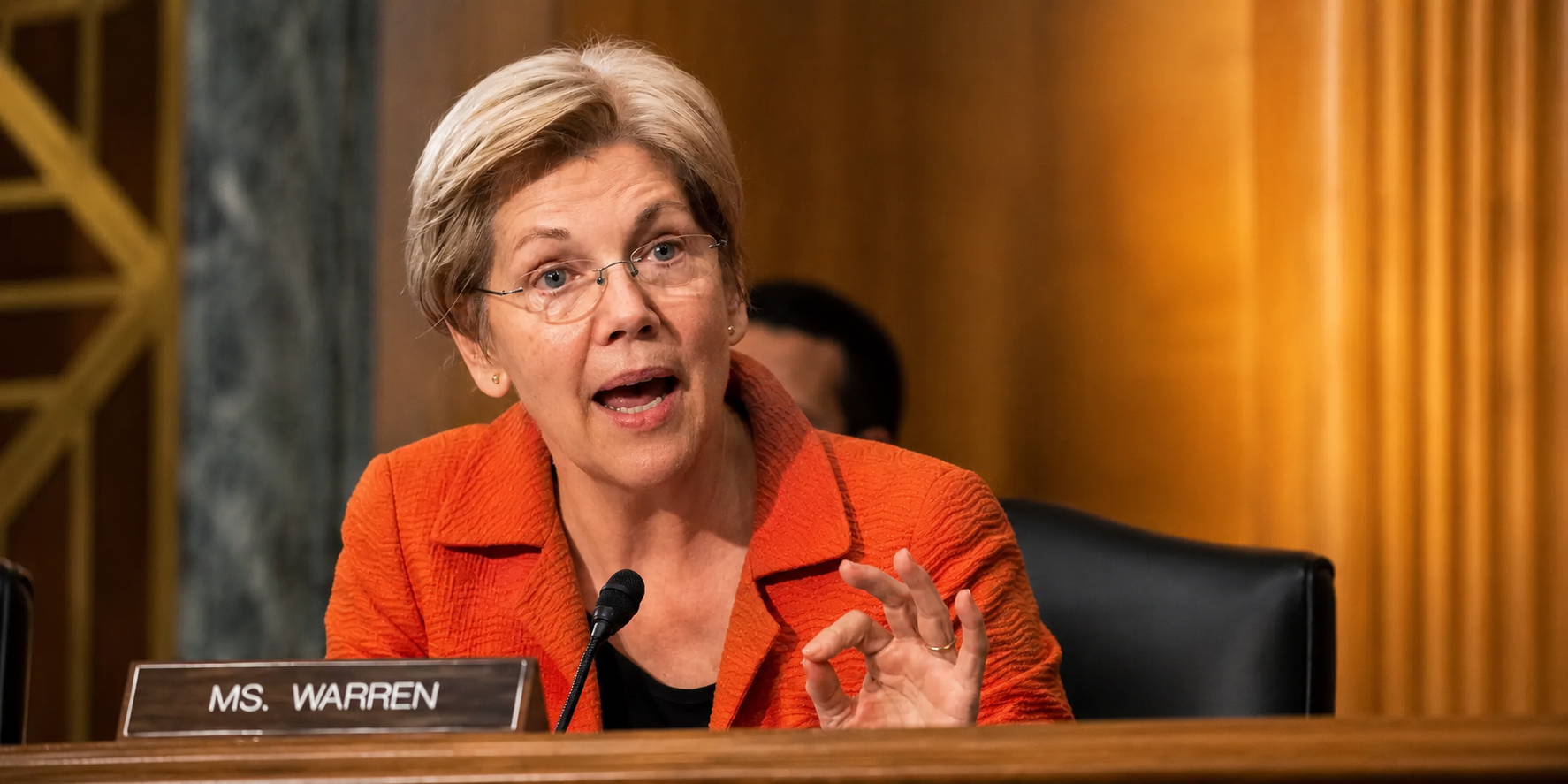


- The Senate Banking Committee advanced the CLARITY Act by a 15-9 vote on May 14, 2026.
- Senator Elizabeth Warren introduced 44 amendments, all of which failed during the markup process.
- Warren said the bill could weaken investor protections and expand crypto exposure in the U.S. economy.
- Supporters said the bill creates defined regulatory standards for digital assets under SEC and CFTC oversight.
- The bill now moves to the full Senate, where it will require 60 votes to pass.
Elizabeth Warren Opposes CLARITY Act During Senate Hearing
Senator Elizabeth Warren launched strong criticism of the CLARITY Act during a Senate Banking Committee hearing held on May 14, 2026. Despite her opposition, the committee voted 15-9 to advance the legislation to the full Senate floor.
During the hearing, Warren also stated, “This bill is just not ready for prime time. It pushes more of the economy into crypto. It will blow up the economy.”
Warren introduced 44 proposed amendments during the markup process. None of the amendments were adopted by the committee. Her objections focused on three main points. Warren said the 309-page bill would “blow a hole in our securities laws that have protected investors since 1929.” She also argued that companies could “opt out” of Securities and Exchange Commission oversight by moving operations onchain. In addition, she said the legislation “declares open season on defrauding American consumers who use crypto.”
Supporters Defend Regulatory Framework in the Bill
Supporters of the CLARITY Act rejected Warren’s characterization of the legislation. According to supporters, the bill’s decentralization test does not provide a blanket exemption from SEC oversight. The proposed framework requires companies to satisfy defined and verifiable conditions before regulatory authority can shift from the SEC to the Commodity Futures Trading Commission.
The CLARITY Act, formally introduced as H.R. 3633, is a bipartisan proposal designed to establish regulatory boundaries between the SEC and the CFTC for digital asset oversight. Last week, Robinhood CEO Vlad Tenev said the United States is “very close” to passing the legislation and described it as a foundational step toward integrating the crypto industry into U.S. financial law.
Bill Advances to Full Senate Vote
Following the committee vote, the legislation now advances to the full Senate chamber, where it must secure 60 votes for passage. A poll cited by Bitcoin.com News found that 52% of Americans support the CLARITY Act. The same poll reported that 70% of respondents believe the United States should already have adopted crypto market structure regulations.
Digital asset markets reacted positively following the committee advance. According to the provided data, digital asset funds previously recorded $857.9 million in net inflows, reflecting investor response to regulatory developments and expectations for clearer market rules.
FAQs
1. What is the CLARITY Act?
The CLARITY Act, formally introduced as H.R. 3633, is a bipartisan bill designed to establish regulatory boundaries between the SEC and the CFTC for overseeing digital assets in the United States.
2. Why did Senator Elizabeth Warren oppose the CLARITY Act?
Senator Elizabeth Warren argued that the bill could weaken investor protections, allow companies to avoid SEC oversight by moving operations onchain, and increase risks for crypto consumers.
3. What was the result of the Senate Banking Committee vote?
The Senate Banking Committee voted 15-9 on May 14, 2026, to advance the CLARITY Act to the full Senate floor despite Warren’s opposition and proposed amendments.
4. What happens next for the CLARITY Act?
The bill will now move to the full Senate chamber, where it must receive at least 60 votes to pass.
Source: Elizabeth Warren
Disclaimer: Cryip's content is strictly for educational and informational purposes and does not constitute financial, legal, or investment advice. Cryptocurrency involves significant risk, and readers assume full responsibility for their own financial decisions. Asset references are never endorsements.
To make complex crypto topics accessible to readers at all experience levels, our team uses AI tools strictly to refine language, correct grammar, and simplify terminology. AI is never used to draft facts, source information, or form conclusions. Every article is fact-checked and approved by a human editor before publication. Read our full AI Use & Content Policy.