
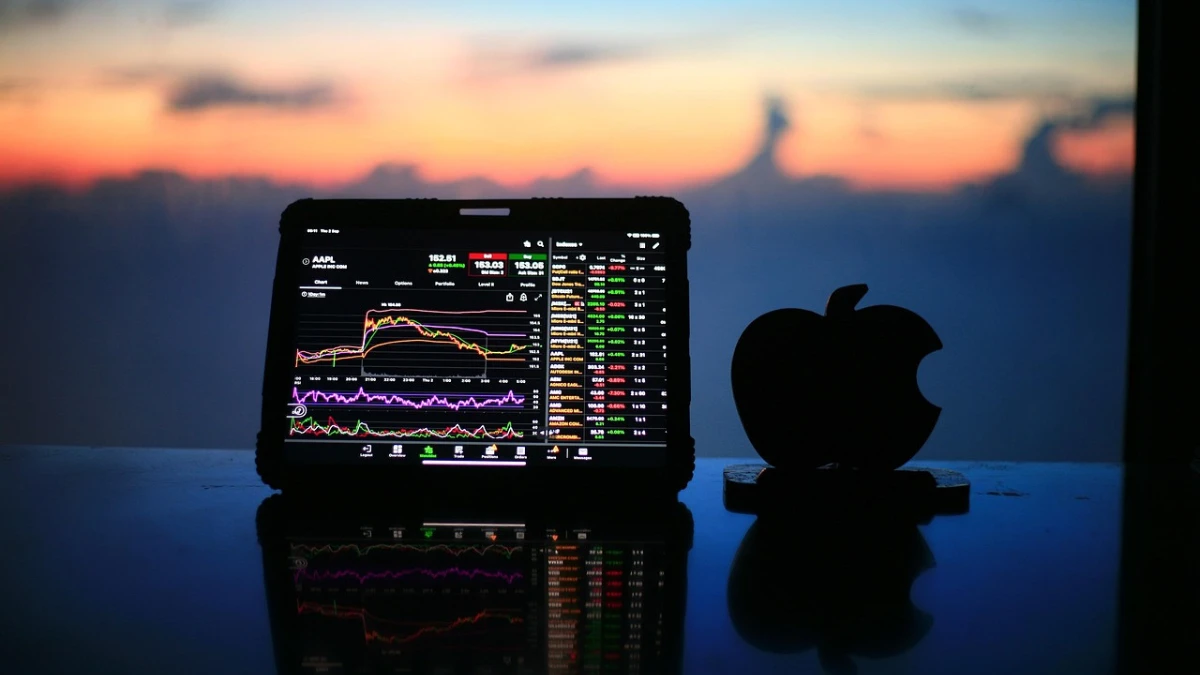


Kraken tells its customers that crypto is turning into the backbone of the entire financial system. “Crypto isn’t just evolving, it’s becoming the backbone for trading across asset classes,” Kraken’s co-CEO Arjun Sethi said in April 2025, when the exchange let users start buying more than 11,000 US stocks and ETFs, commission-free.
But at the same time, Kraken has quietly joined a group of over 50 companies helping build a rival system, one run by the banks it’s supposedly competing with. That group is led by DTCC, the company that already safely holds $114 trillion worth of stocks and bonds for Wall Street, and includes BlackRock, Goldman Sachs, JPMorgan and Morgan Stanley.
Kraken is telling retail customers “we’re the future of finance,” while also paying to be part of the banking industry’s own plan to build that future. Both things are true at once.
That contradiction sits underneath a string of recent headlines that can look, from a distance, like a simple land grab: Coinbase, Kraken and Crypto.com have all started letting users trade regular stocks. Bybit and OKX now offer something that looks similar but works very differently, called “tokenized stocks.” Each of those launches has already been covered on its own. What hasn’t been explained clearly is what’s actually happening underneath: crypto exchanges want more of your money and more say in how stocks eventually move onto blockchains, and they’ve run straight into a much bigger, slower effort by the banks that already run the world’s stock markets.
Two very different things being sold as “stocks”
Coinbase, Kraken and Crypto.com let you buy real stock. Behind the scenes, each of them works through a licensed brokerage, the kind of company that’s legally allowed to hold your shares and is regulated the same way Fidelity or Charles Schwab is. Coinbase does this through a unit called Coinbase Capital Markets, and says clearly that your shares are protected up to a set limit if the broker ever fails (a protection called SIPC insurance, the same one traditional brokers carry), and that a trade takes one business day to fully settle, same as anywhere else. Kraken’s stock arm is a licensed brokerage too. Crypto.com runs its stock trading through a similarly licensed and regulated unit. In all three cases, if you buy Apple stock, you actually own Apple stock, with the same legal protections you’d get anywhere else.
Coinbase is also moving toward the tokenized side of this divide, for customers outside the US. In June 2026, the company said it would launch tokenized US stocks backed 1:1 by real shares, with CEO Brian Armstrong describing them as “real 1:1 backed tokenized stocks you can trust. You own an actual chunk of the company onchain,” a direct contrast with the disclaimer Bybit puts on its own tokenized product below.
Bybit, OKX, and Kraken’s separate xStocks product are not this. What they sell is a digital token, built on a blockchain, designed to move up and down in price along with a real stock like Tesla or Apple. But you’re not buying the stock itself, you’re buying a token that’s supposed to track it. Bybit says this outright on its own website: it “does not issue or sell xStocks, and does not guarantee the delivery or redemption of the underlying shares.” A separate company (Backed Assets, based in Jersey) is meant to hold real shares to back the tokens, and the price is kept roughly in line through traders buying and selling to close any gap, not through any legal right the token owner has to the actual stock.
Kraken’s own xStocks business has grown quickly since it launched in June 2025: more than 500 tokenized assets, $37 billion in trading volume, and roughly 200,000 holders worldwide. In July 2026, Kraken’s parent company, Payward, said it would expand xStocks beyond the US into Hong Kong, the UK, Europe and South Korea through a partnership with GTN, a financial infrastructure firm that will handle custody of the real shares backing the tokens and execution of the underlying trades.
The same split shows up well beyond these five exchanges. Binance began offering real US stock trading in June 2026 through a licensed broker-dealer, clearing through Alpaca, covering more than 7,000 stocks and ETFs, and separately previewed its own tokenized product, bStocks, still pending regulatory approval. Bitget went the tokenized-only route, launching 36 stock-linked tokens issued by a separate platform, and reported more than $1 billion in tokenized-stock trading volume by January 2026. Gemini did the same for European customers, partnering with Dinari, an SEC-registered transfer agent, starting with MicroStrategy. MEXC took the most telling turn: after building a tokenized-stock product like Bybit’s and OKX’s, it launched a second product in June 2026, RealStocks, through a FINRA-licensed broker-dealer, that hands buyers actual shares and real dividends instead of a price-tracking token, positioning itself directly against the synthetic exposure it and its rivals had been selling.
| Product | What you own | Who holds the real shares | Voting rights | Trades when |
|---|---|---|---|---|
| Regulated brokerage stocks (Coinbase, Kraken, Crypto.com) | The actual share, full legal ownership, SIPC-insured | A licensed broker, in the buyer’s name | Yes | Weekdays, normal market hours |
| Third-party tokens (Bybit, OKX, Kraken’s xStocks) | A token tracking the price, not the stock itself, no SIPC/FINRA protection | A separate issuer (Backed Assets), delivery not guaranteed | No | Every day, including weekends |
| DTCC’s tokenized security (still in testing) | Same ownership rights as the traditional version, per DTCC | DTCC, via its existing custody system | Yes | Not yet public |
| Nasdaq’s issuer-controlled token (planned, 2027) | The real security, issuer stays in control | The issuing company itself, directly | Yes | Not yet public |
The two live models already trading today, real stocks and third-party tokens, are different in almost every practical way. Coinbase’s stock accounts trade five days a week, just like the real market. Bybit’s and OKX’s tokenized versions trade every single day, because the token itself never actually closes, even when the real stock market does. And Kraken deliberately keeps its two products in different places: real stock trading in the US, and tokenized stocks everywhere but the US, because US law treats each one very differently. The other two rows in the table above, DTCC’s and Nasdaq’s own tokenization plans, aren’t fully live yet, but they show what a bank-approved, issuer-backed version of the same idea looks like, and how differently it treats ownership compared to what Bybit and OKX sell today.
What US regulators say “owning” a tokenized stock actually means
On January 28, 2026, the SEC made its clearest statement yet on this. Its position, in plain terms: putting a stock on a blockchain doesn’t change the rules that apply to it. If a company tokenizes its own stock directly, that token is treated exactly like the regular stock, with the same paperwork and rules. But if a token was created by someone else, not the company itself, it falls into one of two buckets: either the token-maker is genuinely holding real shares for you (which still carries real risk if that company runs into trouble), or the token is just a side-bet contract that tracks the stock’s price without giving you any actual ownership in it at all.
A separate SEC advisory group went further in a recommendation approved on March 12, 2026. It warned that someone who owns one of these third-party tokens may not get to vote on company matters or have the same legal standing if that company goes bankrupt, the way a real shareholder would. It called for companies to be forced to spell out, in plain language, exactly what rights a buyer is and isn’t getting. Seen through that lens, Bybit’s own warning on its website isn’t just small print. It’s the company admitting, in its own words, that its product is exactly the kind of thing regulators are telling people to be careful about.
While exchanges were selling stocks, the banks were quietly building the real infrastructure
The most advanced tokenization project in 2026 didn’t come from a crypto exchange at all. DTCC, the company that already handles settlement for nearly all US stock trades, started test trades on its own tokenization system in July 2026 and plans a full rollout in October. It covers major stocks, popular ETFs, and US government bonds, and DTCC says it’s built to give investors “the same entitlements, investor protections and ownership rights as the assets held in traditional form,” meaning none of the ownership gaps that come with Bybit- or OKX-style tokens. Nasdaq is building something similar, planned for early 2027, where the company issuing the stock stays fully in control of its own token. Nasdaq’s president, Tal Cohen, describes the goal as making markets “always-on” without giving up the protections investors already have, which is a direct contrast to how Bybit’s and OKX’s tokens work today.
The banks moved on roughly the same timeline. BlackRock, which already runs a tokenized US Treasury fund, launched tokenized cash funds in Europe in August 2026 and called tokenization one of the biggest trends shaping markets this year. JPMorgan expanded its own blockchain payment network and moved its digital dollar token onto a new blockchain. BNY, which safely holds $62.6 trillion in client assets as of June 2026, one of the largest such totals in the world, added crypto staking to its platform through a partnership with Galaxy Digital in August, after already launching its own tokenized cash system for big institutional clients back in January. State Street has been making similar moves.
None of this replaced what the crypto exchanges were doing. It happened alongside it, at a size no single crypto exchange comes close to: DTCC alone is responsible for $114 trillion in assets, and BNY another $62.6 trillion. No crypto exchange manages anywhere near that.
How big this could get, and who’s actually positioned to win it
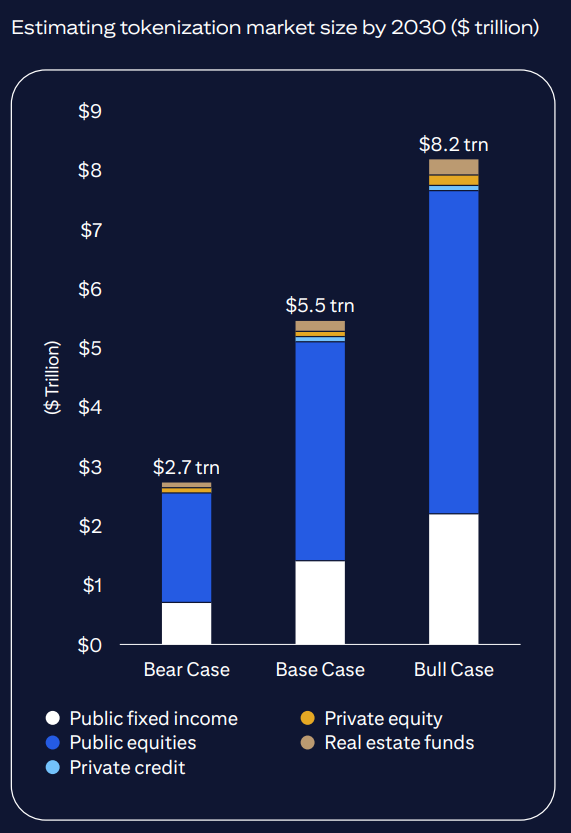
Citi’s own research tries to put a number on all this: it expects the tokenized asset market to grow from about $17 billion today to roughly $5.5 trillion by 2030 in its middle-of-the-road forecast, with a low end of $2.7 trillion and a high end of $8.2 trillion if things move faster. Citi credits that growth to the same institutions mentioned above, DTCC, Nasdaq, and the New York Stock Exchange’s parent company, building tokenization directly into how they already issue and settle trades. Citi’s forecast does not credit crypto exchanges with leading that growth.
That doesn’t mean the stock-trading push isn’t paying off for the exchanges right now. Coinbase’s own results show why this matters to its business today, regardless of who ends up owning the bigger infrastructure fight: 88% of its revenue in the second quarter of 2026 came from something other than Bitcoin, and the fees it earns from subscriptions and other services hit $555 million, up from just $6 million six years earlier. Robinhood’s crypto trading revenue dropped 47% in the first three months of 2026 compared to a year earlier, falling to $134 million, even though the company’s total revenue still grew 15% overall. Robinhood made up the difference elsewhere: revenue from its prediction-market bets jumped 320%, and its stock-trading revenue grew 46%. For both companies, branching out into stocks and other products is already softening the blow from crypto’s own ups and downs, whichever way the bigger tokenization race eventually goes.
| When | What happened |
|---|---|
| Apr 2025 | Kraken opens stock and ETF trading to select US states |
| Dec 2025 | Coinbase opens stock trading to a limited group of US users |
| Jan 2026 | SEC issues its rules on tokenized stocks; BNY launches its own tokenized cash system |
| Feb 2026 | Coinbase opens stock trading to all eligible US users |
| Mar 2026 | SEC advisory group calls for clearer rules on tokenized-stock ownership |
| May 2026 | Robinhood reports its crypto revenue down 47%; DTCC announces its own tokenization plans |
| Jun 2026 | Citi publishes its $5.5 trillion tokenization forecast |
| Jul 2026 | OKX launches its tokenized stocks; DTCC starts its own test trades |
| Aug 2026 | BlackRock launches tokenized funds in Europe; BNY adds crypto staking; Coinbase reports its 88% non-Bitcoin revenue quarter |
So who’s actually driving this
The honest answer is that both things are happening, and neither cancels the other out. Crypto exchanges really are building something new for everyday users: you can now buy Apple stock from the same app you use to buy Bitcoin, which wasn’t possible two years ago, and that shift is already showing up in Coinbase’s and Robinhood’s own earnings. But the deeper question, what it actually means to “own” a tokenized stock, and how big that market becomes, is being decided by DTCC, Nasdaq, and the world’s largest banks, under rules the SEC has already started writing. Citi’s own forecast expects those institutions, not the crypto platforms selling tokenized stocks to everyday users today, to end up with most of that growth.
The clearest sign of which way the exchanges themselves are betting is Kraken’s own membership in DTCC’s group. A company that tells retail customers it’s building the backbone of a new financial system is, at the same time, paying to be part of the old system’s plan to build that backbone itself. That’s not something crypto exchanges are likely to resolve by picking one side. It looks more like the position they’re settling into: sell stocks to whoever wants them today, while quietly keeping a seat at the table for whichever infrastructure ends up winning.
Disclaimer: Cryip's content is strictly for educational and informational purposes and does not constitute financial, legal, or investment advice. Cryptocurrency involves significant risk, and readers assume full responsibility for their own financial decisions. Asset references are never endorsements.
To make complex crypto topics accessible to readers at all experience levels, our team uses AI tools strictly to refine language, correct grammar, and simplify terminology. AI is never used to draft facts, source information, or form conclusions. Every article is fact-checked and approved by a human editor before publication. Read our full AI Use & Content Policy.