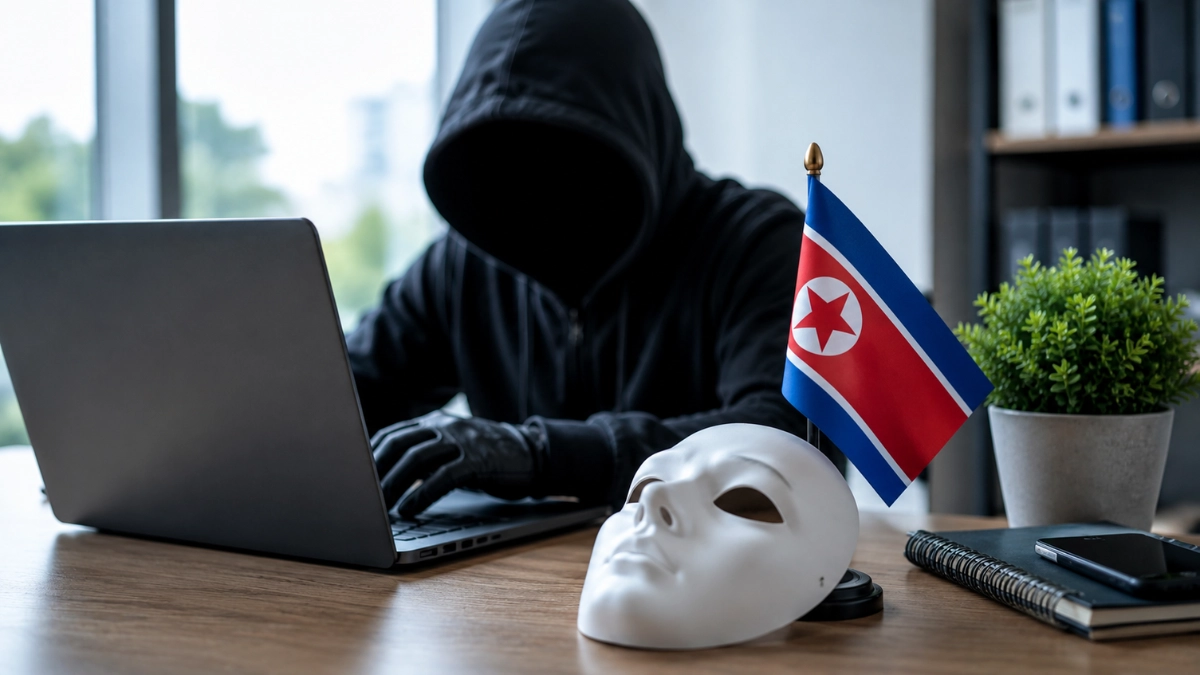


In a significant security lapse that has sent ripples through the cryptocurrency industry, blockchain giant Consensys, the company behind the widely used MetaMask wallet, inadvertently hired a developer with suspected ties to North Korea. The revelation, first reported by Drop Site News on July 17, 2026, underscores the persistent and evolving risks posed by state-sponsored actors targeting the crypto sector.
The “Tyler Knapp” Case: What Happened
According to internal communications obtained by Drop Site News, the individual operated under the alias “Tyler Knapp” and GitHub username imyugioh. He was onboarded as a consultant through a third-party service provider that Consensys had previously trusted.
Knapp’s contributions focused on core platform elements of MetaMask, particularly features related to on-ramps and off-ramps, the critical bridges between cryptocurrency and traditional fiat currencies. His work reportedly included code that handled interactions with third-party payment providers.
- Timeline: GitHub activity began around March 9, 2026, and ceased abruptly in April 2026.
- Duration: Approximately one month of internal access.
- Discovery: Consensys General Counsel Matt Corva issued a company-wide alert in April, suspending product releases and ordering staff to cease all interaction with Knapp during the probe.
Corva later stated that the company’s security protocols identified the threat quickly. A full investigation confirmed no misappropriation of assets or data, no deployment of malicious code, and crucially, no impact on user safety or security. Law enforcement was notified.
“We’ve reviewed our practices for utilizing third-party services to ensure the rigorous standard which we apply to all of our employees is also followed in more complex third-party relationships.” — Matt Corva, General Counsel, Consensys
MetaMask Celebrates 10th Anniversary Amid Security Scrutiny
The incident comes shortly after MetaMask celebrated its 10th anniversary, marking a decade as one of Ethereum’s most important on-ramps. With tens of millions of users worldwide, any potential supply-chain risk to the wallet ecosystem carries major implications for decentralized finance and Web3 adoption.
Examining the GitHub Profile and Contributions
The imyugioh profile presents as a typical blockchain developer. Its bio reads “Ready or not, Spirit, This is where you take over,” with a location listed as “Domino City,” a clear reference to the Yu-Gi-Oh! franchise. The account has around 33 followers and holds GitHub Developer Program membership.
Pinned repositories prominently feature forks of major MetaMask projects, including MetaMask/core and MetaMask/metamask-mobile.
One of the final public contributions was Pull Request #28399, merged on April 5, 2026. This update fixed a problem that was preventing some users from properly seeing supported tokens when buying or selling crypto through the app’s ramp features.
Our Cryip team analyst reviewed the repositories and pull request commits in detail. The changes improved how the app checks which payment providers support specific tokens. The update was tested, reviewed by the team, and included before-and-after demonstration videos. It was merged into the next release shortly before the account’s access was revoked.
While the visible public contributions appear to be legitimate bug fixes aimed at improving user experience, the timing raises important questions. It is unclear whether any other modifications were made in private code or internal systems during the same period.
Consensys’ Position and Lessons Learned
In statements to Drop Site News, Matt Corva emphasized pride in the rapid response and highlighted ongoing collaboration with law enforcement. The company is conducting a broader review of outsourcing and third-party engineering practices, a necessary step given the decentralized and fast-moving nature of blockchain development.
MetaMask remains one of the most popular entry points to Ethereum. Any compromise in its supply chain could have had serious consequences for the wider ecosystem.
The Wider DPRK Threat Landscape
The Consensys incident is not isolated. North Korean IT workers and hackers have aggressively targeted the crypto industry for years, generating hundreds of millions, if not billions, in revenue for the regime.
- Remote Job Infiltration: Operatives use stolen or fabricated identities, polished GitHub histories, and remote desktop tools to secure positions at Western tech and crypto firms. See our earlier report: Fake Job Candidate Exposed After Failing “Insult Kim Jong Un” Test (April 2026).
- Financial Networks: On-chain investigator ZachXBT recently exposed an internal DPRK payment server processing over 3.5 million dollars in illicit remittances from IT workers. The platform, luckyguys.site, featured weak security and detailed hierarchies. Full coverage: ZachXBT Exposes DPRK Crypto Payment Network.
- Exploit Surge: April 2026 recorded an alarming 625 million dollars in DeFi exploits, many linked to sophisticated North Korean groups such as Lazarus. Read: Record 625 Million Dollars in DeFi Exploits – April 2026.
Why Crypto Remains a Prime Target
Several factors make blockchain companies attractive:
- Remote-friendly roles with high salaries that can be funneled back to Pyongyang.
- Access to valuable intellectual property, smart contract logic, and sometimes direct wallet infrastructure.
- Relatively lighter background checks compared to traditional finance in some startups.
- The pseudonymous and borderless nature of crypto aligns with sanctions-evasion goals.
Researchers have documented cases spanning years, with North Korean workers embedded in DeFi protocols, wallets, and infrastructure projects. Behavioral indicators, such as hesitation on politically sensitive topics or sudden connection drops, are now part of the informal screening toolkit used by vigilant hiring managers.
Industry Implications and Recommendations
The incident serves as a wake-up call. Even well-resourced firms like Consensys can be breached through the supply chain. Smaller teams remain even more vulnerable.
Best Practices Emerging:
- Multi-layered identity verification beyond resumes and GitHub.
- Company-issued devices and restricted remote access tools.
- Behavioral and technical interviews designed to detect inconsistencies.
- Continuous monitoring of code contributions and internal access.
- Collaboration with law enforcement and threat intelligence firms specializing in DPRK operations.
As the industry matures, expect tighter scrutiny on hiring, greater use of AI-assisted vetting, and possibly regulatory pressure to implement stronger supply-chain security standards.
Conclusion
The “Tyler Knapp” affair highlights both the ingenuity of North Korean cyber programs and the persistent vulnerabilities in the global remote workforce. While Consensys acted decisively once the threat was identified, the case illustrates how state actors can blend into open-source communities and development teams.
Original source material includes reporting by Drop Site News. GitHub profiles and pull requests are publicly accessible as of publication. This article contains independent analysis and context by Saravana Kumar Mahendran, a content writer and security analyst whose work has been cited by Halborn and Sherlock.
Disclaimer: Cryip's content is strictly for educational and informational purposes and does not constitute financial, legal, or investment advice. Cryptocurrency involves significant risk, and readers assume full responsibility for their own financial decisions. Asset references are never endorsements.
To make complex crypto topics accessible to readers at all experience levels, our team uses AI tools strictly to refine language, correct grammar, and simplify terminology. AI is never used to draft facts, source information, or form conclusions. Every article is fact-checked and approved by a human editor before publication. Read our full AI Use & Content Policy.