

DeepSeek has not published a single audited number since it rattled global markets in January 2025, when its low-cost model release wiped roughly $589 billion off Nvidia’s market value in a single day. Eighteen months later, the clearest public evidence of what the Chinese AI lab is actually worth comes not from the company but from a routine filing in China’s own corporate registry.
What the registry actually confirms
The filing on China’s national enterprise credit registry, dated July 15, 2026, shows DeepSeek’s operating entity raising its registered capital to 14.02 billion yuan, up from a nominal 400,000 yuan before the company took any outside money. It also names the new shareholders directly: China’s National AI Industry Investment Fund alongside investment entities affiliated with Tencent, battery maker CATL, and JD.com. That filing is public record. It does not depend on anonymous sourcing, and it lands weeks after DeepSeek’s first funding round, reported at more than 50 billion yuan, or roughly $7.4 billion, closed in June with a structure that reportedly left outside investors without voting rights.
A profitable slice inside a loss-making whole
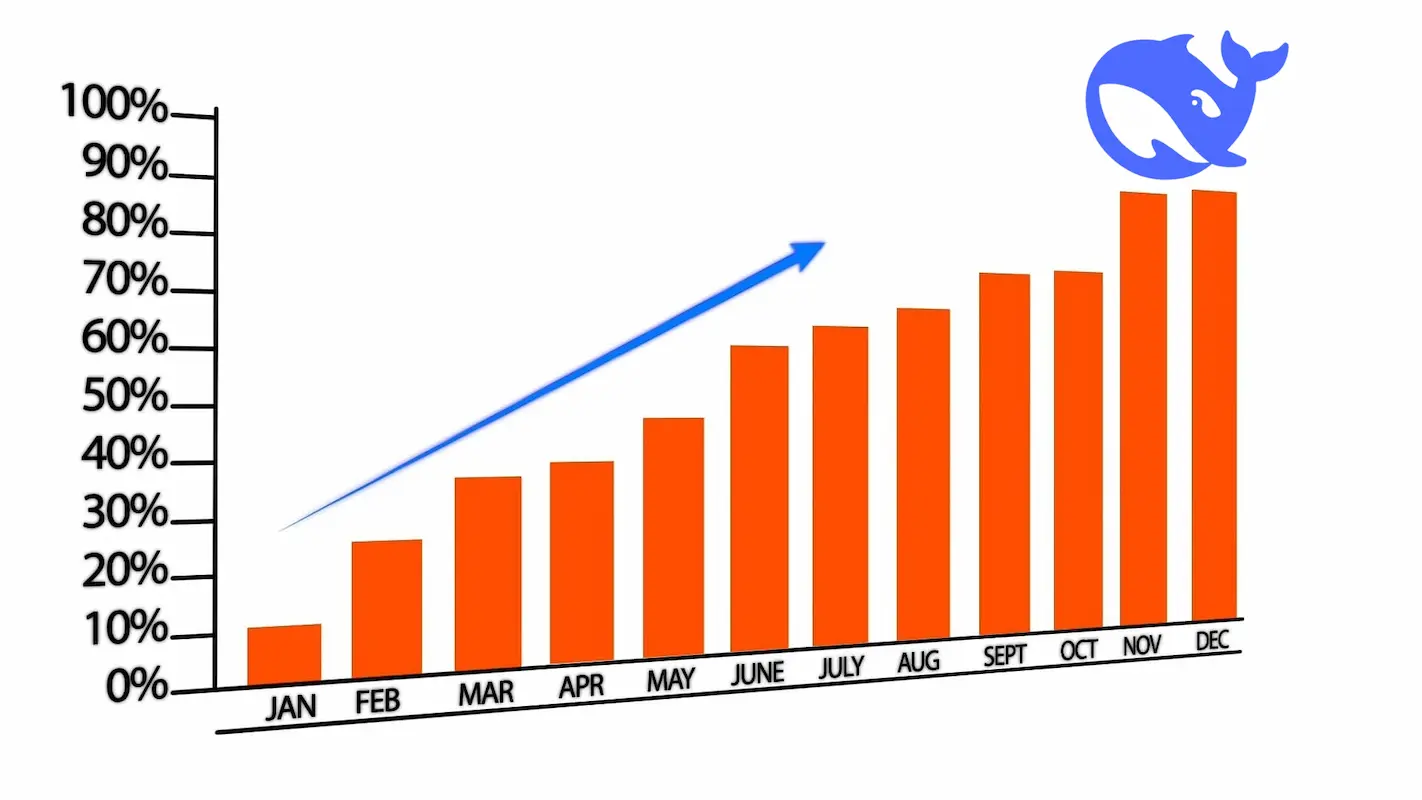
The revenue figures getting the most attention this week come from The Information, not from DeepSeek, and the company did not respond to the outlet’s request for comment. The report puts DeepSeek’s January-to-July 2026 revenue at roughly 475 million yuan, about $70.7 million, versus roughly 47.5 million yuan for all of 2025. It also splits DeepSeek’s margins: 82.9% on the API business that developers pay to access DeepSeek’s models, but only 44.6% across the company as a whole once other costs are counted. That overall figure still beats OpenAI’s reported 39% gross margin for the first quarter, though it trails Anthropic’s, which is expected to climb to 63% by year-end.
Set against that, the same report puts DeepSeek’s net loss for the seven-month period at about 715 million yuan, more than the company’s entire revenue for that stretch. Infrastructure spending over the same seven months is put at roughly 11 billion yuan, about 23 times revenue, up from 1.2 billion yuan for all of 2025.
Why the timing lines up
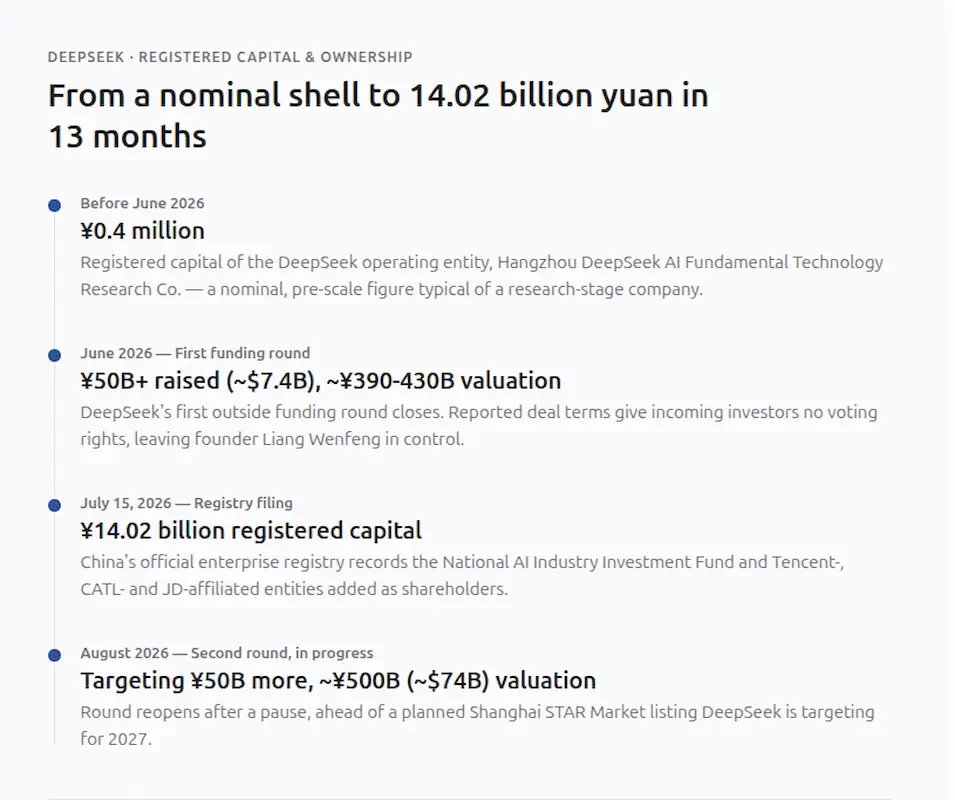
None of this is proof the growth is fake. A tenfold jump in revenue and an 82.9% margin on the API business are the kind of numbers that make a funding round easier to close and an IPO pitch easier to write. But the registry filing is the part of this story that does not require taking anyone’s word for it: DeepSeek brought in a state-backed AI fund and three of China’s largest tech and industrial names as shareholders in the same month its revenue figures started circulating, and it is now pushing toward a Shanghai listing in 2027 while spending on infrastructure at a pace that outstrips its reported income by more than 20 to 1. The revenue story explains why investors are interested. The registry filing explains why DeepSeek can now afford to let them in.
What happens next is a matter of record, not speculation: whether the second round closes near the reported $74 billion valuation, whether the Shanghai filing materializes on the 2027 timeline, and whether the Chinese AI lab, spending 23 times its revenue on infrastructure, narrows that gap before it has to answer to public shareholders.
Disclaimer: Cryip's content is strictly for educational and informational purposes and does not constitute financial, legal, or investment advice. Cryptocurrency involves significant risk, and readers assume full responsibility for their own financial decisions. Asset references are never endorsements.
To make complex crypto topics accessible to readers at all experience levels, our team uses AI tools strictly to refine language, correct grammar, and simplify terminology. AI is never used to draft facts, source information, or form conclusions. Every article is fact-checked and approved by a human editor before publication. Read our full AI Use & Content Policy.