




At its I/O conference in May, Google rebuilt its search box for the first time in more than 25 years and wrapped it in AI. Its own numbers: over a billion people use AI Mode every month, AI-powered searches are more than doubling every quarter, and overall search traffic just hit an all-time high. Now the other number: when Google’s AI answers a question and cites sources, people click through to one of those sources about 1% of the time. Both are true at once. That gap is the real story here, more than any single feature Google shipped this year.
What Google changed
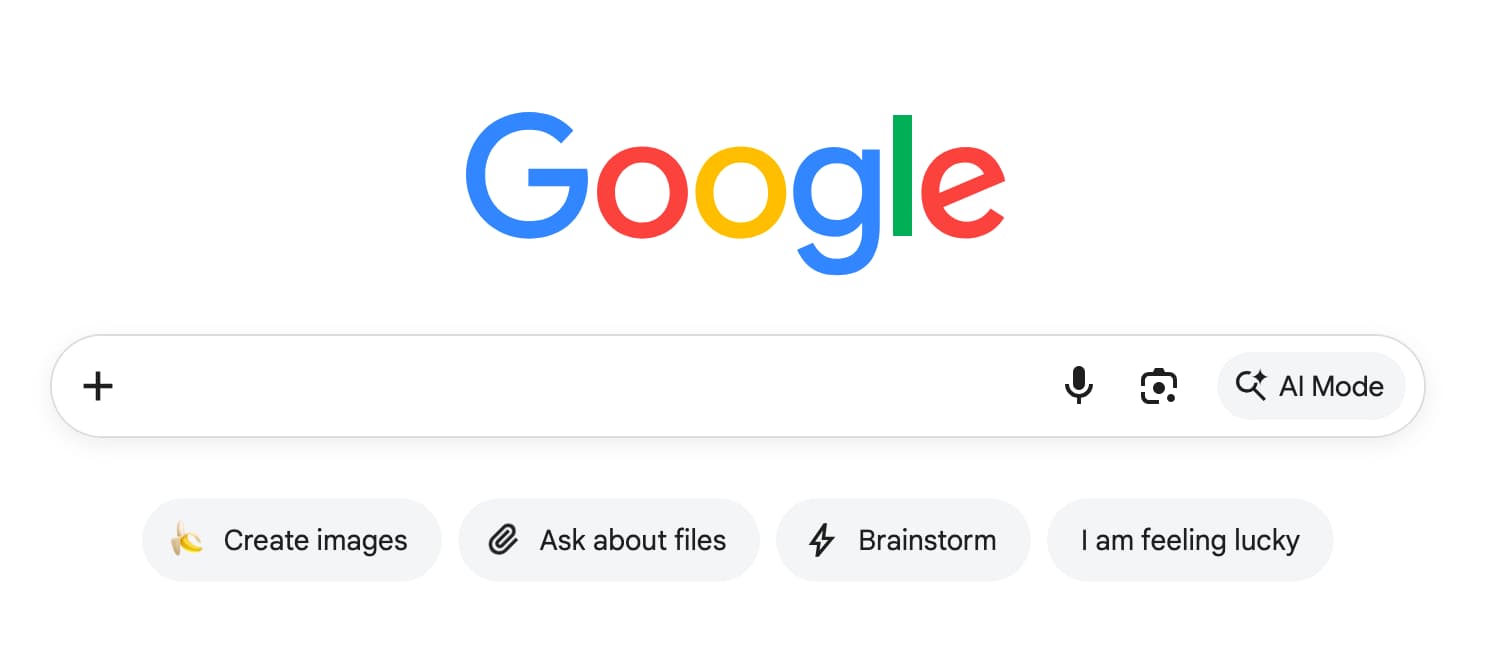
The new search box takes photos, files, videos, or open Chrome tabs as input, not just typed words, and runs on a new model, Gemini 3.5 Flash. Google backed it with the numbers above.
Two weeks later, it gave website owners two tools: “Preferred Sources”, so favorite sites appear more in AI answers, and, on June 2nd, an opt-out toggle in Search Console to keep a site out of AI Overviews and AI Mode entirely. Publishers got a choice. Users didn’t, as the next section shows.
What independent researchers found
A Washington University in St. Louis study tracked 55,393 real queries over 40 days. AI Overviews appeared for 14% of all searches, but nearly 65% of question-style searches, versus under 10% of others. Almost 30% of the sites cited weren’t in the normal search results shown alongside them. Of nearly 100,000 individual claims checked, 11% weren’t actually backed up by the source cited.
A Pew Research study of 900 U.S. adults’ real browsing data found people click through to an AI Overview’s cited source in only about 1% of visits, and that AI Overviews were more likely to end the browsing session altogether.
| Google’s numbers | Independent research | |
|---|---|---|
| Usage | 1B+ monthly AI Mode users; queries doubling every quarter | AI Overviews appear on ~14% of searches |
| Reach | Search queries at an all-time high | Question searches get an AI answer ~65% of the time |
| Follow-through | Not addressed | ~1% of visits click through to a cited source |
| Accuracy | Not addressed | ~11% of claims aren’t backed by the source cited |
The homepage test Google has now confirmed
In early August, reports surfaced of a new Google homepage carrying three AI shortcuts, “Ask about files,” “Brainstorm,” and “Create images,” sitting beneath the search box next to the existing “Google Search” and “I’m Feeling Lucky” buttons. Some early coverage described the classic Search button as being replaced. It wasn’t. Robby Stein, Google’s VP of Product for Search, confirmed the test directly, on the record:
The merging of Gemini and Search continues. It’s a big deal when Google adds features to the homepage… https://t.co/j8xeCBlGnh
— Glenn Gabe (@glenngabe) August 10, 2026
So the buttons are additions, not a replacement, and Google has now put a name and a description to the test: small, desktop-only, aimed at surfacing AI Mode features people might not otherwise find. What Google hasn’t said is how many people are seeing it, or whether it expands beyond this test.
Microsoft just went the other way with its own AI-in-search decision, adding a “kill switch” to disable Bing’s Copilot answers. Its search lead: “not everyone wants to use AI for everything all the time.” Google’s test nudges people toward AI Mode without touching the box itself, a smaller move than some early reports suggested, but one pointed in the same direction.
Where this leaves things
A billion monthly users is real. But the numbers Google published don’t answer whether people are getting what they came for. The numbers that do, a 1% click-through rate and an 11% error rate on cited claims, point somewhere less flattering. Whether the homepage test expands beyond a small desktop trial, and whether Google responds to what the research found, is now on Google to answer.
Disclaimer: Cryip's content is strictly for educational and informational purposes and does not constitute financial, legal, or investment advice. Cryptocurrency involves significant risk, and readers assume full responsibility for their own financial decisions. Asset references are never endorsements.
To make complex crypto topics accessible to readers at all experience levels, our team uses AI tools strictly to refine language, correct grammar, and simplify terminology. AI is never used to draft facts, source information, or form conclusions. Every article is fact-checked and approved by a human editor before publication. Read our full AI Use & Content Policy.