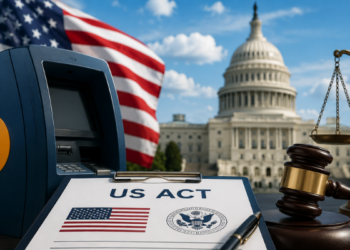


- The SEC and CFTC have moved forward on a joint harmonization initiative meant to align how each agency treats digital assets.
- Both agencies have published statements clarifying how existing securities and commodities law applies to crypto assets under their respective jurisdictions.
- The effort follows a memorandum of understanding between the two agencies establishing a formal coordination framework.
For most of the past decade, one of the most consistent complaints from crypto firms operating in the US was that they answered to two regulators who did not agree with each other, and sometimes did not talk to each other, about which agency had jurisdiction over which type of digital asset. That is the specific problem the SEC and CFTC have spent this year trying to close, through a formal memorandum of understanding and a joint harmonization initiative that commits both agencies to coordinate rather than operate in parallel.
The practical output of that effort has been a series of statements from each agency clarifying how existing law applies to crypto assets within its own jurisdiction, rather than a single combined rulebook. The SEC has published its own guidance clarifying how federal securities laws apply to crypto assets, aimed at giving issuers and platforms a clearer sense of when a token or arrangement falls under securities law and when it does not. The CFTC, working from the same coordination framework, has issued its own parallel statement addressing the commodities side of that same line-drawing exercise.
The reason this matters more than a typical inter-agency memo is that the underlying jurisdictional ambiguity has been a genuine operating cost for crypto businesses, not just a legal abstraction. A platform offering products that could plausibly be classified as either a security or a commodity has historically had to structure its compliance program to satisfy the more conservative reading of both agencies’ rules simultaneously, since getting the classification wrong with either regulator carries real enforcement risk. A formal coordination framework does not eliminate that classification question, but it does raise the odds that the SEC and CFTC reach consistent answers when they are asked to weigh in on the same product or arrangement.
This harmonization push is also happening against the backdrop of Congress working through its own market-structure legislation, which would, if passed, hand much of this same jurisdictional line-drawing to statute rather than leaving it to agency interpretation. The two efforts are related but distinct: the SEC-CFTC initiative is about how the two agencies interpret and enforce the laws already on the books today, while pending legislation would potentially rewrite which agency has authority over which asset category going forward. Firms building compliance programs right now have to account for both tracks, since the current harmonization effort governs enforcement risk in the near term regardless of how any future legislation eventually resolves the jurisdictional question on a more permanent basis.
Whether the initiative meaningfully reduces disputes in practice will show up less in the agencies’ public statements than in how the next set of contested product classifications gets resolved. A joint statement is easy to publish; consistently applying it across enforcement actions handled by two separate agencies, with separate staff and separate institutional histories, is the harder test the coordination framework has actually set for itself.
Disclaimer: Cryip's content is strictly for educational and informational purposes and does not constitute financial, legal, or investment advice. Cryptocurrency involves significant risk, and readers assume full responsibility for their own financial decisions. Asset references are never endorsements.
To make complex crypto topics accessible to readers at all experience levels, our team uses AI tools strictly to refine language, correct grammar, and simplify terminology. AI is never used to draft facts, source information, or form conclusions. Every article is fact-checked and approved by a human editor before publication. Read our full AI Use & Content Policy.