
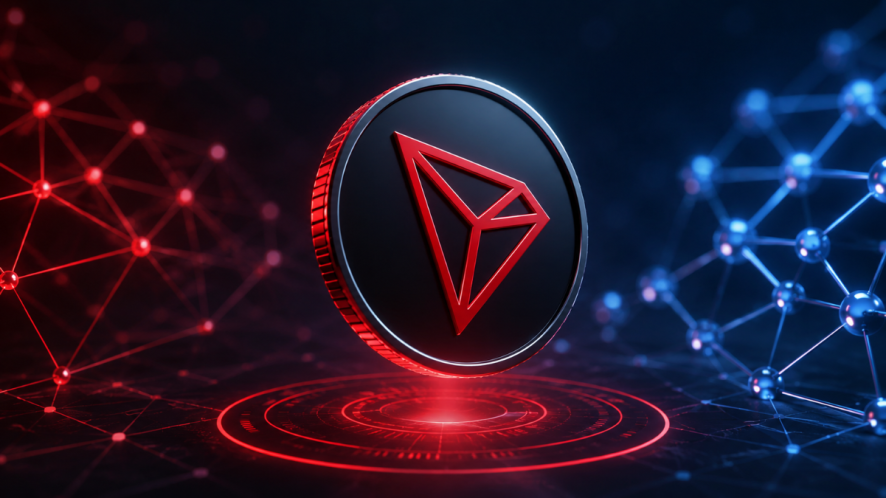


Tron has enabled post-quantum signature capabilities on its Nile testnet, marking a concrete step toward protecting the network against future quantum computing threats. The development comes as major technology companies and blockchain projects accelerate preparations for a post-quantum world.
The TRON DAO announced that the Nile testnet successfully passed Committee Proposal No. 20628 on July 3, 2026. This enables FN-DSA-512 (based on Falcon-512) as the first post-quantum signature algorithm available for testing. Developers can now experiment with quantum-resistant signing for transactions, block production, peer-to-peer handshakes, and smart contract verification in a controlled environment. The feature is currently opt-in on testnet and has no impact on the mainnet. Tron also integrated ML-DSA-44 (Dilithium-based) alongside FN-DSA-512, with each scheme activated independently through separate committee proposals.
TRON’s Quantum-Resistant Signature Feature Is Now Live on Testnet!
TRON’s post-quantum signature capability has officially arrived on testnet — developers are welcome to start building with it. In the face of the quantum era, TRON is taking action to build the most secure…
— H.E. Justin Sun 👨🚀 🌞 (@justinsuntron) July 3, 2026
Understanding Post-Quantum Cryptography
Quantum computers have the potential to break current encryption methods such as ECDSA using algorithms like Shor’s. To counter this, the National Institute of Standards and Technology (NIST) has standardized several quantum-resistant algorithms. These include:
- ML-KEM – Protects the exchange of encryption keys between users and systems,
- The primary post-quantum digital signature standard used to verify transactions and identities,
- A hash-based digital signature algorithm that serves as an alternative for enhanced security,
- A lightweight post-quantum digital signature algorithm with smaller signatures, making it well-suited for blockchain networks. Tron has implemented this algorithm first on its Nile testnet.
Tron’s Implementation and Goals
By activating FN-DSA-512, Tron aims to future-proof user assets and transactions. The testnet phase allows thorough evaluation of performance, compatibility, and integration challenges. Post-quantum signatures are typically larger than traditional ones (FN-DSA-512 signatures are variable-length, capped at around 667 bytes), which can impact transaction size, storage, and network throughput. Real-world testing on Nile is therefore essential before any mainnet consideration.
This move aligns with Tron’s broader efforts to strengthen security in a network known for high transaction volumes, especially stablecoins. The project has indicated a target for mainnet rollout in Q3 2026, likely using hybrid schemes (supporting both legacy ECDSA and post-quantum signatures) during the transition period.
Industry-Wide Momentum
Technology giants are treating quantum threats with urgency. Google has set a 2029 target to complete its internal migration to post-quantum cryptography, citing advances in understanding risks to elliptic curve systems. The company is already deploying NIST-approved algorithms such as ML-KEM across its services, Chrome, Android, and cloud infrastructure.
Recent Google quantum research has intensified these concerns. With estimates suggesting that breaking ECDSA could require far fewer resources than previously thought. Independent researchers and AI-driven optimizations have further accelerated timelines, pushing discussions around Q-Day earlier and highlighting risks to dormant assets and mempool transactions across blockchains.
Ethereum is also advancing its quantum-resistance roadmap. This includes research on XMSS signatures for validators, hybrid schemes during transition periods, and upgrades to protect different parts of the protocol such as zero-knowledge proofs and consensus mechanisms.
Tron’s Strategic Ecosystem Moves
This quantum security push fits into Tron’s ongoing expansion. The network recently joined Mastercard’s Crypto Partner Program to explore blockchain-based payment use cases, strengthening its position in traditional finance integrations and stablecoin rails.
Additionally, TRON DAO expanded its AI Fund from 100 million to 1 billion dollars, focusing on infrastructure for the agentic economy including agent identity systems, stablecoin payment rails, and tokenized assets further positioning the ecosystem at the intersection of AI, blockchain, and high-volume payments.
Why Preparation Matters Now
Although cryptographically relevant quantum computers do not yet exist, experts warn about “harvest now, decrypt later” risks. Adversaries could store encrypted blockchain data today and decrypt it once quantum computers become powerful enough. Blockchain networks, which manage significant value on-chain, require years of careful planning and testing to migrate safely. Early testing on environments like Tron’s Nile testnet helps the industry identify practical issues around signature size, verification speed, and backward compatibility.
Tron has published guidance for developers to begin testing on the Nile testnet. As more projects follow similar paths, collaboration with standards bodies like NIST will remain critical. Hybrid approaches that support both legacy and new signatures are expected to play an important role during the transition.
This testnet activation adds Tron to the list of networks actively addressing long-term quantum risks. Continued monitoring, community involvement, and performance optimization will determine the pace of broader adoption across the blockchain space.
Disclaimer: Cryip's content is strictly for educational and informational purposes and does not constitute financial, legal, or investment advice. Cryptocurrency involves significant risk, and readers assume full responsibility for their own financial decisions. Asset references are never endorsements.
To make complex crypto topics accessible to readers at all experience levels, our team uses AI tools strictly to refine language, correct grammar, and simplify terminology. AI is never used to draft facts, source information, or form conclusions. Every article is fact-checked and approved by a human editor before publication. Read our full AI Use & Content Policy.