

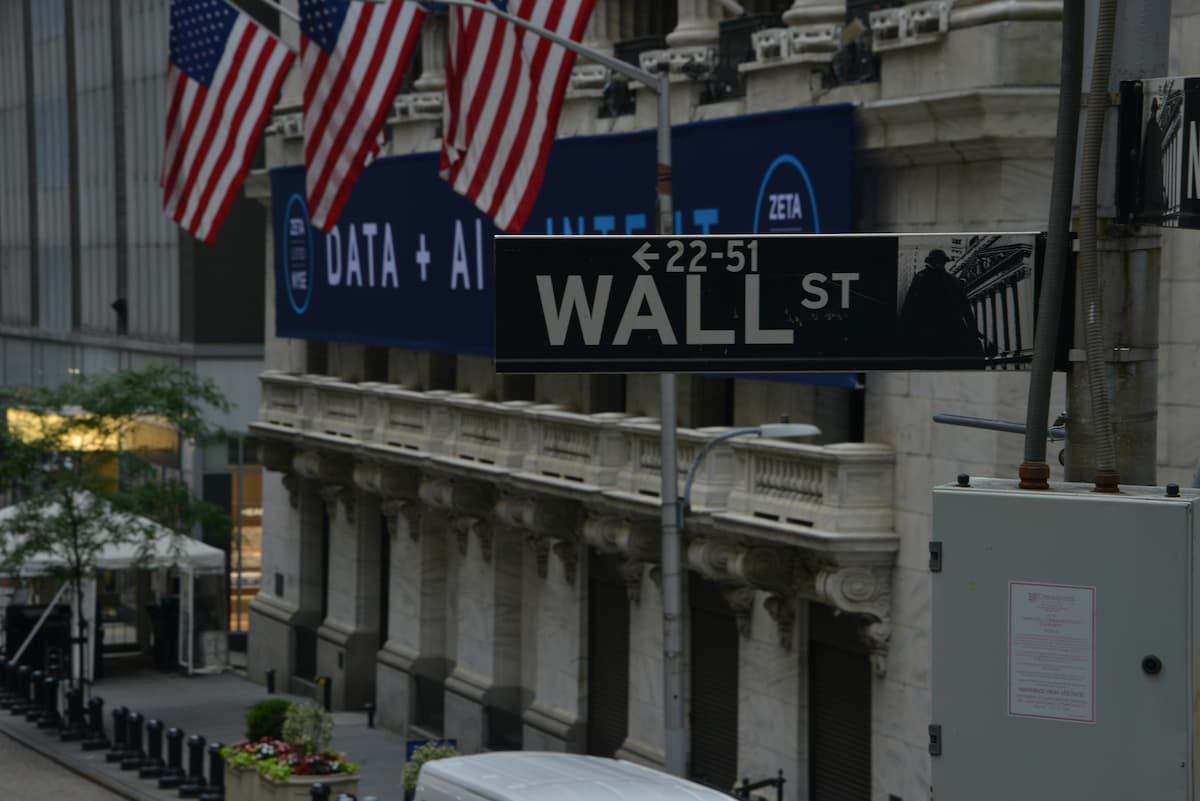


- The Senate missed its third target date for a CLARITY Act floor vote this year; a September 15 cloture attempt is next, and the White House says a miss there likely ends this year’s chance.
- In the same window, five institutions moved anyway: Wintermute registered as a U.S. broker-dealer, Mastercard closed its $1.8B acquisition of BVNK, BlackRock launched two tokenized money-market funds, NYSE expanded a tokenized-securities pilot, and the UK’s FCA opened early talks on tokenized gold.
- Wintermute’s announcement and NYSE’s announcement regarding the CLARITY Act.
The filings that never mention Congress
Wintermute’s announcing its new U.S. broker-dealer status runs. It talks about equities trading, ETF authorized-participant status (the role that creates and redeems ETF shares directly with the fund), self-clearing digital-asset securities, and CEO Evgeny Gaevoy’s ambition to compete with Jump Trading, Jane Street and Citadel within three to five years.
Neither does the New York Stock Exchange’s. When NYSE’s parent, Intercontinental Exchange announced in January it was building a platform for trading and onchain settlement of tokenized securities, president Lynn Martin framed it as the exchange “leading the industry toward fully on-chain solutions.” NYSE’s subsequent SEC rule filing, is conditioned on what Congress does with crypto market-structure legislation.
That’s notable only because of the timing. On August 6, the same week Wintermute filed its paperwork, the Senate quietly missed its third target date for a CLARITY Act floor vote this year: first a July 4 signing target, then a pre-recess vote, and now a September 15 cloture attempt set by Majority Leader John Thune.
“If they can’t get there by September 15, they never will.”
Two of the biggest institutions moving into regulated crypto infrastructure this summer, in other words, built and filed without reference to the one law Washington keeps describing as crypto’s foundational fix.
The Market Is Moving While Washington Debates
Wintermute and NYSE and the same disconnect shows up four more times in the same several-week window. Mastercard closed its roughly $1.8 billion acquisition of stablecoin infrastructure firm BVNK on August 3. BlackRock launched two tokenized money-market products, BSTBL and BRSRV, the same day. The UK’s Financial Conduct Authority is in early talks with major banks on a framework for tokenized gold as derivatives collateral.
The White House’s warning and Grayscale’s position are both real. Grayscale’s research head, Zach Pandl, argued this week that without comprehensive market-structure rules, “a greater share of new investment may occur overseas.” Both are about a genuine fight over what happens to new crypto-native products and retail protections.
What’s actually live versus still on paper
Start with what’s actually running versus what’s still on paper. A rule change NYSE filed with the SEC took effect April 17, letting Russell 1000 stocks and certain ETFs trade in tokenized form under a Depository Trust Company pilot: same CUSIP (the security’s existing identifying number, unchanged), T+1 settlement, nothing structurally different from a normal trade except the wrapper. The fully separate, 24/7 instant-settlement venue NYSE has talked; as of this month it remains unapproved.
Mastercard’s BVNK deal moved faster than its own guidance. Announced in March at up to $1.8 billion, the acquisition was expected to close “before year-end 2026”; it closed August 3, four and a half months in. Mastercard already manages network relationships across “fiat, stablecoins and tokenized deposits,” and BVNK’s rails plug directly into that. The acquisition follows a template Stripe set in 2024, when it paid roughly $1.1 billion for stablecoin platform Bridge, a deal S&P Global Market Intelligence has credited with helping spur the wider wave of payments-company stablecoin M&A that Mastercard’s deal now extends.
BlackRock’s move is the clearest case of an incentive stated out loud. Chief financial officer Martin Small connected BSTBL and BRSRV directly to a specific revenue line:
“We already manage $60 billion of reserves for Circle… we want to be the reserve manager of choice.”
Both products are structured to qualify as eligible reserve assets for stablecoin issuers under the GENIUS Act, a law that already passed. The new funds build directly on BUIDL, BlackRock’s original tokenized Treasury fund, which has grown to roughly $2.9 billion on-chain since its 2024 launch. That’s the reference case the newer products.
London Quietly Extends the Institutional Shift
Wintermute is the second crypto market maker to reach broker-dealer status this year. GSR got there roughly two months earlier, by acquiring an existing FINRA-registered broker-dealer outright rather than registering from scratch: a faster, if less controlled, route. Wintermute’s path took longer: roughly 18 months from opening a New York office in early 2025 to clearing FINRA membership this August. Both firms reached the same regulatory status by different roads, and neither road ran through Congress.
London’s contribution to this pattern is smaller and much earlier-stage than the other five. The FCA is, per Financial Times reporting picked up across crypto trade press this month, in early discussions with major banks on standards for tokenized gold as derivatives collateral: bank talks. The broader FCA/Bank of England tokenization paper this builds on, from May, never mentions the metal at all. Hong Kong’s government-backed gold-clearing system went live in July, explicitly aimed at bullion-hub status, and tokenized gold trading volume already hit $90.7 billion in the first quarter of this year alone, more than all of 2025. London has an incentive to move before the market structure gets set elsewhere, but calling this a framework already gets ahead of where the FCA itself actually is.
The compliance-cost curve
Line the six up by how they got where they are, and a cost curve appears. Firms that move early and alone (Stripe buying Bridge in 2024, BlackRock building BUIDL from scratch that same year) absorb the highest compliance and engineering cost. Firms that follow inherit a cheaper path: Mastercard’s BVNK deal used the M&A playbook Stripe had already normalized; BlackRock’s BSTBL and BRSRV reuse BUIDL’s transfer-agent relationships and regulatory posture rather than building either from zero. The same holds on the registration side: GSR’s acquisition route in 2025 was faster than Wintermute’s from-scratch FINRA registration, but Wintermute’s approach, once done, is arguably more durable.
| Institution | Move | Status as of Aug 10, 2026 | Legal/regulatory basis |
|---|---|---|---|
| Wintermute | Broker-dealer registration | Registered | Ordinary FINRA/broker-dealer law |
| NYSE/ICE | Tokenized-securities settlement | DTC pilot live; 24/7 venue still pending | SEC staff no-action letter, 3-yr sandbox (exp. ~2028) |
| Mastercard/BVNK | $1.8B acquisition | Closed Aug 3, 2026 | Ordinary M&A/banking review |
| BlackRock | BSTBL/BRSRV tokenized MMFs | Launched Aug 3, 2026 | Fund law + GENIUS Act reserve eligibility |
| UK FCA | Tokenized-gold framework | Early bank talks, not a rule | None yet; extension of May 2026 FCA/BoE paper |
The Regulatory Foundation Matters
Here’s where the pattern breaks in an important way. Wintermute’s FINRA registration, Mastercard’s completed acquisition, and BlackRock’s fund launches all rest on ordinary, non-expiring regulatory footing: broker-dealer law, standard M&A review, and fund law paired with the already-enacted GENIUS Act, respectively.
NYSE’s piece of the story is different. The DTC pilot its tokenized-securities trading depends on runs on an SEC staff no-action letter dated December 11, 2025, explicitly bounded to a three-year sandbox period. That makes NYSE’s slice of “quiet institutionalization” the one piece of this story that a future SEC, could actually unwind, a fragility none of the other five threads share. If that letter gets converted into a durable rule before its sandbox period runs out, this distinction disappears, NYSE’s onchain-settlement push is on a shorter legal clock than it looks.
What Congress still controls
The dispute holding up the September 15 vote is over whether enforcement of the bill’s ethics provisions runs through the Justice Department alone or gives state attorneys general a role too, a fight tied directly to scrutiny of President Trump’s own crypto holdings. That’s a real fight over retail protection and enforcement power that none of the six moves above touch. Grayscale’s Pandl and Bitcoin advocate Michael Saylor read the stakes differently. Pandl warns capital may simply move offshore without comprehensive rules, while Saylor’s position is narrower (“Bitcoin doesn’t need CLARITY. America needs clarity”).
Bitcoin doesn’t need CLARITY. America needs clarity.
— Michael Saylor (@saylor) August 7, 2026
What to watch before September 15
September 15 is Thune’s own deadline for finding seven Democratic votes; Witt has said plainly that a miss there effectively ends this year’s chance. But for the durability question raised above, DTC’s no-action letter and its 2028. That’s the actual legal event that determines whether NYSE’s contribution to this story holds up as well as the other five.
FAQs
1. What is the CLARITY Act, and why does its timeline keep slipping?
It’s the crypto market-structure bill meant to settle regulatory jurisdiction between the SEC and CFTC. It has missed three separate target dates this year, each time over the same unresolved dispute: whether enforcement of its ethics provisions runs through the Justice Department alone or also gives state attorneys general a role, a fight tied to scrutiny of President Trump’s crypto holdings.
2. What’s actually live at NYSE today, versus still pending?
Live: a narrower DTC pilot letting Russell 1000 stocks and certain ETFs trade in tokenized form, T+1 settlement, same CUSIP. Still pending: the fully separate 24/7 instant-settlement venue NYSE has talked.
3. Why does BlackRock care about the GENIUS Act specifically, not the CLARITY Act?
BSTBL and BRSRV are designed to qualify as eligible reserve assets for stablecoin issuers under the GENIUS Act, which already passed. That’s the specific law governing the business line BlackRock’s CFO said the funds are built to compete in.
4. Is the FCA’s tokenized-gold plan an actual rule yet?
No. It’s early-stage discussion with major banks, not a published rule or even a formal consultation specific to gold.
Disclaimer: Cryip's content is strictly for educational and informational purposes and does not constitute financial, legal, or investment advice. Cryptocurrency involves significant risk, and readers assume full responsibility for their own financial decisions. Asset references are never endorsements.
To make complex crypto topics accessible to readers at all experience levels, our team uses AI tools strictly to refine language, correct grammar, and simplify terminology. AI is never used to draft facts, source information, or form conclusions. Every article is fact-checked and approved by a human editor before publication. Read our full AI Use & Content Policy.