
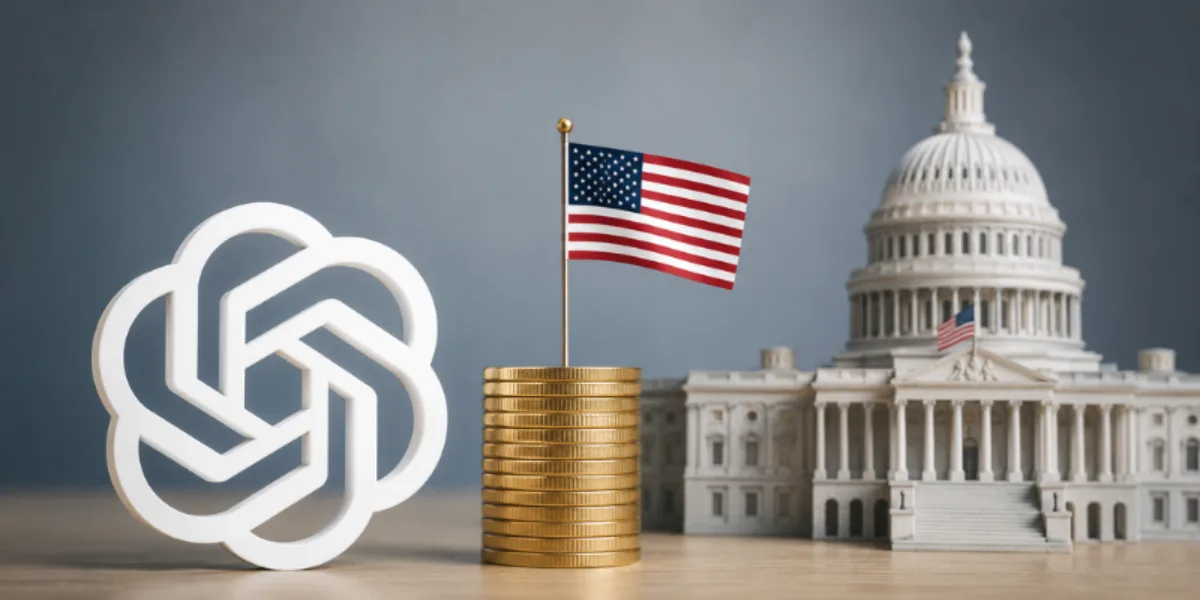


OpenAI has engaged in early-stage discussions with the Trump administration about granting the US government a significant 5% equity stake in the company, a move that could reshape the relationship between Big Tech, artificial intelligence innovators, and public policy.
The proposal, first reported by the Financial Times, seeks to give American taxpayers a direct financial share in the explosive growth of AI technologies without requiring government funding for the stake. Industry sources describe it as a strategic effort to address regulatory concerns while promoting broader public participation in AI-driven prosperity.
Background of the Proposal
The idea reportedly originated from OpenAI CEO Sam Altman, who has advocated for mechanisms to ensure that the massive economic gains from AI do not remain concentrated solely among private shareholders. The structure is modeled after Alaska’s Permanent Fund, where resource revenues are invested and returns are distributed to citizens.
At OpenAI’s estimated $850 billion private valuation, a 5% stake would equate to roughly $42 billion in value. Importantly, the government would hold this as a passive investor, with no board representation or decision-making authority over product development or model releases.
Recent Funding Boost and Model Rollouts
The discussions come as OpenAI strengthens its financial position. The company recently raised an additional $10 billion, pushing its total funding beyond $120 billion. This fresh capital, backed by major investors including Microsoft, Amazon, Nvidia, and SoftBank, provides significant resources to support infrastructure expansion and accelerate development of next-generation models.
In a related development, OpenAI has rolled out its latest GPT-5.6 model family including variants Sol, Terra, and Luna in a limited government-approved early preview. These models feature enhanced reasoning, coding, and cybersecurity capabilities, with initial access restricted to trusted partners following coordination with US authorities. The phased rollout underscores the company’s ongoing engagement with regulators on safety and national security matters.
Context Amid Rising AI Regulation
The equity proposal and model releases occur against a backdrop of heightened US government oversight of frontier AI systems. The White House is preparing voluntary security standards, while recent actions highlight the challenges of balancing innovation with risk management.
For instance, rival Anthropic was recently directed by the US government to disable its newest Claude Fable 5 and Mythos 5 models globally due to export control concerns involving foreign nationals and potential cybersecurity risks. The incident, which forced a full shutdown to ensure compliance, illustrates the increasing regulatory scrutiny facing leading AI developers and the complexities of operating in a geopolitically sensitive environment.
OpenAI itself is advancing toward a potential initial public offering (IPO) after confidentially submitting draft S-1 paperwork. With ChatGPT now reaching 900 million weekly active users and generating substantial revenue, the company is navigating both rapid growth and evolving policy expectations.
Potential Industry-Wide Implications
While the initial talks center on OpenAI, the 5% stake proposal envisions other major US AI companies contributing equity to a broader public investment vehicle. However, support from firms like Google and Meta remains uncertain. The initiative has been framed not as a regulatory concession but as a forward-looking approach to public-private partnership in the AI era.
Altman has reportedly held conversations with key Trump administration figures, including Commerce Secretary Howard Lutnick and Treasury Secretary Scott Bessent. These discussions intersect with wider political conversations on technology governance and economic equity.
What This Means
If realized, the equity arrangement could ease political tensions around AI, foster greater public buy-in, and influence how future economic benefits of transformative technologies are distributed. At the same time, recent model rollouts, funding rounds, and regulatory actions with peers like Anthropic highlight the delicate balance AI companies must strike between innovation speed and compliance in the current environment.
OpenAI has not publicly commented on the stake reports. The story continues to develop as both industry and policymakers navigate the rapidly evolving AI landscape.
Disclaimer: Cryip's content is strictly for educational and informational purposes and does not constitute financial, legal, or investment advice. Cryptocurrency involves significant risk, and readers assume full responsibility for their own financial decisions. Asset references are never endorsements.
To make complex crypto topics accessible to readers at all experience levels, our team uses AI tools strictly to refine language, correct grammar, and simplify terminology. AI is never used to draft facts, source information, or form conclusions. Every article is fact-checked and approved by a human editor before publication. Read our full AI Use & Content Policy.