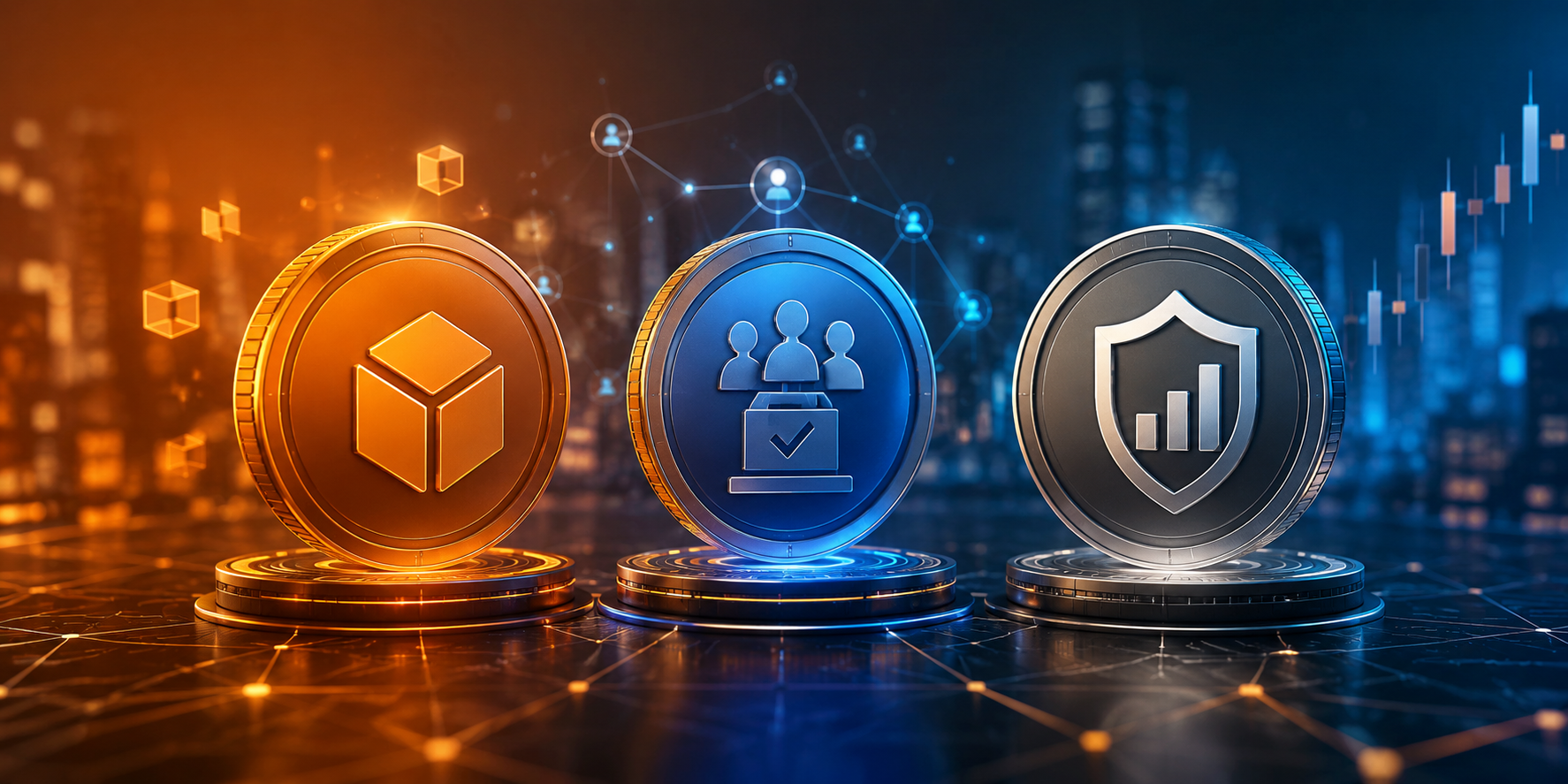


The cryptocurrency landscape has evolved dramatically since Bitcoin’s inception in 2009. What began as a peer-to-peer electronic cash system has expanded into a multifaceted ecosystem where thousands of tokens serve specialized roles. Among the most critical distinctions are those between utility tokens, governance tokens, and security tokens. These categories shape how value is created, distributed, and regulated in blockchain projects.
For investors, developers, regulators, entrepreneurs, and everyday users, mastering these differences is no longer optional. Token classification affects everything from investment risk and potential returns to legal compliance and long-term viability. Misunderstandings have led to high-profile regulatory actions, such as SEC enforcement cases, project failures, and significant investor losses. This expanded guide provides in-depth analysis, real-world examples, regulatory context as of 2026, comparative insights, due diligence frameworks, and forward-looking trends to equip readers with actionable knowledge.
The Evolution and Importance of Token Classification
Early crypto projects often issued tokens with vague or overlapping purposes, leading to the 2017-2018 ICO boom and subsequent bust. Many projects marketed tokens as “utilities” while promising massive returns, attracting scrutiny under securities laws. Today, with maturing markets, clearer frameworks like the EU’s MiCA regulation, and institutional adoption, precise classification matters more than ever. In addition to understanding a token’s purpose, investors increasingly examine tokenomics factors such as Vesting and Lockups, which influence circulating supply, long-term incentive alignment, and potential market volatility. These mechanisms have become key indicators of a project’s sustainability and commitment to responsible growth.
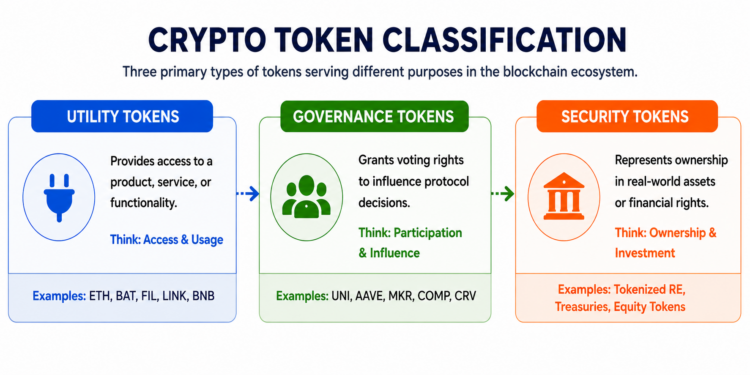
Why it matters:
- Value Drivers: Utility tokens thrive on usage; governance on participation and protocol success; security tokens on underlying asset performance.
- Risk Assessment: Speculative bubbles in utility tokens versus compliance risks in securities.
- Regulatory Exposure: The U.S. SEC applies the Howey Test-whether there’s an investment of money in a common enterprise with expectation of profits from others’ efforts. Marketing labels are secondary to economic reality.
- Sustainability: Tokens with genuine utility or strong governance tend to weather market cycles better.
- Innovation Enablement: Proper design supports decentralized applications (dApps), DeFi, and real-world asset (RWA) tokenization.
Real-World Analogy: A utility token is like a prepaid card for a service (e.g., subway ticket). A governance token is like membership in a cooperative that lets you vote on policies. A security token is akin to owning shares in a company or a fraction of a rental property, complete with potential dividends and legal protections.
As of 2026, the tokenized RWA market has grown explosively, with on-chain value exceeding $25-30 billion in Q1, driven largely by security-like instruments such as tokenized U.S. Treasuries (over $12-13 billion). Projections for the broader asset tokenization market range from $10-16 trillion by 2030.
What Are Utility Tokens?
Utility tokens are digital assets designed to provide access to a specific product, service, or functionality within a blockchain ecosystem. They function as “digital fuel” rather than investment contracts.
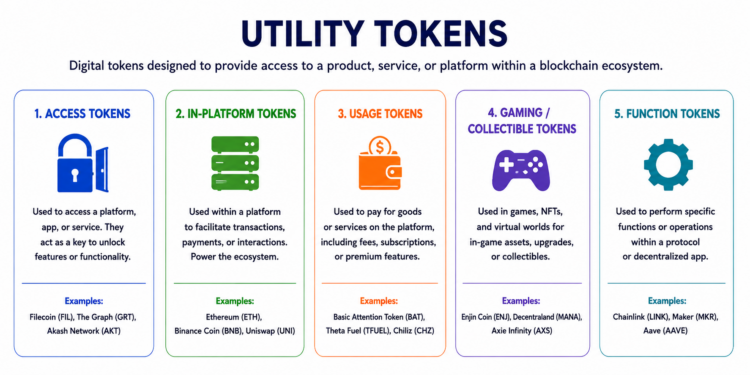
Mechanics and Use Cases:
- Paying gas/transaction fees (e.g., on Ethereum or layer-2 networks).
- Accessing decentralized storage, computing power, oracles, or premium features.
- Facilitating in-platform payments, rewards, or staking for services.
- Enabling participation in play-to-earn games, metaverses, or data marketplaces.
Value is primarily derived from demand for the underlying service. Increased adoption and network effects can drive token price appreciation organically, but there are typically no promises of profit from promoters’ efforts.
Key Characteristics:
- No ownership or equity rights.
- Often burned, staked, or consumed during use.
- Ecosystem-specific and permissionless in many cases.
- Success hinges on product-market fit and real usage metrics (e.g., daily active users, transaction volume), which can be validated through a Blockchain Explorer.
Prominent Examples:
- Ethereum (ETH): The quintessential utility token. Users need ETH to pay for gas fees, execute smart contracts, and interact with dApps. It also underpins staking for network security. Despite additional functions, its core utility remains foundational.
- Basic Attention Token (BAT): Integrated into the Brave browser for privacy-focused advertising. Users earn BAT for viewing ads and can tip creators or pay for premium experiences.
- Filecoin (FIL): Powers a decentralized storage network. Providers earn FIL for storing data; users spend it to rent space.
- Chainlink (LINK): Used to pay for oracle services that connect smart contracts to real-world data.
- Others: BNB (Binance ecosystem fees and discounts), MANA (Decentraland virtual world).
Advantages:
- Strong incentive alignment: Network growth directly boosts token demand.
- Global accessibility without intermediaries.
- Fosters innovation in DeFi, NFTs, Web3 gaming, and infrastructure.
- Lower regulatory hurdles when truly functional post-launch.
Risks and Challenges:
- Speculation Dominance: Many buyers ignore utility and chase price pumps, leading to volatility.
- Adoption Dependency: Tokens like many 2017 ICOs failed when promised platforms never materialized.
- Regulatory Gray Areas: If pre-sale marketing emphasized profits, regulators may reclassify (e.g., Munchee case).
- Token Burn/Inflation Mechanics: Poorly designed supply dynamics can undermine long-term value.
Utility tokens dominate market capitalization in many segments due to their role in powering major blockchains and applications.
What Are Governance Tokens?
Governance tokens grant holders voting rights and influence over a protocol’s direction, embodying the decentralized ethos of blockchain. They emerged prominently with DeFi’s growth as projects sought to replace centralized control with community-driven decision-making.
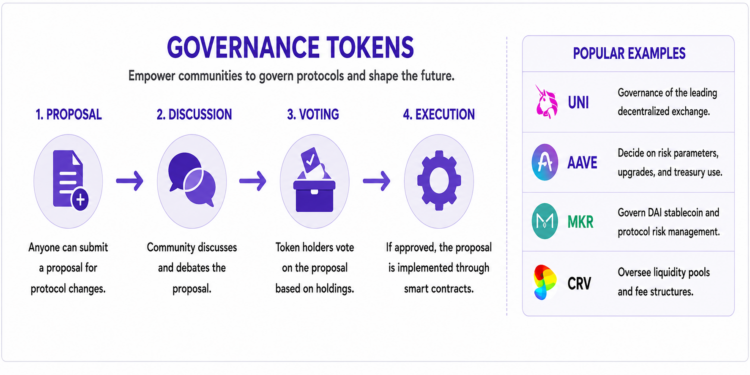
How They Function:
- Submit, debate, and vote on proposals via on-chain mechanisms (e.g., Snapshot, on-chain DAOs).
- Topics include protocol upgrades, fee structures, treasury management, risk parameters, partnerships, and incentive programs.
- Voting power is typically proportional to token holdings, often boosted by staking or delegation.
- Many integrate with utility functions (e.g., staking for rewards).
This creates “digital democracy,” where stakeholders collectively steward the project. However, implementation varies widely from highly effective to plagued by low turnout.
Notable Examples:
- Uniswap (UNI): Holders govern the world’s leading decentralized exchange, deciding on fee switches (which can route revenue to token holders), liquidity incentives, and governance treasury use.
- Aave (AAVE): Influences lending pool parameters, asset listings, risk models, and ecosystem expansions in one of DeFi’s largest lending protocols.
- Maker (MKR): Central to the MakerDAO ecosystem, governing the DAI stablecoin’s stability mechanisms, collateral types, and monetary policy.
- Others: COMP (Compound), CRV (Curve Finance), and various DAO tokens.
Advantages:
- Promotes true decentralization and reduces single points of failure.
- Aligns long-term incentives: Active participants shape sustainable growth.
- Transparent decision-making via public proposals and on-chain records.
- Can lead to innovative treasury strategies and community grants.
Risks:
- Whale Influence and Plutocracy: Large holders or venture-backed entities often dominate votes.
- Voter Apathy: Turnout is frequently below 5-10%, leading to decisions by a small minority.
- Governance Attacks: Malicious proposals or flash-loan exploits (though rarer now with safeguards).
- Complexity: Average users may lack expertise for informed voting on technical proposals.
- Limited Direct Economics: Pure governance rights don’t always translate to strong value capture without additional mechanisms like revenue sharing.
Governance tokens often overlap with utility, creating hybrid models that enhance holder engagement.
What Are Security Tokens?
Security tokens are blockchain-native representations of traditional securities or real-world assets (RWAs). They confer ownership rights, profit participation, dividends, or claims on underlying assets and are explicitly regulated as securities in most jurisdictions.
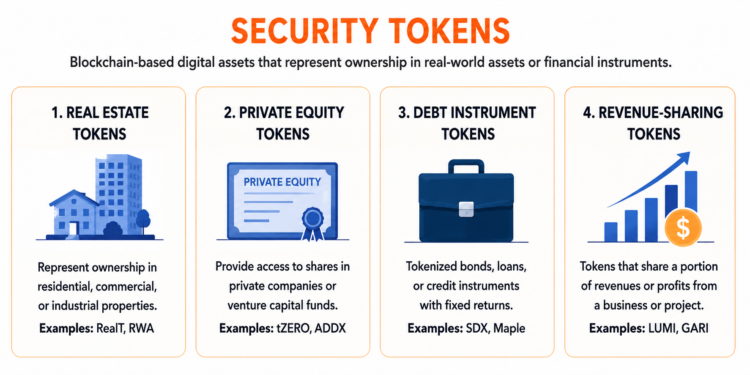
Mechanics:
- Tokenized equity in companies, real estate, bonds, funds, or revenue streams.
- Fractional ownership: A $10M building tokenized into 1 million tokens allows small investors entry.
- Benefits: Automated dividends, faster settlement (T+0 vs. T+2), immutable audit trails, and global 24/7 trading on compliant platforms.
- Often issued via Security Token Offerings (STOs) with KYC, AML, and prospectus requirements.
Benefits Over Traditional Securities:
- Liquidity for illiquid assets (private equity, real estate).
- Reduced costs and intermediaries.
- Enhanced transparency and compliance via blockchain.
- Democratization of access.
Market Momentum (2026):
Tokenized U.S. Treasuries alone exceed $12 billion. Broader RWA markets show 30%+ quarterly growth, with projections reaching trillions. Platforms like Ondo, BlackRock’s BUIDL, Centrifuge (for invoices), and Securitize lead the charge.
Examples:
- Tokenized real estate (e.g., Aspen Digital or various fractional property tokens).
- Private credit and funds via Centrifuge or Maple Finance.
- Equity tokens in startups or revenue-sharing models.
- Institutional products: BlackRock and others tokenizing funds on Ethereum and other chains.
Advantages:
- Legally enforceable rights and investor protections.
- Asset-backed stability and yield potential.
- Bridges TradFi and DeFi, attracting institutions.
- Fractionalization and programmability unlock new capital flows.
Risks:
- Stringent compliance: Registration, accreditation, ongoing reporting.
- Higher issuance and operational costs.
- Jurisdictional hurdles and limited retail access in some regions.
- Liquidity fragmentation across compliant exchanges (e.g., tZERO, INX).
Detailed Comparison
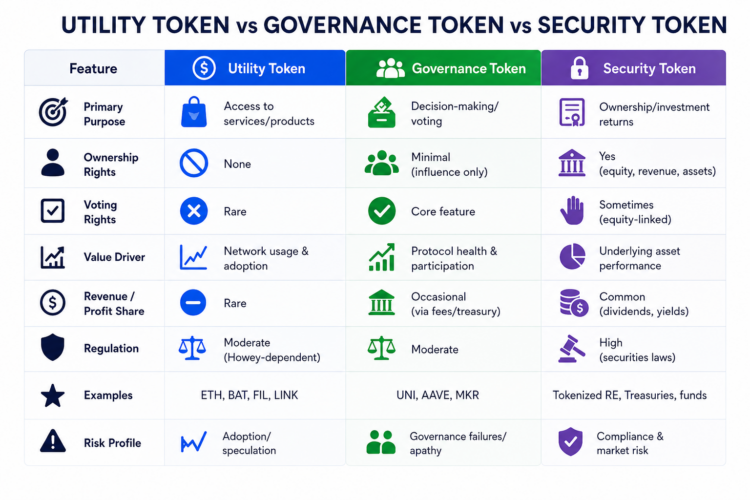
- Primary Purpose: Utility tokens are built to provide access to products and services, governance tokens are designed for voting and protocol oversight, while security tokens focus on ownership rights and investment returns.
- Ownership Rights: Utility tokens generally do not grant ownership, governance tokens offer influence over protocol decisions, and security tokens can represent equity, revenue claims, or ownership of underlying assets.
- Voting Rights: Voting is a defining feature of governance tokens, whereas utility tokens rarely include governance privileges. Security tokens may include voting rights when linked to equity ownership.
- Value Drivers: Utility token valuations are often tied to network adoption and usage, governance tokens derive value from protocol participation and influence, and security tokens depend on the performance of the underlying asset.
- Revenue Sharing: Security tokens are most commonly associated with dividends, yields, or profit-sharing mechanisms. Revenue distribution is less common among utility and governance tokens.
- Regulatory Treatment: Security tokens typically face the strictest regulatory oversight due to their investment characteristics, while utility and governance tokens are often assessed under evolving digital asset frameworks.
- Examples: Utility tokens include Ethereum (ETH), Basic Attention Token (BAT), Filecoin (FIL), and Chainlink (LINK). Governance token examples include Uniswap (UNI), Aave (AAVE), and Maker (MKR). Security token examples include tokenized real estate, tokenized Treasury products, and tokenized investment funds.
- Risk Profile: Utility tokens are primarily exposed to adoption and speculative risks, governance tokens face challenges related to voter participation and governance effectiveness, while security tokens carry compliance, legal, and market-performance risks.
Hybrids and Spectrum: Most modern tokens blend categories. ETH offers utility (gas), economic security (staking), and de facto governance influence. Many governance tokens include utility elements. Regulators evaluate substance over form e.g., the SEC’s 2026 interpretive guidance clarifies when a token transitions out of investment contract status post-network maturity.
Regulatory Landscape in 2026
- United States: SEC emphasizes Howey Test. Recent frameworks distinguish digital commodities (e.g., ETH, BTC) from securities. Enforcement focuses on unregistered offerings promising profits.
- European Union (MiCA): Comprehensive rules for crypto-assets, distinguishing e-money tokens, asset-referenced tokens, and others. Utility tokens face lighter rules if not financial instruments.
- Switzerland & Singapore: Pragmatic, innovation-friendly classification (payment/utility/asset tokens) with clear licensing.
- Global Trend: Focus on consumer protection, AML, and integration with traditional finance while fostering innovation.
Projects must navigate these carefully; “utility” labeling alone offers no safe harbor.
Investor Due Diligence Framework
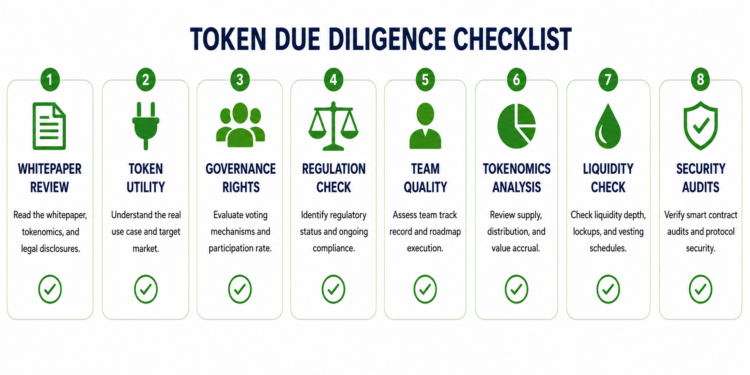
- Read Core Docs: Whitepaper, tokenomics, legal disclosures, audits.
- Assess Rights: What do you actually own or access?
- Evaluate Demand Drivers: Usage metrics vs. hype.
- Regulatory Check: Any ongoing actions? Compliant wrappers?
- Team & Decentralization: Progress toward promised roadmap and true DAO status.
- Value Accrual: Does growth directly benefit holders?
- Risks: Liquidity, smart contract audits, market cycles.
Diversify across categories based on risk tolerance: utility for growth bets, governance for engagement, security for yields and backing.
The Future: Convergence, Tokenization, and Maturity
The coming years will see deeper integration. RWA tokenization is unlocking trillions in efficiency gains. DAOs are refining governance with quadratic voting, delegation, and AI assistance. Hybrid tokens and layer-1/2 innovations will blur lines further while improving user experience.
Utility tokens will power mass adoption in consumer apps. Governance will evolve toward more effective decentralized organizations. Security tokens will modernize capital markets, bringing liquidity to previously inaccessible assets. Challenges remain: Scalability, user education, cross-chain interoperability, and balanced regulation. Yet the trajectory points toward a more inclusive, efficient financial system.
Conclusion
Utility, governance, and security tokens form the bedrock of the crypto economy. Utility tokens fuel functionality and adoption. Governance tokens distribute power and foster community. Security tokens bring verifiable ownership and bridge to traditional assets. Understanding their nuances empowers better decisions amid hype and volatility.
The most successful participants look beyond price charts to fundamentals: Does the token solve a real problem? Grant meaningful rights? Comply with evolving rules? As blockchain matures into 2026 and beyond, informed classification will distinguish sustainable value from fleeting speculation. Whether you’re building, investing, or simply participating, prioritize substance and the token’s true purpose above all.
Disclaimer: Cryip's content is strictly for educational and informational purposes and does not constitute financial, legal, or investment advice. Cryptocurrency involves significant risk, and readers assume full responsibility for their own financial decisions. Asset references are never endorsements.
To make complex crypto topics accessible to readers at all experience levels, our team uses AI tools strictly to refine language, correct grammar, and simplify terminology. AI is never used to draft facts, source information, or form conclusions. Every article is fact-checked and approved by a human editor before publication. Read our full AI Use & Content Policy.